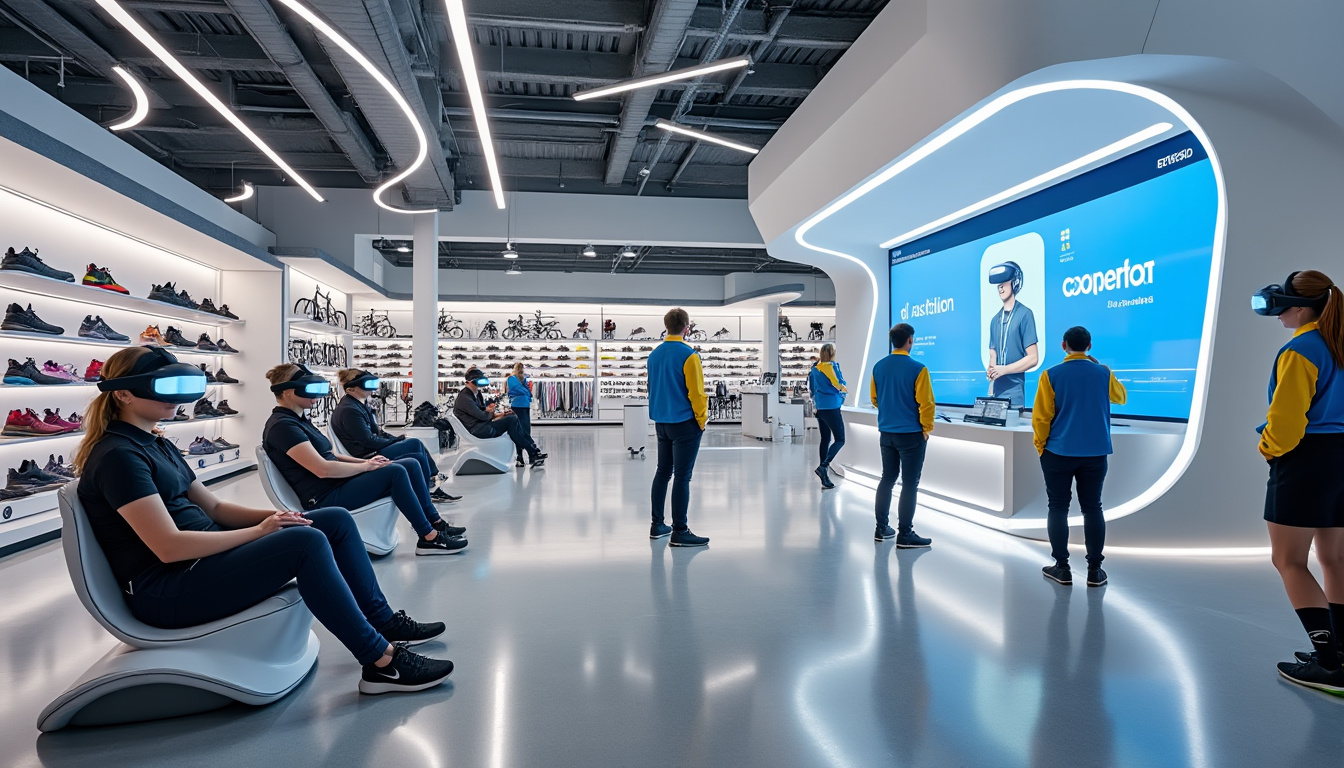
Decathlon is revolutionizing customer relations through virtual reality while waiting for the arrival of artificial intelligence agents
Since its inception, Decathlon has consistently reinvented itself to offer its customers innovative shopping experiences. In 2025, the sports equipment retailer is no exception, integrating cutting-edge technologies, such as virtual reality, into its customer relations strategy. Its Customer Relations Director, Christophe Leclerc, hopes not only to improve the customer experience but also to strengthen the human connection, a crucial approach in an increasingly digitalized world. Whether through real-time interactions, the launch of a “video center,” or anticipating the arrival of artificial intelligence agents, Decathlon is positioning itself as a pioneer in personalized service.
Digital Transformation at Decathlon: Towards a Reimagined Customer Relationship
Combining technology and human empathy in the customer relations sector is a challenge, and Decathlon seems to be rising to this challenge brilliantly. As its first “video center” approaches, which will be inaugurated on April 24th, the company is looking to leverage digitalization to strengthen its value proposition. Christophe Leclerc emphasizes that, despite growing customer demand for self-help, the need to maintain a human connection is paramount. Decathlon’s strategy is based on several pillars: Technological Innovations
: Using virtual reality to improve the shopping experience.
- Personalized Service : Training advisors to offer tailored advice, including video meetings with experts.
- Trend Anticipation : Preparing for the integration of artificial intelligence agents while preserving the role of human interaction.
- This model is booming, and initial feedback is very encouraging. Decathlon is seeing strong demand from its customers for the ability to interact with advisors who have local knowledge to answer their questions. The Challenges of Customer Relations in the Digital Age
In a world where everything is becoming instantaneous thanks to technological advances, companies must adapt quickly. Consumer expectations have evolved; they now seek quick solutions, but also human support. This dichotomy represents a real challenge for Decathlon and other major retailers.
In a context where nearly 80% of customer interactions take place without human intervention, the need to make artificial intelligence and human customer relations coexist is becoming crucial. Christophe Leclerc explains that it is essential to find a balance where AI can handle repetitive, non-value-added tasks, leaving human advisors to focus on more personalized and engaging interactions. Innovative customer service thanks to virtual reality
The launch of the “video center” at Decathlon aims to integrate an immersive experience for customers. Imagine being able to discuss a product with a product expert directly from home while taking advantage of virtual reality features. This could transform the approach to online shopping, often perceived as cold and impersonal.
This initiative aims to: Facilitate exchanges : Customers can directly consult expert advisors remotely via video.
Popularize the use of technology
: Offer unique experiences, such as visiting a camping tent in virtual reality, that would not be possible in a physical store.
Create an emotional connection
- : Maintaining the human aspect of service while integrating technological tools Advantages of the video center
- Impact on the customer experience Direct access to an advisor
- Personalized advice Use of virtual reality
| Product immersion | Increased availability |
|---|---|
| Confidence in online purchasing | Hybrid logic: the role of artificial intelligence |
| The shift towards AI is inevitable. Although Christophe Leclerc remains vigilant about this trend, he recognizes that the future of customer relations is closely linked to the evolution of this technology. One of the main advantages that AI can bring is the reduction of time-consuming tasks, allowing advisors to focus on more value-added tasks. | During the recent All4customer trade show, it was observed that AI agents are beginning to enter the customer relations field. However, their presence was relatively limited, which reflects an experimental phase. The main benefits Decathlon envisions from integrating artificial intelligence include: |
| Automation | of answers to frequently asked questions, increasing efficiency. |
Data analysis
to understand purchasing behaviors and anticipate customer needs.
Improved customer satisfaction
through faster and more relevant interactions.
- Before fully adopting artificial intelligence agents, Decathlon is banking on a hybrid model where humans and machines will work together to provide the best possible service. Legitimate concerns about AI
- Despite the enthusiasm surrounding AI, questions remain. Consumers wonder if interacting with a robot can replace the human touch needed for quality customer relations. For Christophe Leclerc, the challenge is to ensure that, even with AI, human engagement remains at the heart of the process. Fears surrounding automation are raising questions about the future of employment in the sector. However, a balanced approach where human advisors can intervene at any time appears to be a viable solution to allay these concerns.
- Risks of AI in Customer Relations Possible Solutions
Decreased Human Contact
Balancing Humans and AI
Reduction in Jobs
Training for New Skills
| Loss of Empathy | Strengthened Role of Experienced Advisors |
|---|---|
| The Impact of Innovation on Customer Retention | In sales, retaining loyal customers is more important than ever. Combining technology and customer service is a key strategy for building customer loyalty. Decathlon understands this and is committed to an enhanced customer experience to transform occasional customers into regular customers. |
| Decathlon’s initiatives aim to increase customer satisfaction by improving the shopping experience. Studies show that a satisfied customer is more likely to recommend the brand and return for further purchases. | With the goal of optimizing customer loyalty and satisfaction, Decathlon adopts various strategies: |
| Loyalty Program | : Rewards for regular customers. |
Additional Services
: Exclusive product preview offers.
Service Reviews
: Soliciting feedback for continuous improvement.
- These measures aim to create an ecosystem where every interaction counts and where the customer feels valued and respected. Loyalty Strategies
- Objectives Personalized Services
- Strengthen Engagement Personalized Support
Create Engaged Customers
| Exclusive Offers | Increase Sales |
|---|---|
| In conclusion, while innovation continues, Decathlon perseveres in its quest to transform customer relations. By combining cutting-edge technologies and human contact, the brand is establishing itself as a key player in modern customer relations. The year 2025 promises significant progress, and we can expect exciting developments in this area. | |
Catégories : Non classé
Tags : artificial intelligence, customer relationship, decathlon, innovation, virtual reality