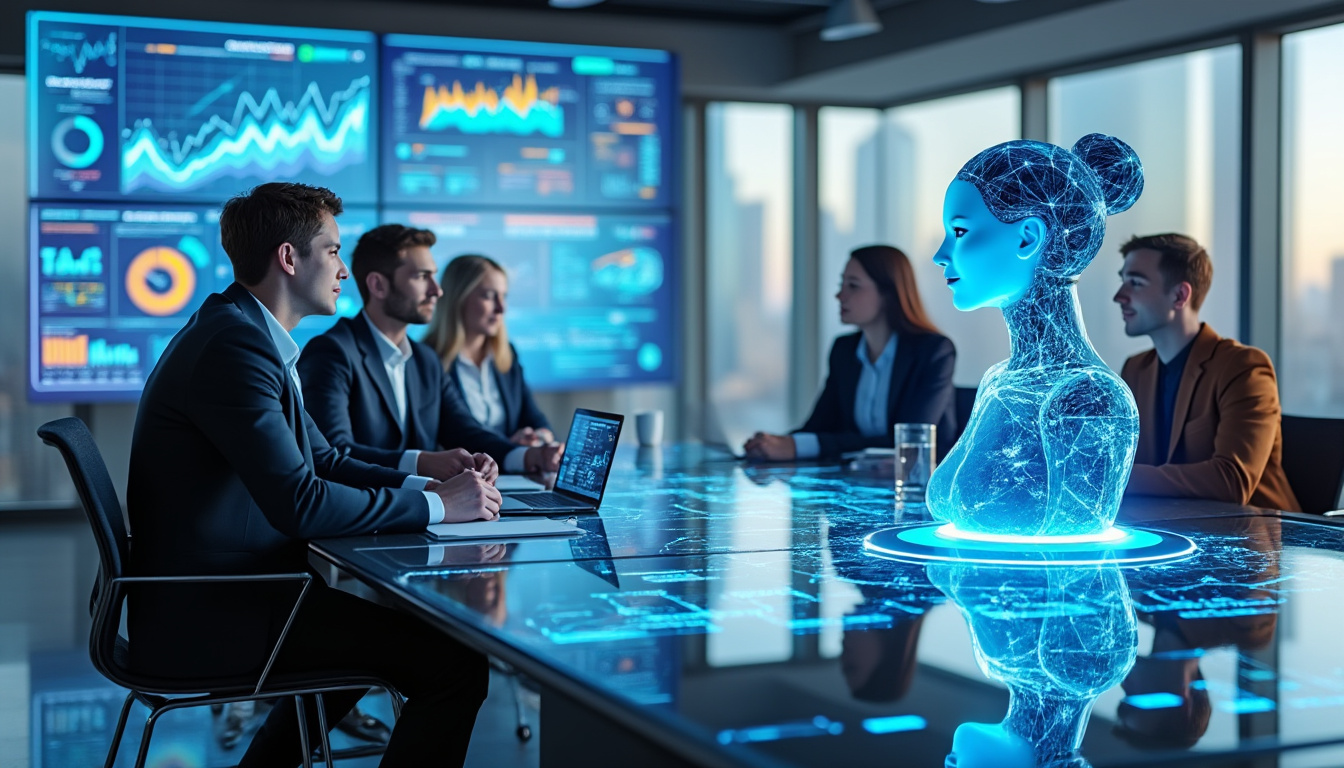
The integration of artificial intelligence agents: a new challenge for human resources
As 2025 dawns, companies are facing a major strategic turning point. The integration of artificial intelligence (AI) agents into teams is not just a simple technological exchange, but requires a true organizational transformation. By combining human and digital forces, companies must rethink their HR practices, their governance, and their approach to productivity. What strategies can be adopted to govern these digital entities while preserving the value of human labor? This article explores the complex dimensions of this situation, proposing avenues for reflection and integration models.
Organizational Transformation in the Face of the Integration of AI Agents
The emergence of AI agents in the labor market is sparking diverse debates. On the one hand, the promise of a rapid return on investment attracts executives, while on the other, fears about replacing human workers persist. However, the reality transcends these simplistic contrasts. Companies and employees must learn to live and work alongside these new digital entities.
Real evolution or simple automation? It’s essential to understand that the concept of AI agents goes beyond simple digital assistants. Unlike one-time automations, these agents have the ability to perform tasks autonomously, often in a specific context that requires tailored decisions, for example, as recruiters or payroll managers.
However, this shift is not linear. For example, managing an AI agent means treating them as a full-fledged employee. This means that companies must develop methods to “onboard” these agents in a similar way to new employees, while also establishing monitoring, auditing, and reporting processes.
The Challenges of Governing Digital Entities The governance framework for AI agents must be rigorously established. Each agent, whether connected to critical processes or involved in value production, requires affiliation with a unit within the company. This includes: Clearly defined access rights
Continuous monitoring of its performance
Audibility of actions taken
- To establish this operation, a new control infrastructure must be put in place, particularly through management solutions that integrate agents into performance monitoring systems.
- Type of AI Agent
- Example of Application
Impact on Productivity
| AI Recruiter | Application Evaluation | Shorter Selection Time |
|---|---|---|
| AI Accountant | Payment Management | Minimizing Errors |
| AI Payroll Administrator | Automatic Salary Calculation | Accelerating Processes |
| The Importance of Defining an Accountability Framework | With the emergence of AI agents, a crucial question arises: | Who is responsible |
for the behavior and decisions made by these digital entities? Companies must clarify the responsibility of each AI agent within their operations. How can this assessment be carried out and the necessary measures implemented to ensure ethical operation?
Measuring Agent Performance Evaluating the performance of AI agents is also a fundamental issue. Companies must develop key indicators to analyze their reliability and impact on results. These indicators may include: Task completion success rate
Request processing time
Satisfaction of employees or customers who interacted with the agent
- These not only optimize agent performance but also assess their contribution to the company’s economy.
- Human involvement in agent governance
- The coexistence of AI agents and human employees raises new managerial questions. It is essential to build bridges between these two categories of workers to foster an inclusive corporate culture. The idea of siloing humans and digital agents must be set aside. Instead, a collaborative framework must be established to benefit from each other’s talents.
Redefining Roles and Skills within HR
The integration of AI into human teams calls for a reconfiguration of traditional roles within human resources. Indeed, the arrival of AI agents encourages:
Reexamining required skills
Balancing human resources with technological resources
Developing appropriate training for teams
- This dynamic is not a replacement for humans, but rather a strengthening of collaboration between these two entities. It is crucial to ensure that this synergy generates effective work networks. Training and Skills Development
- Addressing these changes requires creating training support programs that allow employees to adapt their skills. Companies like IBM and SAP have already implemented training programs to familiarize their teams with artificial intelligence tools. These initiatives open up enriching opportunities for collective upskilling.
- Training should focus on the following areas:
Understanding AI and its practical applications
Developing human skills to interact with AI agents
Ability to analyze and audit agent performance Encouraging internal mobility Encouraging internal mobility is also of central importance, as it fosters exchanges between humans and AI agents. These bridges can lead to a reevaluation of career paths and increased dynamism within teams. Workday and
Ultimate Software
- are examples of companies seeking to facilitate this movement by offering suitable tools.
- Hybrid Governance: New Managerial Challenges
- With the rise of a company between humans and AI agents, managerial challenges are multiplying. Senior management, IT managers, and HR teams must collaborate to design a management architecture that integrates this duality. Key questions emerge:
What productivity objectives should be defined?
How should agent identity be managed within the organization? What new technological tools are needed to manage this synergy? This approach must be collective and inclusive, involving experts such as IT security managers and legal experts to ensure a robust and compliant framework. The Tools Needed for Successful Integration Successful integration of AI agents cannot be achieved without the right tools. It is essential to equip yourself with the right solutions to facilitate their integration into work processes. Some platforms such as ADP, Cornerstone OnDemand, Zoho, and PeopleSoft offer features that allow you to effectively manage these transformations. AI Integration Tools
Key Features
Benefits
- ADP
- Payroll and Human Resources Management
- Administrative Process Automation
Cornerstone OnDemand
Learning and Development Platform
Continuous Skills Improvement ZohoCollaboration and Task Management Tools Workflow AccelerationPromote Human-Agent Synergy The key to successfully completing this transition lies in companies’ ability to define a strategic framework where humans and AI agents cooperate. This involves creating a fluid ecosystem that streamlines interactions while respecting each individual’s role and function. For example, virtual work agencies such as Talentsoft are already working on collaborative models between human and digital workers.In summary, the integration of artificial intelligence agents represents more than just a technical challenge. It requires a strong commitment to transforming mindsets, processes, and roles within companies to achieve a balance between digital innovation and human efficiency. The road is still long, but the potential benefits are undeniable.
Catégories : Non classé
Tags : artificial intelligence, challenges, human resources, integration, technology