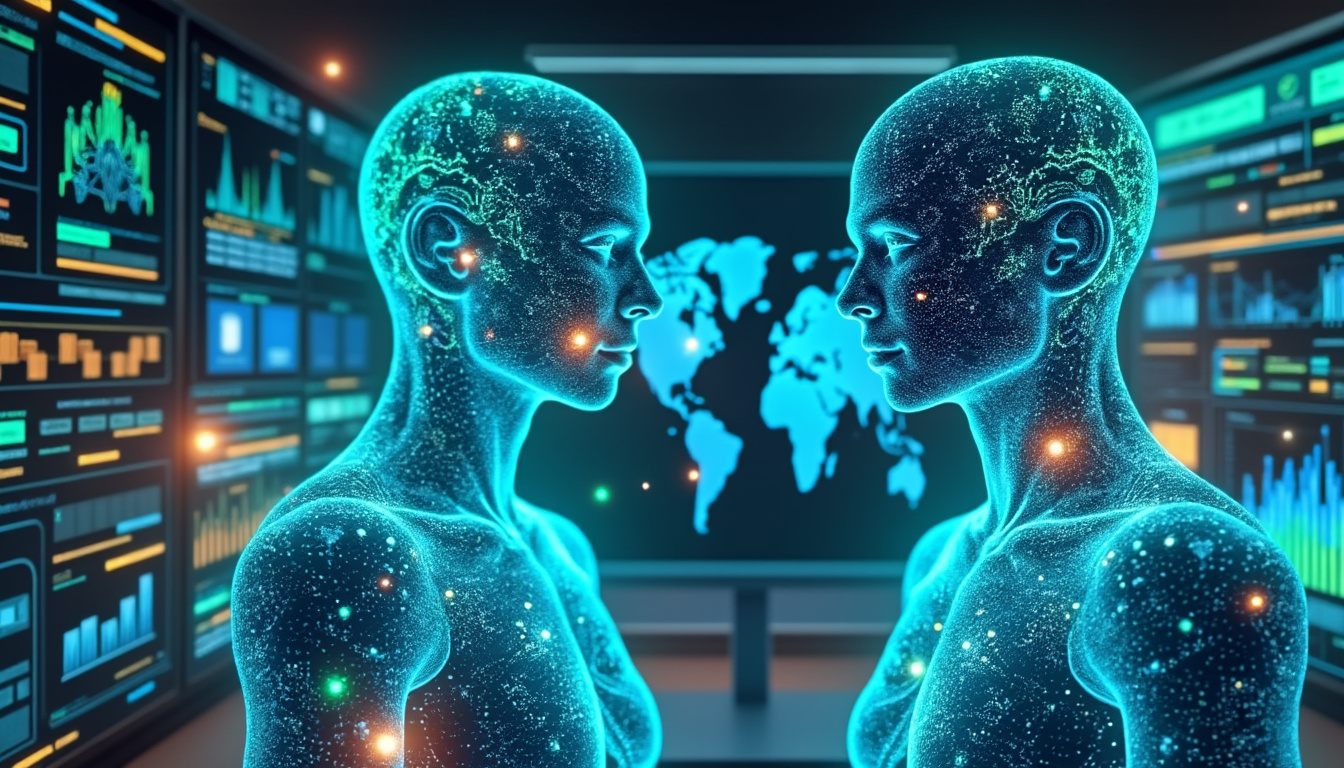
The Importance of Digital Twins in Cybersecurity for Businesses in the Age of AI
In an increasingly complex and interconnected world, cybersecurity occupies a prominent place within businesses. In the era of artificial intelligence, the challenges related to data and system protection are numerous. It is in this context that digital twins are emerging as an innovative solution. A digital twin virtually reproduces the architecture of an information system, giving companies the ability to simulate and anticipate cyberattacks. This process, powered by artificial intelligence, paves the way for proactive defense, transforming our approach to IT security. Let’s explore the benefits and challenges associated with this crucial innovation.
Creating Digital Twins: A Response to Growing Cybersecurity Threats
With the increase in cyberattacks, companies must redouble their efforts to protect their systems. Creating a digital twin is a strategic response to these threats. It creates an exact replica of an organization’s IT systems, including servers, ports, and network configurations. These digital replicas, which also include vulnerabilities identified in public databases (CVE), provide a training ground for artificial intelligence platforms.
A new training tool for AI
Digital twins allow AI systems to be trained to detect and simulate attack paths. By reproducing real-life attack conditions, these models offer an excellent opportunity to refine defense strategies. This process relies on reinforcement learning, where AI explores a multitude of potential attack scenarios by exploiting identified vulnerabilities.
The benefits are numerous:
- Proactive identification of vulnerabilities: AI can uncover chains of vulnerabilities that might not have been detected by traditional security methods.
- Continuous training: AI is constantly improving based on the new scenarios it encounters.
- Anticipation of attacker behavior: By simulating hacker strategies, companies can better prepare to respond to real threats.
These technologies are gradually being adopted by leading companies such as Thales, Atos, and Orange CyberDefense, which are investing heavily in this innovative approach to cyber defense. Concrete applications of digital twins in businessesExperiments conducted by researchers have revealed the potential of digital twins. For example, studies conducted at the University of Lorraine have shown that an AI agent, trained on a digital twin, could compromise up to 69% of a simulated network. This impressive figure highlights not only the effectiveness of such tools, but also their importance in developing robust security strategies. Benefits of Digital Twins in Cybersecurity Examples of Applications Early Detection of VulnerabilitiesSimulation of Attack Scenarios in Controlled Environments
Optimization of Security Resources
Reduction of False Positives During Security Analysis
| Better Risk Governance | Presentation of Results to Security Steering Committees |
|---|---|
| A New Defensive Approach to the Sophistication of Cyber Threats | Traditional cybersecurity defense often relies on a reactive approach, seeking to resolve problems once they arise. In contrast, digital twins require a radical shift in posture. They encourage companies to anticipate threats before they materialize. |
| The Benefits of Proactive and Simulated Defense | This inverted approach transforms the way organizations design their security: |
| Patterning of patches: | Digital twins make it possible to determine which vulnerabilities should be patched first, based on their potential for exploitation in a real-world context. |
Effective documentation:
Identified scenarios can be integrated into security governance, providing an overview of potential risks.
Justification of investments:
Simulations allow companies to better argue for cybersecurity budget decisions.
- This transition is becoming a strategic priority for senior management, which sees the integration of digital twins as an opportunity to optimize the security of their systems. A necessity for regulated sectors
- Regulations such as DORA (Digital Operational Resilience Act) and NIS2 (Network and Information Systems Directive) also require increased vigilance in cybersecurity. Implementing digital twins can therefore become essential to ensure legal compliance while improving security. Companies such as Airbus CyberSecurity and Capgemini are adopting solutions integrating this technology to comply with these standards while increasing their resilience against threats. This dynamic is also driving players such as Trustwave and Sopra Steria to develop specialized solutions based on digital twins. Key Cybersecurity Regulations
- Implications for Businesses DORA
Strengthening the Operational Resilience of Financial Firms
NIS2
Security Obligations for Digital Service Providers
GDPR Personal Data Protection and Information Security Future Prospects for Digital Twins in Cybersecurity Like any innovation, digital twins in cybersecurity are continually evolving. Their growing adoption marks the beginning of a new era in how companies approach IT security. With the continued development of AI, these tools will not only be a unique feature, but will gradually become the norm. Roading to Standardization As several companies begin to integrate these solutions, standardization seems inevitable. Systancia and Stormshield
| are investing in these technologies, recognizing their potential to transform the cybersecurity landscape. Simulation solutions combined with AI engines and attack path visualization are expected to become widely adopted. | The outlook is promising, but also raises ethical and practical questions. How will companies ensure the security of their digital twins? What measures will they implement to prevent these tools from becoming targets for attackers? The security of these digital twins must be a central concern to avoid additional risks. The Role of Cybersecurity Companies in This Transformation |
|---|---|
| Companies such as Atos and Accenture play a key role in implementing and integrating these technologies within organizations. They offer tailored solutions to help their clients navigate this new security landscape. | Leaders must therefore invest in these tools to prepare for a future where AI and cybersecurity are inseparable. By fully harnessing this potential, businesses will be able to better defend themselves against the growing threats facing them. |
Catégories : Non classé
Tags : artificial intelligence, companies, cybersecurity, digital twins, technology