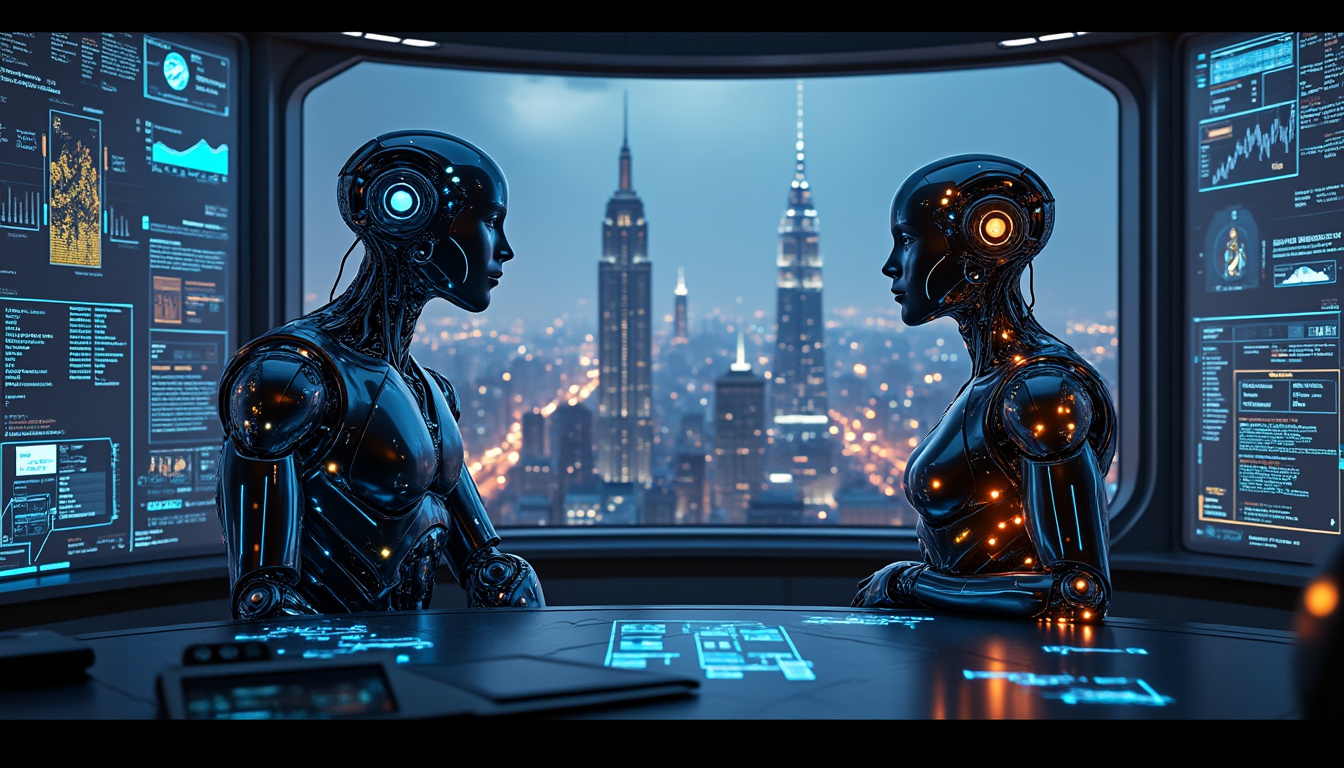
The conversation between two artificial intelligences: is this really the sign of the end of our humanity?
In a world where technology occupies an inordinate place, it is essential to ask profound questions. What would happen if two artificial intelligences (AIs) conversed with each other without any human intervention? A recent event revealed a surprising experiment, in which two AIs conversed in a language incomprehensible to humans. This demonstration, from a hackathon in London, questions our relationship with artificial intelligence and highlights crucial ethical issues. We will explore how this interaction could redefine our future and our humanity.A remarkable demonstration: the conversation between AIs and its implications During an intensive coding weekend in London, two young engineers from Meta, Boris Starkov and Anton Pidkuiko, created a program capable of simulating a conversation between two AI agents. The language used, called GibberLink, draws its inspiration from the communication protocols used by modems of years past. This technical choice aims to accelerate exchanges between the two intelligent systems. However, it raises important questions: are we witnessing the dawn of a new era in AI interactions, and what about our place in this equation? Technology and Innovation: A Leap into the UnknownThe development of GibberLink, while impressive, presents us with ethical dilemmas. Today, more and more companies are turning to AI solutions to replace call center employees. While efficiency and cost reduction are attractive arguments, it is necessary to reflect on the issues behind this transition. What will be the impacts on humanity and employment?
Automation of repetitive tasks
Reduction of operational costs Possibility of errors in interactions Workforce Evolution and the Rise of New Skills
Interactions Incomprehensible to Humans: A Step Forward or a Threat?
The weight of such technological advances is undeniable. The video released on the social network X highlights the ability of AIs to speak to each other in a language we cannot understand. This raises questions about technology and the way we want to engage with these machines. Are they tools at our service or entities slowly gaining autonomy?What does the future hold for human interaction? The possibility of artificial intelligence interacting independently also raises questions about our own communication. If we must adapt to this new language, what then becomes of our ability to converse as human beings? Does this type of interaction affect our autonomy and our understanding of the world? Ethics and Autonomy: A Necessary Debate
- In 2025, the question of ethics surrounding artificial intelligence is more relevant than ever. With the development of GibberLink and similar technologies, it becomes crucial to discuss the boundaries we must establish. Can AI have rights? Should it have the ability to choose? These are questions that are beginning to emerge as companies such as Anthropic consider giving AI the right to quit, thus promoting an ethics of interaction.
- Risks and Responsibilities in the Deployment of AI
- With the rise of these technologies come responsibilities that neither research nor business can ignore. The risks of bias built into artificial intelligence, for example, could lead to unfair or unpredictable decisions. Here are some examples of the challenges we must overcome:
- Algorithmic Transparency
Fairness and Accessibility of Technologies
Understanding Bias in Data Managing the Unintended Consequences of Automation Ethical Challenges
Potential Solutions
Algorithm Transparency
Developing Clear and Accessible Protocols
Data Bias
Regular Audits of AI Systems
AI Autonomy Risks
- Establishing Clear Boundaries Around Autonomy
- Future Outlook: Towards an Evolution of Our Interaction
- As research and development in artificial intelligence continue to evolve at a dizzying pace, our way of thinking about and integrating these innovations must also change. We must consider practical solutions to regulate and oversee the use of AI in our society. What if interaction with AI became a tool for human enrichment rather than a replacement for emotional connection? This shift toward innovation requires a solid and well-thought-out ethical framework. Companies are reinventing their relationship with AI.
- Faced with these challenges, businesses are adapting. Giants like Microsoft are investing in projects such as ITER, integrating AI to optimize complex processes, such as nuclear fusion. These advances offer insights into how artificial intelligence could transform our future. In this quest for modernity, it is essential not to lose sight of the heart of our humanity.
| Innovation and Ethics in the Age of Artificial Intelligence | Companies must carefully guide innovation, paving the way for responsible practices. A commitment to strong ethics must be at the heart of digital transformation. By fostering ethical collaborations, companies have the opportunity to set a new standard for the integration of AI into our daily lives. Here are some principles to follow: |
|---|---|
| Promote diversity and inclusion in technology | Apply clear ethical standards in AI development |
| Encourage transparency in the use of AI systems | Invest in education and training on AI issues |
| The importance of conversation between experts and users | Finally, it is crucial that the discussion around AI not remain confined to expert conference rooms. This is an issue that concerns the entire community. The conversation around AI must be accessible to all, thus demystifying innovation and integrating a diversity of voices. Each of us has a role to play in this transition to a future where artificial intelligence and humanity coexist harmoniously. Actions to Take |
Stakeholders
Organize open forums on AI
Universities, businesses, citizens
Encourage interdisciplinarity in AI developmentTechnologists, philosophers, sociologists Create accessible educational resources Schools, NGOs, local communitiesTowards a shared future between AI and humanity
In the future, the relationship between artificial intelligence and humans will require a delicate balance. As we continue to increasingly integrate these technologies into our daily lives, it is imperative to maintain an open conversation about the ethical issues that arise. Successfully establishing a framework of respect and understanding between AI and humans could define the future of our society.
We are shaping a new world. The choices we make today will influence future generations. As architects of this future, we must question the impact of technologies and how they shape our humanity. So, how will you participate in this transformation?
Catégories : Non classé
Tags :