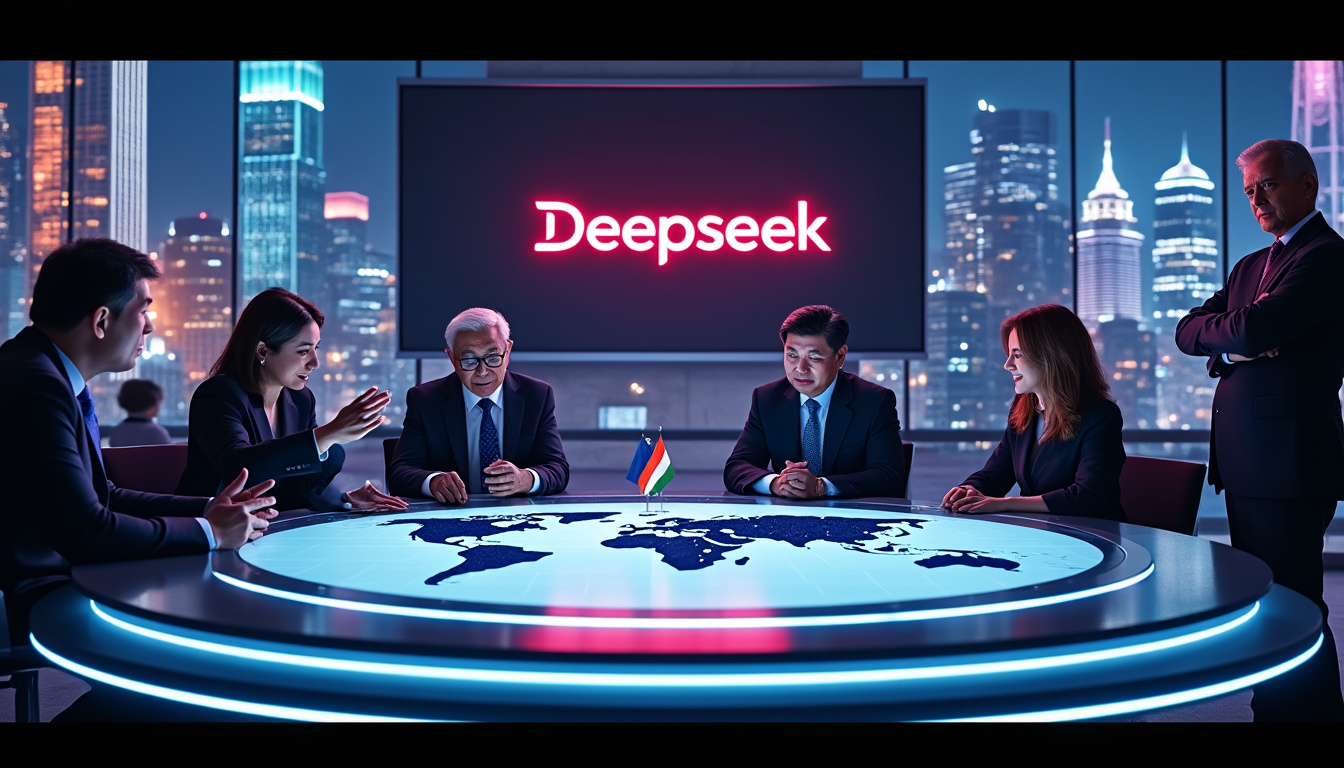
States take the lead against Deepseek
The development of artificial intelligence by the Chinese start-up Deepseek has raised concerns within several governments. Far from being an isolated phenomenon, the rise of this AI model is fueling intense debates on the protection of personal data and national security issues. While the United States examines the security implications of Deepseek, Italy is focused on regulatory compliance, particularly with GDPR. This duality of approaches underlines the growing complexity of international relations in the field of technological innovation.
American reactions to Deepseek
Since the launch of Deepseek’s reasoning model, the United States has notably highlighted the potential dangers that this technology represents for national security. Deepseek has been seen as a threat that could weaken American technology companies, particularly as evidence of improper use of OpenAI data arises. Donald Trump’s statements regarding this start-up highlight the fear that Chinese innovation could become a key player in the ongoing technological war.
National security concerns
Concerns around Deepseek go beyond just AI performance. The United States, through its administration, is concerned that this technology could lead to leaks of sensitive data that could be used for malicious purposes. Recent enthusiasm for these innovations reinforces the need for in-depth investigation. David Sacks, an AI advisor, has clearly expressed that Deepseek’s methods could involve a ‘distillation’ of OpenAI’s models, which could constitute a violation of intellectual property rights.
The legislative response
In response to these fears, some US officials have proposed legislative measures, including the “No DeepSeek on Government Devices Act” bill which aims to ban the use of this application on government devices. Similarly, Texas was the first state to implement restrictions, banning enforcement on government equipment. These maneuvers mark a dynamic of mistrust and a desire to protect national players in the face of this rise in foreign competition.
Italian regulations and the GDPR
Unlike the United States, Italy has chosen to tackle Deepseek from a legal angle, focusing on compliance with the General Data Protection Regulation (GDPR). There Italian Cnil escalated the situation by sending a letter to Deepseek, seeking clarification on the collection and use of personal data. This approach follows a complaint from consumer associations.
Requests for clarification
The Garante per la protection dei personal data requires details on the types of data collected and their origin, as well as on the way in which they are used and stored. The fear of non-compliant treatment highlights issues related to the transparency and ethics of AI technologies. Deepseek’s response to this request will be closely scrutinized, as it could influence the European Union’s position on imported AI technologies.
The implications for Europe
The requests from the Italian CNIL are not isolated. They are part of a broader framework where Europe seeks to define guidelines on the use of artificial intelligence. Public opinion and the regulatory framework are increasingly influenced by concerns about privacy and data security. This Italian response could prompt other European countries to embrace similar regulations, creating a more restrictive legal environment for technology companies that do not comply with EU standards.
Other countries on alert
The reaction to Deepseek is not limited to the United States and Italy. Other nations, such as South Korea, have also been vigilant about the ramifications of this technology. Many ministries, including those related to defense, have prohibited access to Deepseek on their machines to prevent insecure use. This trend highlights the extent of concern about technological innovation, particularly in the context of geopolitical tensions.
National security risks
The risks associated with Deepseek, mainly related to data leaks, industrial espionage and manipulation of public opinion, are the focus of policy makers’ concerns. Discussions have already taken place on the need to adopt a global legislative framework to regulate these emerging technologies. The main objective is to synchronize the efforts of different nations to establish common security protocols in the face of these products which can have significant consequences on global stability.
How can states prepare?
To anticipate these challenges, it is crucial that governments invest in solutions that protect data and ensure that emerging technologies are used ethically and responsibly. This includes enhanced regulation and international cooperation. The potential for losing global technological supremacy requires governments to collaborate to prepare for a future where highly effective AI could influence different sectors.
Perspective on the future of AI and international policy
The rise of Deepseek is indicative of the transformations underway in the global technology landscape. Innovations in AI, largely facilitated by private investment and government programs, are changing the power dynamics between nations. While some countries seek to regulate and limit the impact of these technologies, others may choose to embrace them wholeheartedly, creating disparities not only in technological development but also in security.
The role of business and ethics
Technology companies also have a crucial role to play in this dynamic. They must ensure that they comply with applicable laws and commit to ethical practices. Innovation must be guided by principles that respect user privacy and data security. To achieve this, a proactive approach could foster greater acceptance of AI technologies by governments and dialogue between different stakeholders.
Catégories : News & AI
Tags : cybersecurity, deepseek, innovation, technology, UNITED STATES