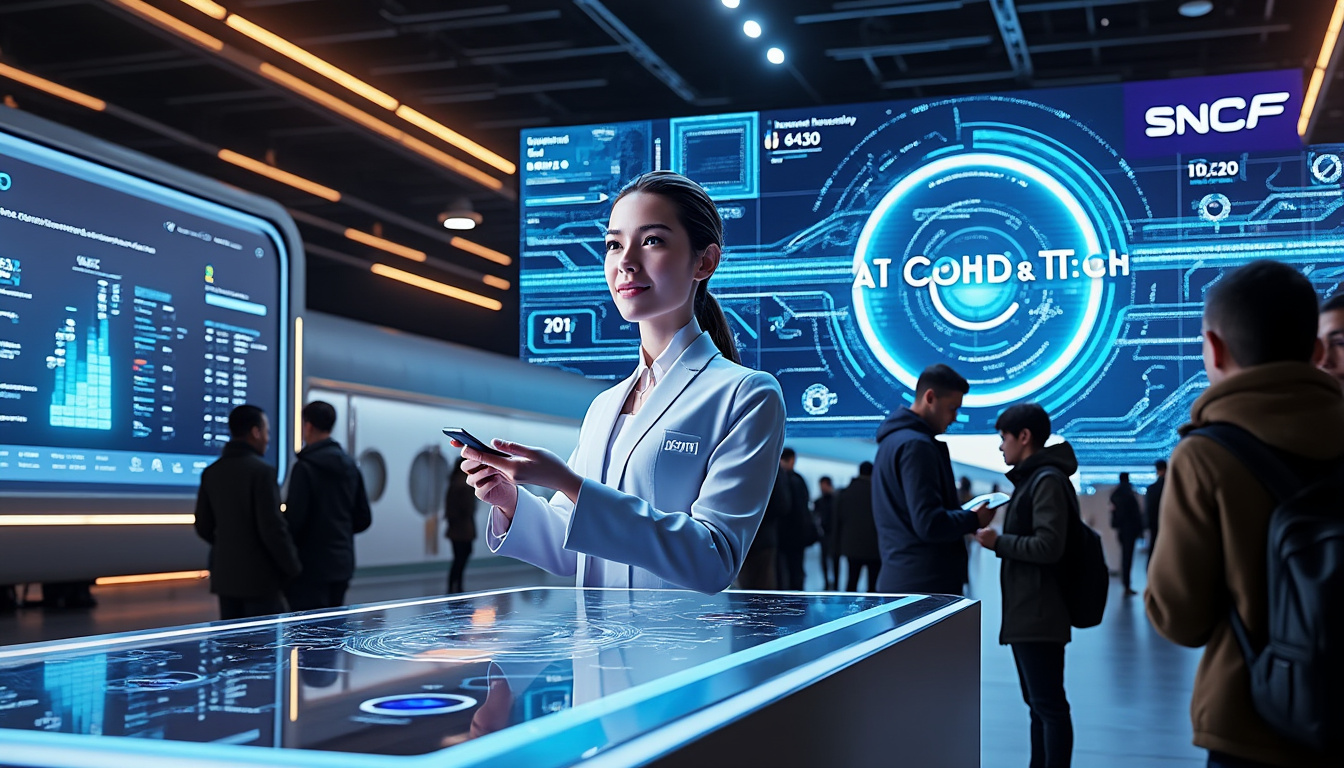
SNCF Connect & Tech: the rise of applications thanks to artificial intelligence
The transportation sector is undergoing a profound transformation, with artificial intelligence (AI) having a significant impact on how services are developed and managed. SNCF Connect & Tech, the digital subsidiary of SNCF Voyageurs, is at the forefront of this transformation, integrating advanced technology solutions to optimize its services. This article explores how the company is using AI, specifically AI agents such as GitHub Copilot, Windsurf, and Cursor, to automate its development processes while improving the customer experience through its applications.
Understanding SNCF Connect & Tech’s role in digital innovation
Created to address the digital challenges of the rail sector, SNCF Connect & Tech is positioning itself as a key player in innovation. With its team of more than 1,200 professionals spread across three sites in France, the company offers a variety of services ranging from e-commerce to the creation of digital solutions tailored to the needs of local authorities and the SNCF Group. An approach based on e-commerce and innovation
SNCF Connect & Tech’s activities are intrinsically linked to e-commerce, with platforms such as OUI.sncf and Voyages-sncf.com allowing users to easily book their train tickets. These platforms are designed to offer a seamless user experience, with intuitive interfaces and advanced search features, including comparison tools such as Trainline and Mappy.
The connection between these digital tools and AI agents has revealed considerable potential to transform the user experience. For example, the integration of AI into the SNCF app provides real-time information on train schedules and optimizes route planning. This system enables personalized travel recommendations, which increases customer loyalty and improves service efficiency. Integrating AI agents into software development Since early 2024, SNCF Connect & Tech has begun integrating AI agents to automate its development processes. AI agents, such as those based on large language models (LLM), offer advanced capabilities such as code auto-completion and technical documentation generation. Emmanuel Cordente, Technical Director of SNCF Connect & Tech, explains that these agents operate using APIs to collect the necessary data and personalize their responses. The choice to use tools such as GitHub Copilot, Windsurf, and Cursor is particularly strategic. These technologies facilitate the creation of configuration files essential for launching new projects and enable automated testing, making the development process faster and more efficient. Benefits for Developers and Users With the advent of these tools, developers can focus on higher-value tasks. This includes essential aspects such as technology choices, design, and application architecture. Automating repetitive tasks increases developer job satisfaction while improving the quality of delivered products. For end users, this technological evolution translates into an improved overall experience. Service accuracy, faster request processing, and better personalized offers are just a few examples of the benefits of this new approach. The impact of AI on mobility is undeniable and represents the future of transportation services. Concrete Applications of Artificial Intelligence in the Rail SectorThe applications of artificial intelligence are diverse, and their impact on the efficiency of public transportation is considerable. SNCF Connect & Tech doesn’t just use traditional tools; it explores innovative solutions to meet the diverse needs of the rail sector.
Optimizing Operations Through AI
AI agents are designed to interact with the software development ecosystem, making each phase of the creation process smoother. These tools gather the necessary information to ensure smooth solution deployment. This includes processing user requirements, adjusting application functionality, and managing feedback. The ability of these agents to gather and synthesize information is crucial for implementing development processes. For example, customer satisfaction data can be analyzed to adjust the services offered on apps such as BlaBlaCar or RailEurope, thus improving the quality of the offering.
Personalization and accessibility of services
AI-powered technologies enable SNCF Connect & Tech to personalize the services offered to users. For example, using the SNCF App, users can receive travel recommendations tailored to their preferences and booking history, thus optimizing the user experience.
A key aspect of this personalization lies in the accessibility of services. Efforts are being made to ensure that all populations can benefit from these innovations, which significantly expands the scope of rail and mobility services. With this in mind, initiatives are being implemented to improve access to information and services through modern digital platforms.
Collaboration with other companies and sustainable development
Collaboration with other technology companies plays a fundamental role in SNCF Connect & Tech’s mission. By partnering with players such as DigitalSNCF and other startups, SNCF leverages the synergies created to develop innovations that meet user expectations while promoting sustainability. These collaborations also focus on the research and development of energy-efficient and environmentally friendly solutions. For example, integrated reservation systems, which use optimized algorithms, help reduce the carbon footprint of the transport sector.
Challenges and Future Opportunities for SNCF Connect & Tech
As SNCF Connect & Tech continues to explore the opportunities offered by artificial intelligence, several challenges arise. Rapidly evolving technology and user expectations require agility in the development and integration of solutions.
Managing Rapidly Changing Technologies
The speed at which technological innovations emerge requires companies to constantly adapt. SNCF Connect & Tech must encourage its developers to continually train on new technologies. This includes learning best practices regarding the use of AI agents, but also understanding the impact of these technologies on the customer experience.
Furthermore, the incorporation of AI into solution development raises security and data privacy issues. Companies in the sector must therefore ensure that their systems comply with data protection regulations, while optimizing the collection and use of information. Rising Customer Expectations Today’s users are increasingly demanding in terms of service quality and personalization. To remain competitive, SNCF Connect & Tech must not only meet these expectations but also anticipate future needs. The services offered on the SNCF App must therefore continue to evolve to ensure they remain relevant and practical for all travelers. This customer-centric approach enables the development of innovative features that make travel simpler and more enjoyable. This could include combined travel offers integrating partners like Babou’s Tech, creating a seamless and integrated travel experience. A sustainable future through technologySustainability is a key concern for many companies, including SNCF Connect & Tech. Initiatives to reduce the environmental impact of transport are a priority. For example, using AI to optimize train schedules can reduce energy consumption.
The integration of AI not only improves current services but also allows for long-term solutions for the future. The emergence of concepts such as multimodal transport, where different modes of transport are integrated, raises interesting questions about transport planning and management in the years to come.
Conclusion: A Sector in the midst of transformation
As the transport sector rapidly evolves under the influence of technology, SNCF Connect & Tech is establishing itself as a leader in innovation. Integrating AI agents into its processes not only optimizes software development but also improves the end-user experience. The challenges associated with this digital revolution are numerous, but the future prospects remain promising.
Trends to watch in digital railway development
SNCF Connect & Tech continues to monitor digital trends and adapt its strategies to stay at the forefront of innovation. For example, the rise of networking and connectivity technologies has opened up new avenues for providing real-time traffic information to passengers. The opportunities offered by AI and technological advances should enable SNCF Connect & Tech to continue transforming the transportation landscape in France and beyond.
Catégories : Non classé
Tags : apps, artificial intelligence, connect, sncf, tech