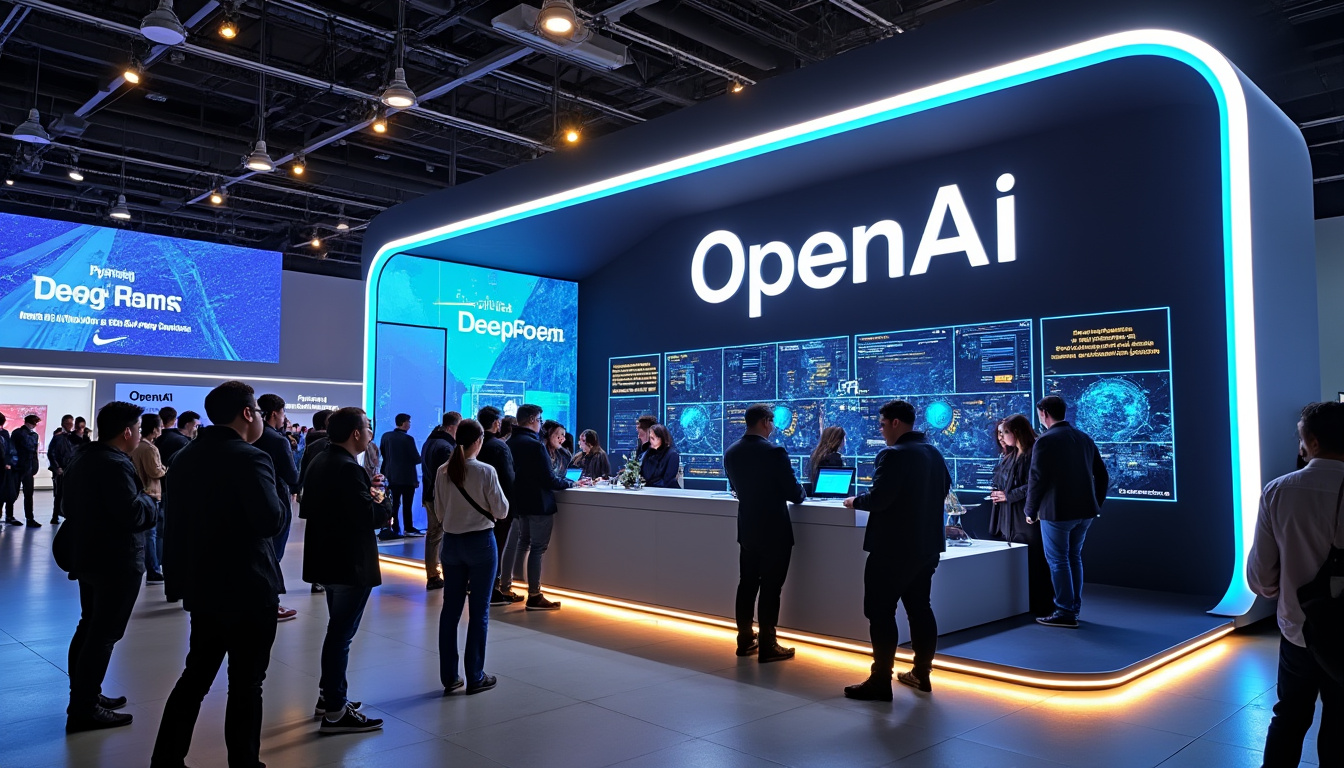
OpenAI unveils new ChatGPT tool to compete with Deepseek
Competition in the field of artificial intelligence is becoming increasingly intense. OpenAI, recognized for its innovative capabilities, has unveiled a new tool for ChatGPT, responding directly to the rise of Chinese startup Deepseek. This revolutionary tool, dubbed “Deep Seek,” promises to significantly improve the efficiency of AI analyses. In a world where fast and accurate results are crucial, OpenAI seeks to maintain its leadership position in the face of growing competition. This new addition allows ChatGPT to retrieve, analyze, and synthesize information from a vast array of online sources in record time. Moreover, OpenAI management is quick to point out that, despite Deepseek’s potential, their new feature sets them apart thanks to its unprecedented accuracy and speed.
Introducing the “Deep Seek” Tool
The “Deep Seek” feature was designed to optimize ChatGPT’s performance. This new tool allows complex analyses to be performed in minutes, a process that would take a human consultant several hours. Thanks to a series of advanced algorithms and cutting-edge technology, OpenAI is able to provide users with detailed and relevant reports.
Key Features of the Tool
This functionality is based on several essential elements:
- Multimodal Search : Ability to explore hundreds of sources in record time.
- Information Synthesis : Creation of clear and concise summaries based on complex data.
- Personalized Recommendations : Suggestions tailored to specific user needs, as demonstrated during a ski equipment demonstration in Japan.
- Intuitive Interface : A design designed to optimize the user experience and facilitate access to results.
Tool Use Examples
During a demonstration, OpenAI highlighted how this tool can be used in a variety of contexts. For example, to find travel recommendations, ChatGPT can deploy its in-depth search to advise travelers on the best destinations or services in the blink of an eye.
Application sectors range from education to finance to marketing. Comprehensive research on market trends, for example, can now be carried out using this efficient tool, which will quickly surpass traditional human labor.
Comparative Analysis of OpenAI and DeepSeek
The rise of the startup DeepSeek represents a real challenge for OpenAI. Although the latter is perceived as the market leader, it must now justify its approaches in the face of DeepSeek’s speed and efficiency. Sam Altman, CEO of OpenAI, has admitted at several conferences that DeepSeek isn’t really innovative, but its efficiency and attractive business model challenge OpenAI’s dominance. Deepseek’s approach focuses on: Reduced costs : Thanks to an optimized infrastructure, access to AI becomes more democratic.
- Ease of use : Deepseek’s user interface is designed to be accessible, even for those who are not tech-savvy.
- Multicultural capabilities : Deepseek targets different markets by adapting its solutions to different languages and cultures.
- Competitive strengths Deepseek’s strengths are undeniable. The startup is leveraging a technology that successfully captures the needs of a population increasingly demanding flexibility. When searching for information, for example, Deepseek’s tool is incredibly responsive and relevant. By discovering equivalence in the depth of searches offered by these two AIs, consumers will be able to choose based on their own needs and the added value each platform offers.
Implications of this competition for the future of AI
This growing competition between OpenAI and Deepseek raises important questions for the future of AI. Market players will have to rethink their strategies to remain relevant. Future investments will likely focus on optimizing algorithms and improving the user experience.
Impact on users
Recent advances in artificial intelligence offer users new solutions they would not have previously imagined. Thanks to the fierce competition between OpenAI and Deepseek, users will benefit from:
Increased productivity: AI tools, such as those offered by OpenAI and Deepseek, enable tasks to be completed faster.
Improved access to information: Sophisticated search capabilities ensure users receive accurate and relevant answers.
- Lower costs: The development of cost-effective solutions by new startups is pushing AI giants to adjust their prices. Future trends in the field of AI
- Technological innovation trends in the AI sector are increasingly focusing on autonomous and integrated models, enabling synergy between different hardware and software. Considering increasingly adaptive and contextual AI solutions will also be a key focus of research. This will make work smoother and more efficient for companies looking to make the most of their human resources. Strategic Projects and Collaborations
- Strategic collaboration appears to be key for OpenAI in the face of competition from Deepseek. Sam Altman has already met with Japanese dignitaries to discuss significant investments in AI, a project known as “Stargate.” The challenge is to create infrastructure capable of supporting future innovation. Future Challenges for OpenAI
For OpenAI, these discussions aren’t just about expansion. They also involve developing dedicated AI hardware prototypes that support the various applications of ChatGPT and other tools. By collaborating with major industry figures like Jony Ive, OpenAI hopes to make significant advances in the usability and effectiveness of its offerings.
Challenges to Overcome Against Deepseek
OpenAI will face several challenges to remain competitive. Refining its algorithms, anticipating new trends, and optimizing its infrastructure will be crucial. Factors such as data security and the ethical responsibility of algorithmic decisions will become paramount. Ensuring that their technologies are not only effective, but also ethical, will be a fundamental element for the future.
Conclusion of the Competition Between AI Giants