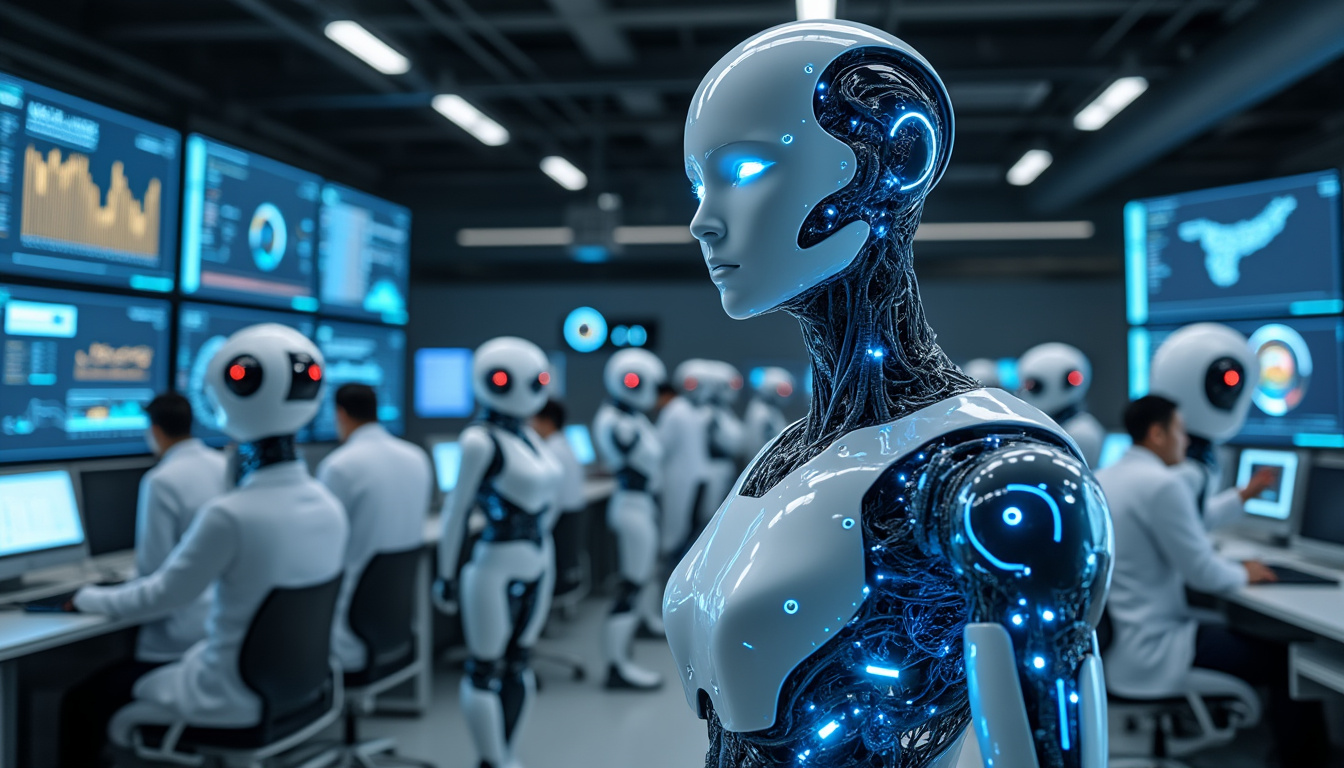
Manus: The Chinese AI agent that could surpass OpenAI
Manus, developed by the startup Monica, represents a significant advancement in the field of artificial intelligence in China. Unlike traditional chatbots, Manus presents itself as a general-purpose AI agent capable of performing complex tasks autonomously. While players such as OpenAI’s ChatGPT continue to dominate the sector, Manus claims to have surpassed these models, which were designed to respond to queries rather than act proactively. Yichao “Peak” Ji, co-founder of the startup, expresses the vision behind Manus: “It connects your ideas to concrete actions.” Despite its potential, this AI faces criticism regarding its transparency and certain technical limitations.
Manus’s specific features: a revolutionary innovation
Manus stands out for its ability to handle varied and complicated tasks, ranging from travel planning to business data analysis. This behavior raises questions about the future of work and the implications of such AI for various sectors. As companies like Alibaba, Tencent, and Baidu invest heavily in AI, Manus is positioning itself in an innovative niche that could shape the way we interact with technology.
An autonomous agent: how Manus stands out
Unlike other AIs like Claude or ChatGPT, which are limited to responding to specific queries, Manus acts proactively. This relies on a complex internal model that allows tasks to be delegated to different sub-agents. This approach is similar to that of a small business, where language models collaborate to achieve a common goal. The tasks it can handle include:
- Detailed planning of personalized trips
- In-depth analysis of business data
- Support for real estate projects
Manus’s ability to adapt to users’ specific needs makes it all the more attractive in a world of constant technological evolution. However, it is not without its flaws.
Manus’s Performance Against the Competition
Monica’s tests revealed that Manus could outperform well-known systems such as OpenAI’s Deep Research. In benchmarks called GAIA, this AI demonstrates its superiority, particularly in handling complex problems. These results highlight the innovative capacity of China and its companies. With models such as Huawei and Alibaba competing, the progress of a startup like Monica becomes even more notable.
A Rapidly Evolving Technology
The Manus system relies on advanced technologies, combining models such as Anthropic’s Claude 3.5 Sonnet and Alibaba’s Qwen. However, the transparency of its operation remains a concern. Experts, such as Bradford Levy, warn that the collected data could be transmitted to Chinese authorities, which could pose ethical concerns for users. Issues of trust and data security then become priorities for developers.
Manus Limitations and Criticisms
Despite its promises, Manus faces criticism regarding its reliability. Some users report bugs, such as interruptions during complex tasks, and “infinite loops” where the AI fails to complete its tasks. These events pose challenges for the startup Monica, which must now work on stabilizing its technology.
| Problem | Description |
|---|---|
| Runtime Bugs | The need to restart running tasks due to crashes |
| Infinite Loops | Repeated Actions with No Results or Progress |
| Ethical Concerns | Sharing Information with the Chinese Government |
Data Trust and Transparency
Manus’s data management raises concerns. While users could benefit from a wide range of services offered by AI, fears of exploitation of their personal information could hamper its adoption. Transparency regarding how data is processed is becoming critical to establishing trust. Large companies like JD.com and NetEase could also benefit from this momentum by assuring users that their personal data is secure.
The Future of Manus and AI in China
With the rise of autonomous agents like Manus, AI in China is at a crossroads. Manus represents a significant advancement that could redefine our perception of artificial intelligence. By integrating the ability to act rather than simply respond, this AI could transform traditional paradigms. Major players like Sogou, Tencent, and Huawei must also take this advancement into account to remain competitive. Long-Term Outlook for AI in China
The race for technological innovation in the field of AI is far from over. While OpenAI and other American giants maintain a privileged position, the rise of Manus could disrupt this balance. It will be essential to monitor how Manus evolves, particularly in terms of reliability, data security, and integration into users’ daily lives. Companies must play an active role in ensuring that AI remains a tool for humanity, rather than a source of concern.
Catégories : Non classé
Tags : AI agent, artificial intelligence, chinese ai, manus, surpass openai