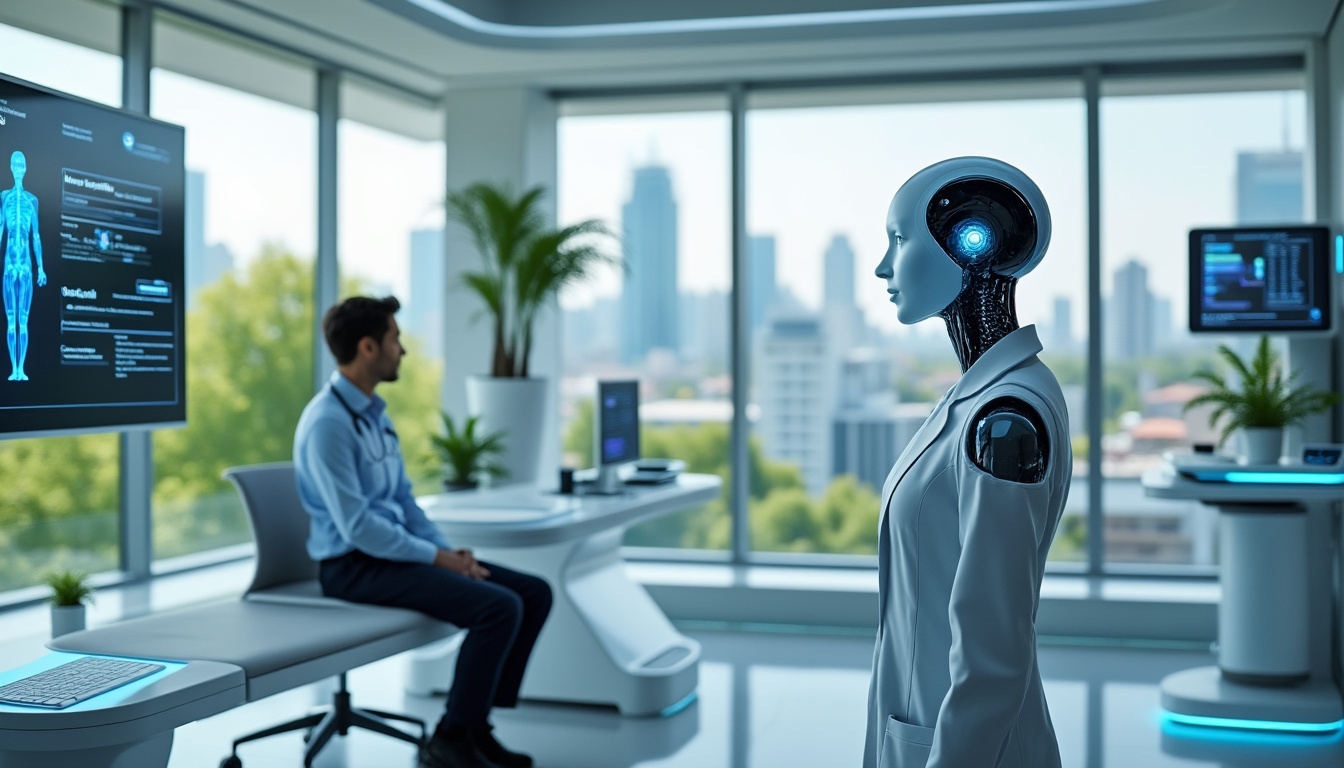
Imagine a future where your doctor is an artificial intelligence developed by Apple
As 2025 approaches, a real upheaval is brewing in the healthcare sector. Apple, the iconic technology giant, is working to develop a revolutionary medical assistant based on artificial intelligence, dubbed “Project Mulberry” or “Health+.” This ambitious project aims to transform the Health app into a virtual doctor capable of analyzing and prescribing tailored recommendations. This article will explore the implications, technical and ethical challenges, and the future of digital health through this unprecedented initiative from Apple.
Apple’s Challenge: A Virtual Doctor at the Service of Healthcare
This is not Apple’s first venture into the healthcare field. However, this new project marks a strategic shift that aims to offer users an enriched and personalized experience. By developing an autonomous AI agent, Apple seeks to replicate some of the functions of a human doctor, a challenge that could redefine the relationship between patients and healthcare professionals. What makes Project Mulberry unique? In a market where many players are trying to establish themselves, this project stands out for its innovative approach. Unlike a simple AI assistant, Project Mulberry aims to become a true intelligent agent. Here are some of its key features: Individual data analysis: The agent will extract medical information from Apple Watches and iPhones (heart rate, sleep, physical activity level).
Personalized recommendations: Once a health profile is established, the AI will be able to suggest appropriate behavioral changes.
Innovative nutritional monitoring: Unlike the current app, tracking of eating habits will be introduced in this updated version. How could this technology revolutionize the healthcare sector?The implications of this technological advancement are vast. By providing detailed and constant analysis of health data, users could benefit from real-time medical monitoring, a true leap forward for preventive health. Feature Description Potential ImpactReal-time Analysis
- Use of Apple Watch and iPhone Sensors Proactive Awareness of Health Issues Personalized Interactions Tailored Profile-Based Recommendations Improved User Engagement
- Nutritional Monitoring
- Evaluation of Eating Habits
Prevention of Diet-Related Diseases
Technical and Ethical Challenges of the Apple Project
| Despite the enthusiasm generated by Project Mulberry, several challenges must be addressed. The reliability of medical information generated by AI raises crucial questions, particularly regarding the veracity of the data and the potential impact of errors. Risks Associated with AI Errors: Major Challenges | Technology platforms, including Apple, which has already experienced errors in its Apple Intelligence system, face serious risks. In the healthcare field, these errors could lead to serious consequences, potentially compromising users’ lives. Here are some key risks: | Returning Incorrect Information: A poor analysis could lead a user to ignore serious symptoms. |
|---|---|---|
| Data Privacy: The collection of sensitive data requires robust security protocols. | Lack of Regulation: The legal framework surrounding AI in healthcare is not yet clearly established, creating a gray area for users and businesses. | How does Apple plan to overcome these challenges? |
| To mitigate these risks, Apple has assembled a multidisciplinary team of medical experts, ranging from nutritionists to cardiologists, to ensure the accuracy of its recommendations. These professionals will also develop explanatory videos, allowing users to better understand their health issues and how to address them. | Area of Expertise | Role |
| Objective | Mental Health | Appropriate Advice and Actions |
Raising Awareness of Mental Well-being
Nutrition
Monitoring Eating Habits
Improving General Health Physical Therapy and RehabilitationPosture Correction
- Preventing Inactivity-Related Injuries
- Apple’s Timeline and Strategic Focus on Digital Health
- The project is gaining momentum, and Apple’s leadership has set 2025 as the target year for the launch of its medical aid, potentially during the iOS 19.4 update. This coincides with a shift in efforts around digital health in a rapidly expanding sector. A Necessary Repositioning in the Digital Health Galaxy
Apple seems determined to reinvent itself in the face of growing competition from companies like Google and Microsoft, which are investing heavily in generative AI. The stakes are high: not only is it about improving the user experience in preventive medicine, but also maintaining the company’s reputation as a reliable provider of technological solutions.
Strengthening its healthcare ecosystem: Integrating connected devices to deliver a consistent user experience.
| Increasing its impact on prevention: Encouraging proactive health behaviors. | Creating an image as a trusted virtual doctor: A marketing challenge as a MediTech. | How does Apple plan to maintain its brand image? |
|---|---|---|
| Given the ethical issues surrounding a virtual doctor, Apple is considering recruiting a well-known medical figure to represent the service. This would give a public face to this technology, strengthening user trust while positioning Apple as a pioneer in the integration of AI in healthcare. | Job Description | Requirements |
| Objective | User Behavior | User Feedback Analysis |
| Improving the Interface and Functionality | Developing Educational Content | Creating Videos and Articles |
Educating Users About Their Health
Testing Security Systems Assessing IT RisksEnsuring the Protection of Personal Data
The Impact of a Virtual Doctor on Preventive Healthcare
Apple’s project raises enormous hopes for the future of medical consultations, particularly in terms of prevention. As tensions mount around traditional healthcare structures, the possibility of a virtual doctor could offer a viable alternative, particularly during a pandemic or health crisis. A Future of Reimagined Medical Consultations The capabilities of a virtual doctor will not be limited to diagnoses. They will also have the power to educate users about their health behaviors, including: Proactive advice on diet and exercise. Regular health status analyses via automated alerts.Personalized recommendations for a balanced life.
- The Struggle Faced with Less Reliable Alternatives
- The spread of health information on social media, particularly on platforms like TikTok, highlights the importance of relying on reliable sources. The challenges posed by health misinformation and the rise of figures like SmartyDocteur
- , require a return to trust and reliability in healthcare. PlatformContent Type
Potential Risk
| Generalized Health Advice | Treatment Misinformation | TikTok |
|---|---|---|
| Viral Health Videos | Risks of Unverified Information | |
| Closed Health Communities | Doubts About the Legitimacy of Advice | |
Catégories : Non classé
Tags : apple, artificial intelligence, doctor, future, health