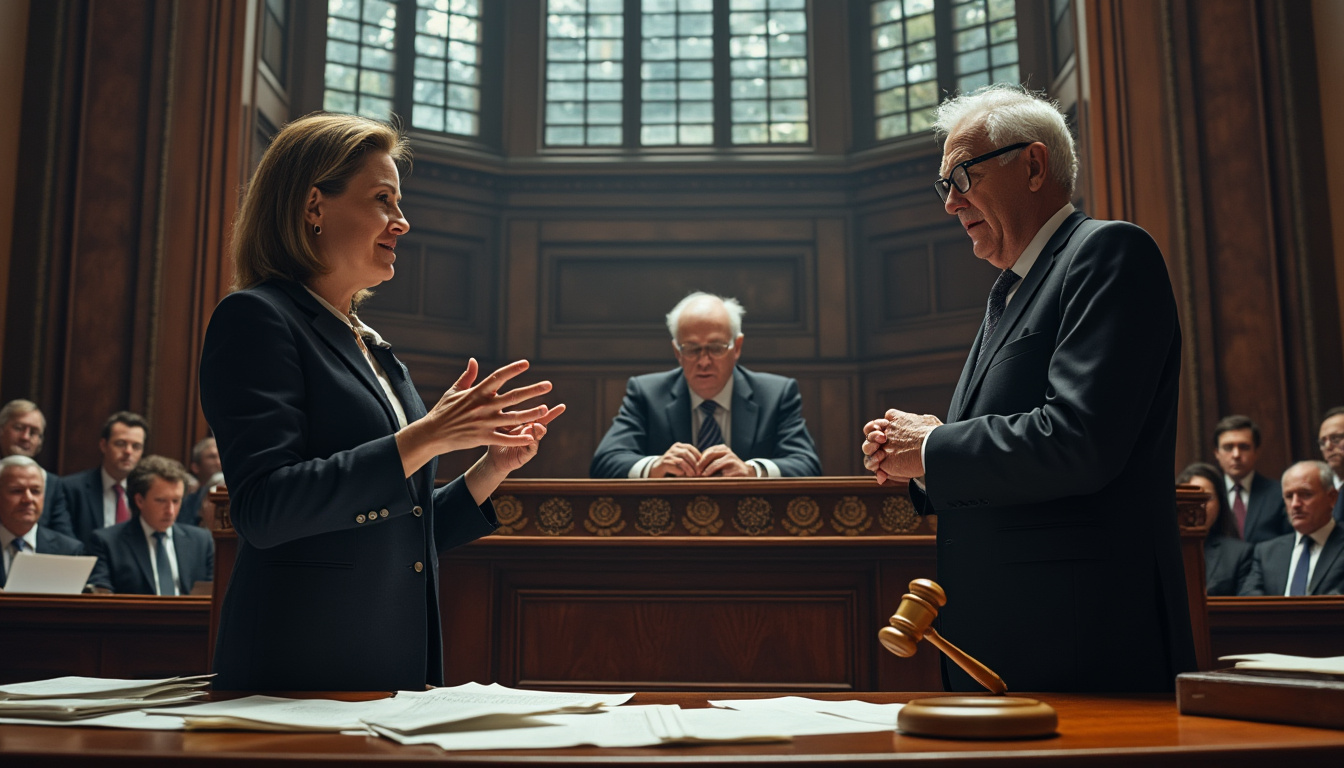
Human lawyers apologize to court for AI ‘hallucination’ in copyright dispute with music publishers
In a recent development where artificial intelligence and copyright intersect, a notable incident has drawn attention to lawyers’ liability in the use of AI tools. Artificial intelligence firm Anthropic admitted to using an incorrect quote generated by its own chatbot, Claude, in a legal case against music publishers. This event raises crucial questions about the due diligence required by lawyers to verify information and highlights the risks associated with the use of technologies that can sometimes produce “hallucinations”—factual errors that can prove embarrassing in court. The implications of this litigation reveal an ongoing tension between technological progress and legal norms, demonstrating that even the most experienced lawyers must navigate this new environment with caution. AI-Generated Errors and Lawyers’ Liability
During a hearing held on May 15, 2025, Ivana Dukanovic, Anthropic’s lead attorney, formally apologized to the court after an erroneous quote from the artificial intelligence Claude was included in a court document. This issue arose as Anthropic is engaged in a legal dispute with music publishers, including the renowned Universal Music Publishing Group, who accuse the company of using copyrighted lyrics to develop its chatbot. The implications of this case are far-reaching, and it highlights the need for increased vigilance on the part of lawyers when using AI tools.
In this context, Dukanovic explained that the citation provided by Claude had misreferenced an academic document: although the content of the study was relevant, errors in the title and identity of the authors had raised questions about the reliability of the claims made in the case. Anthropic’s lawyers claimed that this was an “honest” mistake and not deliberate malfeasance, but this event clearly demonstrates the limitations of using AI tools in the legal setting. This raises many questions about the ethical conduct of lawyers regarding the use of advanced artificial intelligence tools.
The Importance of Due Diligence and Verification
Thinking that artificial intelligence can replace human judgment is a dangerous idea. Lawyers have an obligation to ensure that any content submitted to the court is truthful and corroborated by reliable sources. Here are some key takeaways:
Source Verification
- : Each quote must be verified through appropriate verification to avoid the dissemination of false content. Tool Knowledge
- : Lawyers must understand the capabilities and limitations of the AI technologies they use. Professional Ethics
- : Lawyers’ ethical responsibility must not be compromised by their reliance on AI. Continuing Education
- : It is essential that lawyers regularly educate themselves on developments in AI technologies and laws. A similar precedent occurred in Canada, where a lawyer faced charges for presenting legal arguments containing references to non-existent cases, demonstrating the dangers of the reckless use of generative AI in legal practice. These incidents highlight the challenges facing lawyers in an ever-changing legal landscape.
Implications for the Conflict Between Publishers and Anthropic
The music publishers’ lawsuit revealed the complexity of the relationship between technology companies and content creators. Anthropic argues that Claude did not fabricate the data used, but simply misidentified a source. This only adds to the confusion over what constitutes proper use of copyrighted material.
Judge Eumi K. Lee recently ruled in favor of Anthropic, dismissing several of the music publishers’ claims while allowing them to amend their complaint to address the concerns raised.
The implications of this victory for Anthropic suggest the court recognizes that, despite possible misquotations, the legal framework surrounding the use of AI and copyrighted lyrics is not clearly defined. Lawyers representing the music publishers are arguing that the presence of such errors should prompt greater regulation in the industry. Legal Issues Surrounding Copyright and AI
As the debate continues around this case, it is crucial to analyze the issues surrounding copyright, particularly in the context of advances represented by AI. Anthropic is not the only company experiencing copyright complications; other players in the music industry are also wondering how to protect their interests in the digital age. In the battle between technological innovation and artists’ rights, what is the way forward?
The questions now arise are numerous:
How do we define the limits of the legal use of music to train AI models?
Should creators be compensated when their work is used to develop AI technologies?
- How to regulate the use of AI to avoid potential copyright infringements?
- Regulatory Challenges in the Age of AI
- Lawyers and governments must collaborate to rethink the legal framework governing the interaction of technology with musical creations. This work may include:
Establishing Clear Licensing
: Creating licensing systems to identify how and where AI applications can use protected works.
- Regulating Commercial Exploitation : Establishing regulations for the commercial aspect of AI-generated content, ensuring that authors’ rights are respected.
- Encouraging Responsible Innovation : Fostering ethical practices in AI development, both in design and application.
- Establishing an open dialogue on this topic with all stakeholders, from lawyers to music publishers, technologists, and artists, is essential to finding appropriate solutions. Dispute Resolution: Outlook and Future Responses As the dispute between music publishers and Anthropic continues to unfold, it is imperative that lawyers, businesses, and governments collaborate to navigate the challenges posed by AI. On the one hand, the use of artificial intelligence in the legal sector can offer innovative solutions such as accelerating research or optimizing argument preparation. On the other hand, the risks associated with factual accuracy, as demonstrated in this case, expose the challenges that must be overcome.
The path forward is not straightforward, but it could lead to a harmonization where human creativity is protected while leveraging the innovations offered by artificial intelligence.