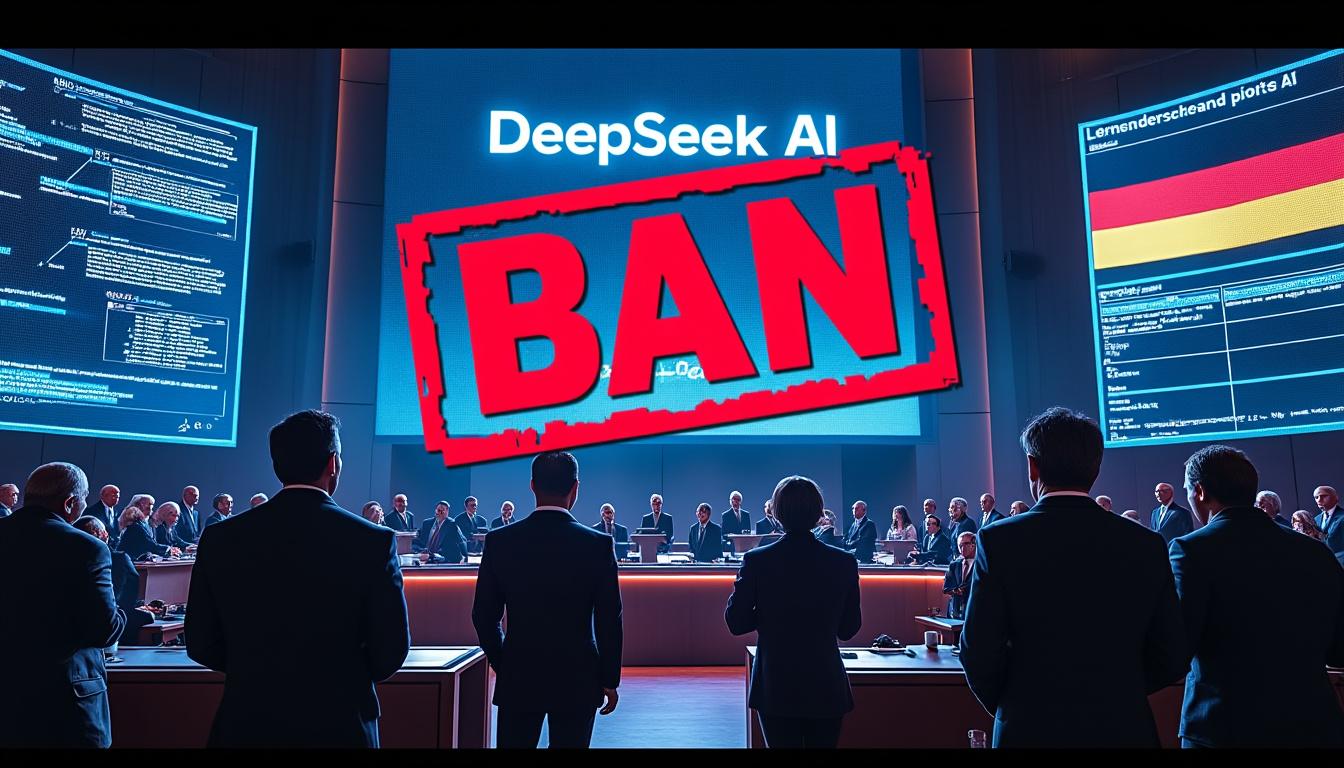
Germany decides to ban artificial intelligence app DeepSeek
In a constantly evolving technological climate, the use of artificial intelligence (AI) sparks heated debate. In May 2025, Germany, through its Data Protection Commissioner, Meike Kamp, made a historic decision by banning the DeepSeek app, developed by a Chinese company. This measure aims to protect users’ personal data in a context of increased regulation surrounding emerging technologies. The app is thus under fire, fueling a debate on digital health and the security of personal data. The German decision: a step towards data protection On May 6, 2025, Germany took the lead by deciding to ban DeepSeek on its territory. This decision was not insignificant and is part of a very specific regulatory framework. Indeed, Meike Kamp has asked Apple and Google to remove the app from their stores, believing that its operation violates the GDPR due to an illegal transfer of data to China. This context raises questions about companies’ responsibilities regarding the security of user data. Reasons behind the ban The DeepSeek ban is based on several critical factors, which deserve in-depth examination: Regulatory violation: Detected as a breach of the General Data Protection Regulation, the transfer of users’ personal data has alarmed authorities.
Public trust
: In a world where technology is ubiquitous, user trust is crucial. The use of a suspicious app can undermine this trust. Cybersecurity risks : With its links to Chinese companies, DeepSeek has raised concerns about the risks of espionage and data leaks. These points strengthen the case for better regulation of applications using artificial intelligence, especially those involving international transfers of sensitive data. Impact of the Ban on the App Market
The DeepSeek ban has implications not only for the company itself, but also for the entire artificial intelligence market. Indeed, app makers must now adhere to stricter standards to ensure the security of their users’ data.
Impact of the Ban
- Description Loss of Trust
- Users may be wary of new AI applications, fearing similar breaches. Increased Regulation
- Companies will need to strengthen security measures to meet regulatory requirements. Market Opportunities
Market participants that comply with standards could benefit from an advantageous position over those that do not. By taking this decision, Germany hopes to encourage sustainable and responsible innovation, promoting applications that comply with safety standards. International Reactions to the Ban Naturally, the German ban has provoked mixed reactions on the international scene. Some countries have expressed support for the German decision, while others emphasize the importance of open dialogue with technology-producing countries, particularly China.
Support
: Several European countries have applauded Germany for taking a strong stance on data protection.
| Criticism | : Others argue that such bans could hamper innovation and international collaboration. |
|---|---|
| Necessary Dialogue | : Many agree that a space for dialogue is necessary to find common solutions to the challenges of AI. In short, this ban raises questions not only about the future of DeepSeek, but also about the role of governments in regulating new technologies. Future Challenges for AI in Europe |
| In the era of new technologies, Europe finds itself at a crossroads. The rules established for applications like DeepSeek could become models for other countries. The technology is evolving rapidly, and legislators must adapt to keep up. | Future Regulatory Challenges |
| Here are some of the challenges Europe will face when regulating AI applications: | Balancing Innovation and Safety |
: Authorities must find a middle ground between fostering innovation and ensuring the digital health of citizens. Harmonizing Approaches : Uniform rules across Europe may be necessary to avoid disparate regulations between countries. Cyber Threat Preparedness: Governments and businesses must equip themselves to address the diverse risks posed by the use of advanced technologies. In the future, it will be crucial to implement robust systems to monitor the use of artificial intelligence while providing companies with space to innovate and grow.Conclusion on the DeepSeek Ban
The DeepSeek ban in Germany is not just a one-off measure. It is emblematic of the contemporary challenges related to the use of artificial intelligence. With this decision, Germany is taking a bold step towards rigorous regulation that could influence other nations to follow suit. Technology companies must now navigate an increasingly complex environment, where health, security, and personal data issues are at stake.
overlap. The future of artificial intelligence in Europe will depend on the ability of all stakeholders to strike the right balance between innovation and responsibility. This challenge is not only timely but also crucial to ensuring user trust.
Catégories : News & AI
Tags : application, artificial intelligence, deepseek, Germany, prohibition