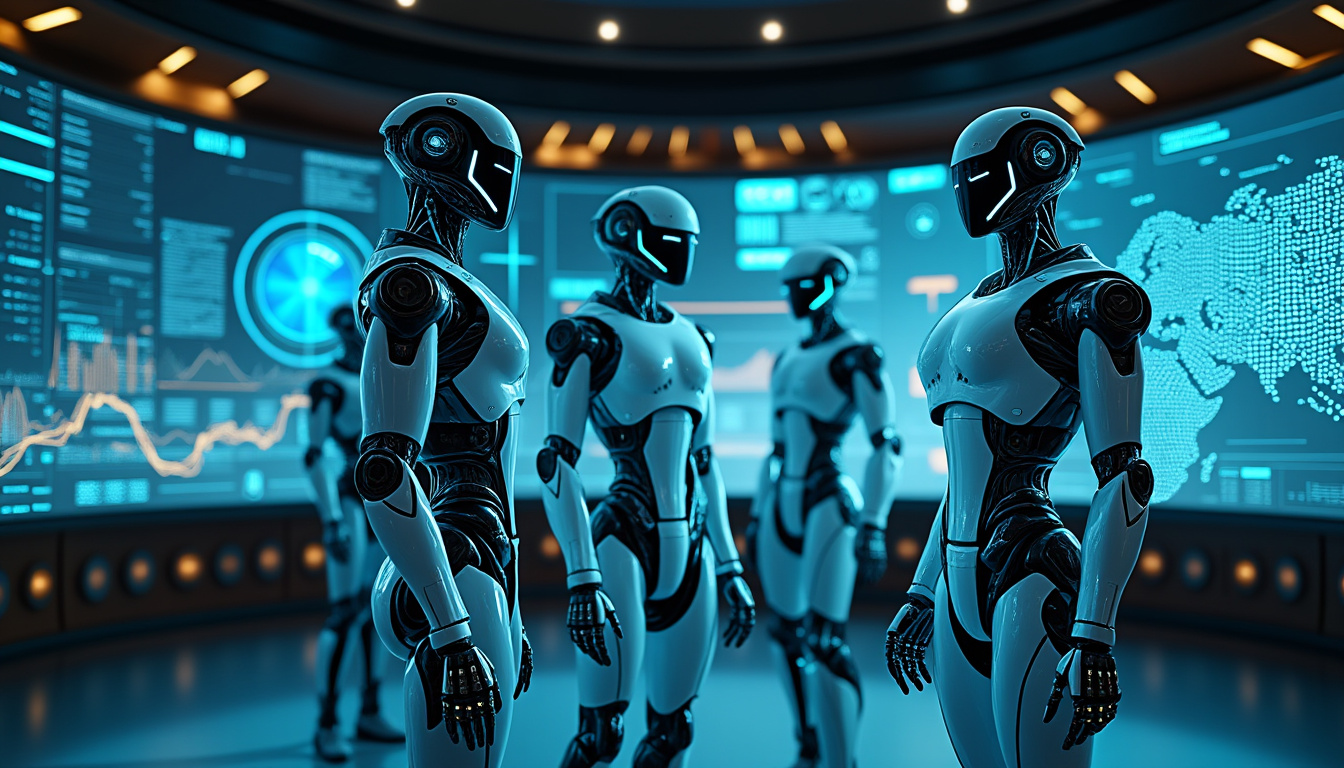
Discover autonomous artificial intelligence agents, capable of making decisions without human intervention
The artificial intelligence (AI) revolution continues to surprise and evolve, marking a crucial milestone with the emergence of autonomous artificial intelligence agents. These advanced virtual entities are capable of making decisions, acting, and adapting to their environment without the need for human intervention. This new technological horizon could transform many aspects of our daily lives more profoundly than the first AI systems. What are the implications of this meteoric rise, and how are these agents reshaping our conception of work and society? Let’s explore this fascinating phenomenon together.
Understanding Autonomous Agents: A Clear Definition
Autonomous artificial intelligence agents represent a significant evolution from traditional systems. Unlike older AI systems that required precise instructions, these agents have the ability to interact with their environment in real time. They perceive data, reason about their context, and act to achieve independently defined goals without direct human intervention. How Autonomous Agents Work Autonomous agents rely on advanced technologies such as: Reinforced Machine Learning
: Learning from large datasets to improve over time.
Natural Language Processing
- : Ability to understand and respond to human speech fluently. Computer Vision
- : Image and video interpretation for enhanced interaction with the physical world. Multi-agent Capabilities
- : Collaboration between multiple agents, enabling more complex tasks without human supervision. These advanced technologies enable agents to quickly learn from their experiences and adapt, enhancing their effectiveness and relevance in diverse contexts.
- Revolutionary Applications in the Modern World The applications of autonomous artificial intelligence agents are already beginning to materialize in many fields:
Logistics
: Autonomous robots managing entire warehouses, thus optimizing supply chains.
Finance
- : Adaptive investment algorithms making real-time decisions without immediate human intervention. Healthcare
- : Virtual medical assistants monitoring patients and initiating emergency protocols without constant consultation. Cybersecurity
- : Defensive AI capable of detecting and neutralizing cyber threats in real time. These examples illustrate the impressive potential of autonomous agents and their ability to significantly improve services and increase productivity, but this potential also comes with significant challenges.
- The Undeniable Advantages of Autonomous Agents Autonomous agents offer considerable benefits that could redefine the way we work and interact. Here are some of the main benefits:
Benefit
Impact
Increased productivity
| Processes become more fluid by eliminating human decision-making delays. | Enhanced resilience |
|---|---|
| Instant response to unforeseen events, particularly in critical situations. | Cognitive energy savings |
| Humans can focus on creative or strategic tasks by delegating complex responsibilities. | In a context where professional demands are rapidly evolving, having entities capable of acting autonomously becomes a major asset for efficiency and innovation. |
| A future shaped by independent intelligence | Looking to the future, we are approaching an era where autonomous AI agents could play a role as ubiquitous as that of smartphones today. From finance to medicine, from businesses to public services, their influence could be phenomenal. But this will also raise crucial questions regarding the control and accountability of the decisions made by these intelligent agents. |
The Ethical and Technical Challenges of Autonomous Agents
Despite the many benefits autonomous agents bring, they pose ethical and technical challenges that deserve consideration. Here are some major concerns.
Responsibility and Ethics
A central question remains: who is responsible if an autonomous agent makes a regrettable decision with harmful consequences? This ethical dilemma is further complicated by the lack of transparency in the AI decision-making process. How can we ensure that these decisions are understandable and explainable to humans?
Who bears responsibility for the agent’s behavior?
How can we create ethical standards for the use of these technologies? How to evaluate autonomous decisions in critical situations?
Security in the face of threats
- Another major challenge concerns security. With increasing reliance on autonomous agents, the risk of malicious attacks increases. Systems can be manipulated or hacked, leading to potentially catastrophic consequences.
- Challenge
- Potential Solutions
Accountability
Development of laws and regulations adapted to AI technology.
| Transparency | Implementation of explanatory systems for analyzing agent decisions. |
|---|---|
| Security | Strengthening security protocols, ongoing user training, and constant system monitoring. |
| The regulation and governance of these autonomous agents must evolve at the same speed as technology to prevent potential abuses. | Impacts of Autonomous Intelligence on Society |
| The implications of autonomous agents go far beyond simple technological innovations. They are also shaping our society and the global economy. This raises questions about how we work, interact, and engage in our communities. | Redefining Work |
As autonomous agents take on repetitive and complex tasks, many are wondering what the future of traditional jobs will be. Work models are evolving rapidly, and this change is leading to adjustments in how professionals interact with these digital entities. Ultimately, this could profoundly change the very structure of our teams within the company.
Replacement of certain tasks by autonomous agents.
Emergence of new positions focused on managing and collaborating with these agents.
Development of specific skills to work with AI technologies. Social Impact
The increased presence of autonomous artificial intelligence agents could also create significant societal challenges. The digital divide could widen, leaving certain sectors of the population completely outside of this transformation. The issue of fair treatment and unequal access to these technologies therefore emerges as a major challenge.
- All of this requires essential reflection on how we will integrate these technologies into our lives. It is imperative that decision-makers consider the social implications of these technological advances.
- Towards a harmonious future with autonomous agents
- The prospects offered by autonomous artificial intelligence agents are exciting, but they also require a considered approach. How can we harness this potential without compromising our ethics and security? Collective reflection on regulation, accountability, and education will be essential.
If we overcome the challenges these agents represent, their integration could not only unleash unprecedented creativity but also enable increased productivity and revolutionary efficiency. This will mark a turning point in our daily and professional lives. Autonomous agents are not just a tool; they could be key partners in our future.
Catégories : Non classé
Tags : artificial intelligence, automated decisions, autonomous agents, innovation, technology