Did Anthropic Produce a ‘Hallucination’ in Its Legal Defense Regarding Song Lyrics Highlighting Copyright?
In an unexpected turn of events, Anthropic finds itself at the center of a scandal involving serious allegations regarding intellectual property and copyright. A recent court case highlights the alleged use of a fictitious academic article in Anthropic’s defense against serious plagiarism accusations filed by music industry giants. This case raises burning questions about the use of artificial intelligence and the ethical implications of its applications, particularly with regard to artistic creativity. How can a simple citation error disrupt an entire legal defense? And what could be the consequences for the future of AI?
Anthropic’s Legal Challenges Around Copyright
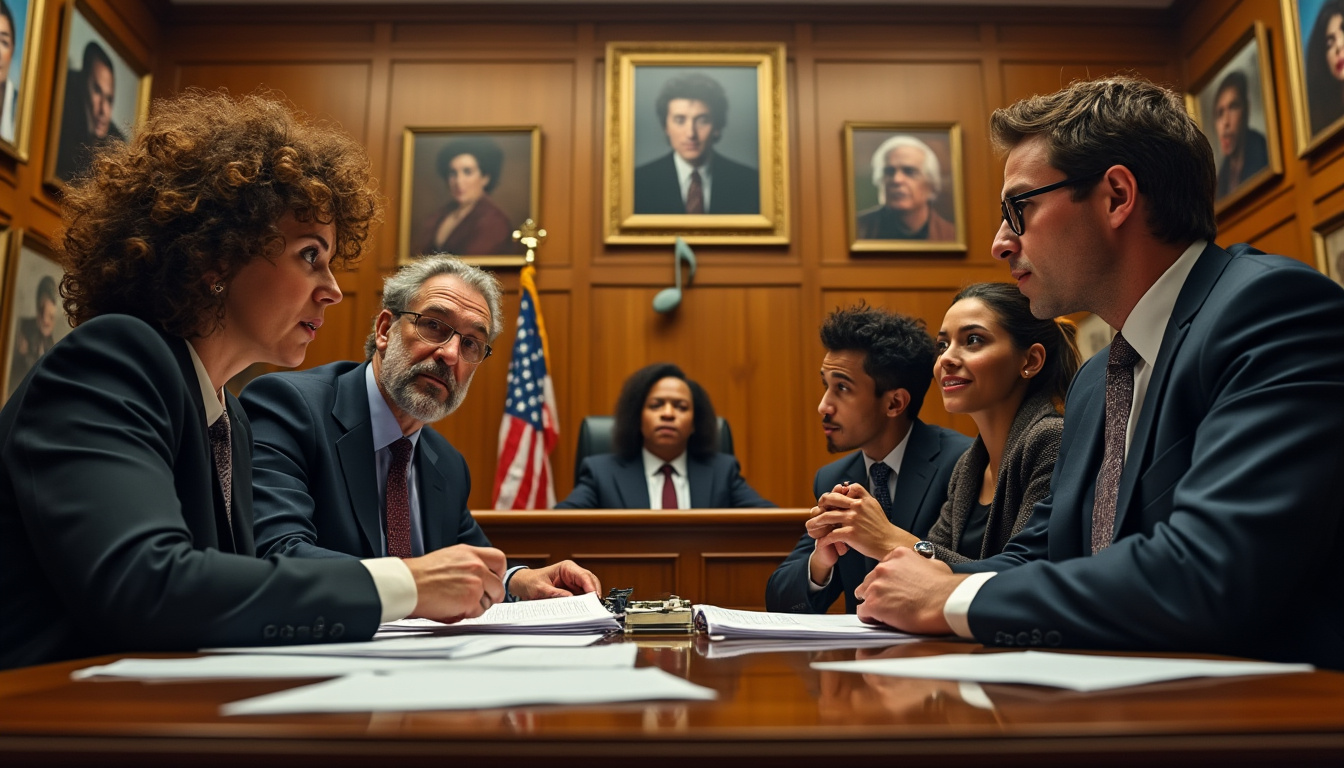
The current situation raises many issues for Anthropic, especially regarding its AI chatbot, Claude. The accusations brought by Universal Music Group and other publishers go far beyond simple plagiarism claims. Indeed, these organizations claim that Anthropic trained its model on copyrighted song lyrics, which is based on a particularly strict legal framework. The Origin of the Conflict: A Controversial Quote At the heart of this case, a document filed by Olivia Chen, a data scientist at Anthropic, has sparked a legal storm. This filing, presented to justify the statistical methods used in training Claude, cites an article in the American Statistician that, according to several sources, does not exist. During a hearing, Magistrate Judge Susan van Keulen called this situation a “very serious problem.” The plaintiffs argued that this approach constitutes data manipulation and a lack of scientific rigor.
Without a solid foundation for their defense, Anthropic’s lawyers face a formidable challenge. The accusations of forgery and fabrication have worrying implications not only for the company, but also for the integrity of the entire technology industry, particularly in the field of artificial intelligence.
The Implications of AI Hallucination for Intellectual Property Hallucination, a term used to describe a situation where an AI model produces inaccurate or completely fictitious information, is at the heart of the debates surrounding Anthropic. The use of AI in academic research has often raised concerns about the veracity of the generated content. In this case, according to experts like Matt Oppenheim, it seems likely that Chen used Claude to craft his arguments. This casts a shadow over how AI can potentially be used to manipulate critical data in a legal defense. This type of situation could pave the way for a free pass regarding artistic creation and intellectual property fraud. The stakes are even higher given that the plaintiffs believe Anthropic has used the lyrics of several artists, such as Beyoncé and the Rolling Stones, without authorization, creating a pattern of plagiarism that could become commonplace if nothing is done. Anthropic and the Future of Artificial Intelligence: Towards Increased Regulation?
In light of recent events, the issue of AI regulation is becoming increasingly pressing. As the technology evolves rapidly, laws and legal frameworks are struggling to keep pace. By 2025, authorities will need to redouble their efforts to establish clear rules protecting both creators and developers of artificial intelligence.
How can the technology be regulated?
Discussions on the regulation of artificial intelligence are growing, and several measures could emerge: Artificial intelligence platforms could be required to certify the origin of the data used to train their models.Regular audits could be instituted to verify copyright compliance.
Severe penalties for repeat infringements could be implemented to deter abuse.
Legal Defense and Creativity: The AI Paradox
The specialist case suggests a paradox: while artificial intelligence is designed to improve our creativity and efficiency, it can also harm entire sectors, including music. The arts require greater protection, and the consequences of potential copyright violations could have cascading effects. Artists feel increasingly threatened by a technology that, in the hands of some, risks eroding the foundations of their work. The Phenomenon of Hallucination: Ethical and Practical Reflections
While hallucination in AI production is recognized, its impact in the legal field is not yet fully understood. The Anthropic case could serve as a precedent for future cases where content generators could be challenged for unverified productions.
Ethical Challenges Related to the Use of AI
- The ethical issues surrounding the use of artificial intelligence are constantly evolving. A few thoughts emerge:
- Respect for intellectual property must take precedence in the training of AI models.
- Developers must be held responsible for errors generated by their tool.
Users should be aware of the limitations of AI and the potential legal disputes it may generate.
Impact on the Music and Technology Sector This type of event could have a profound impact on the music industry and technology as a whole. If Anthropic loses its case, a chain reaction could occur, including: Potential Impact
Description
Reduced Use of AI
Companies may hesitate to use AI to avoid legal conflicts related to copyright.
Creation of New Legislation
- Stricter laws may emerge to regulate the use of AI technologies.
- Increased Artistic Autonomy
- Artists may demand greater protection for their works against use by AI.
Artists Facing the Future: Adaptation and Resilience
Faced with these troubling events, artists must reevaluate their relationship with technology and AI. As we explore the new frontiers of creativity, it becomes crucial to find ways to leverage AI tools while protecting their interests. Tomorrow’s artists will have to navigate a hybrid landscape where technology and music coexist, but where boundaries must be clear.
| Steps to Creative Coexistence with AI | To envision a future where artists and AI can coexist harmoniously, several avenues can be explored: |
|---|---|
| Integrating education on the ethical use of AI into art and music school curricula. | Promoting collaborations between artists and AI developers to create copyright-compliant tools. |
| Encouraging discussions on the impact of AI on artistic creativity to anticipate future issues. | A New Era for Music and AI |
| As cases like Anthropic call into question the future of intellectual property in the digital age, solutions are emerging. Constant dialogue between different stakeholders will be essential to navigate the legal, ethical, and creative challenges associated with AI. Artists, developers, and music companies must collaborate, share experiences, and innovate to build a future where technology serves as a tool for enrichment rather than a threat. | Thus, transforming the relationship between artificial intelligence and music creation, while respecting copyright and intellectual property, is becoming a pressing priority for industry stakeholders. The challenges remain immense, but the horizon brightens when these issues are approached seriously and creatively. |
Catégories : News & AI
Tags : anthropic, copyright, hallucination, legal defense, song lyrics