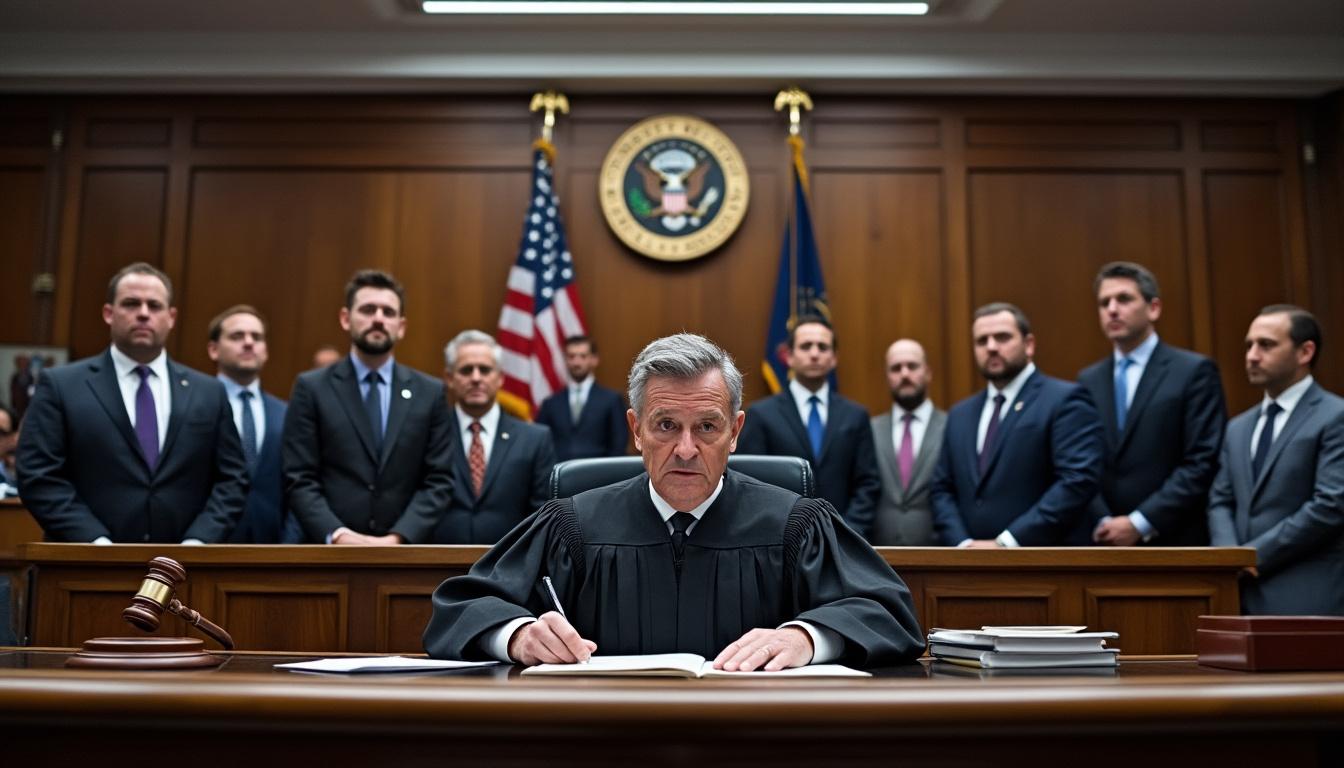
Court rules in favor of Anthropic, opening debate on AI and copyright protection for American writers
A recent court ruling in the case involving the company Anthropic has garnered considerable attention, highlighting a crucial issue regarding artificial intelligence and copyright. Accusations of literary appropriation have been increasing since the emergence of language models like those developed by OpenAI, but this verdict could be a game-changer. As Google AI, Microsoft, and other tech giants continue to refine their AI, the concerns of writers and content creators remain at the forefront. This article explores the implications of this decision for copyright and the future of AI. The Anthropic Case and Copyright: A Landmark DecisionThe case recently concluded with a decision by San Francisco federal judge William Alsup, who ruled in favor of Anthropic in a class action lawsuit filed by several authors. These writers, including Andrea Bartz, Charles Graeber, and Kirk Wallace Johnson, accused the company of using their works without permission to train its AI model, Claude. In this case, the judge concluded that Anthropic’s use of the works fell within the scope of “fair use.” This legal principle allows, under certain circumstances, the reproduction of copyrighted works without obtaining the author’s permission. This raises important questions: how far can one go when it comes to training an AI with legally questionable data?Fair use: a key concept in the AI debate The concept of fair use, although long-standing, is becoming increasingly complex in the context of artificial intelligence. Judge Alsup has ruled that copyrighted works cannot be considered untouchable for machine learning purposes.What constitutes fair use?
For whose benefit are AIs actually learning?
Can content creators truly protect their works? The debate is not solely legal, but ethical. A fundamental aspect concerns the access AIs have to creations. The decision could encourage other companies, such as Meta AI and IBM Watson, to follow the same path, thus attracting more criticism. This raises a key question: will big tech companies finally honor creators, or simply exploit their work?Implications for content creators
The decision in favor of Anthropic could pose a major challenge for many writers and artists. More and more creators fear that their works will be used without consent or adequate compensation. These concerns are growing even as giants like NVIDIA and Amazon Web Services invest heavily in artificial intelligence technologies.
Risk of devaluing creative works
The threat of AI appropriating the work of writers without due recognition is not trivial. With the rise of generative models, there is a real risk of devaluing the written word. For authors, the idea that their content could be assimilated, modified, and even reproduced by algorithms illustrates a worrying situation:
- The risk of losing the originality of their work
- A possible reduction in their income from copyright
- The difficulty of defending themselves and claiming rights
Furthermore, companies like Cortana and DeepMind could help create an environment where plagiarism is becoming an increasingly difficult problem to control. The issue of copyright protection in the face of AI is only just beginning and risks profoundly influencing creative practices.The role of regulatory bodies
With the rise of AI, the need for regulation is becoming urgent. The recent decision regarding Anthropic is a wake-up call for legislators and regulators. How can authors’ rights be protected in a world dominated by artificial intelligence? The questions are now on the table.
The need for an appropriate legal framework Legislators must now be proactive and consider legislative reforms to protect authors. Copyright must evolve to adapt to new technologies, and a solid protection framework could foster a respectful environment for writers. Some avenues for consideration include: Developing specific laws regarding the use of copyrighted works by AI Promoting means of compensation for artists whose work is used Encouraging transparency about the algorithms used by companies
These steps could not only strengthen the creative sector, but also foster an environment where innovation and respect for rights coexist.
An ongoing battle for the future of AI
- Ultimately, the fight for copyright protection in the face of artificial intelligence is only just beginning. The ruling in favor of Anthropic could pave the way for other similar decisions, but it is not the end of the battle for content creators. How will they navigate this new landscape in the years to come?
- Creator rights organizations
- Organizations like Fairly Trained, founded by Ed Newton-Rex, are emerging to defend the rights of creators. Their goal is to preserve an environment conducive to creativity while respecting technological innovation.
Activating dialogue between creators and technology companies Developing ethical principles for the use of works Raising public awareness of intellectual property issues in the face of AI The stakes are multiplying: with each new language model and each advance in AI, the issue of copyright becomes increasingly pressing. This is a critical time for writers and creators to reevaluate their place in this evolving ecosystem. Conclusion: The Uncertain Future of Copyright in the Age of AI
As technology continues to advance and evolve, it is imperative that copyright issues be firmly anchored in contemporary debates. The recent decision in favor of Anthropic will likely not serve as an exception, but rather as a precedent that could guide the future of relationships between artificial intelligence and creators.
The future of copyright in this field is uncertain, but one thing is certain: the dialogue between writers, creators, technology companies, and legislators must be maintained. Together, they can establish a framework in which human creativity and artificial intelligence coexist harmoniously.