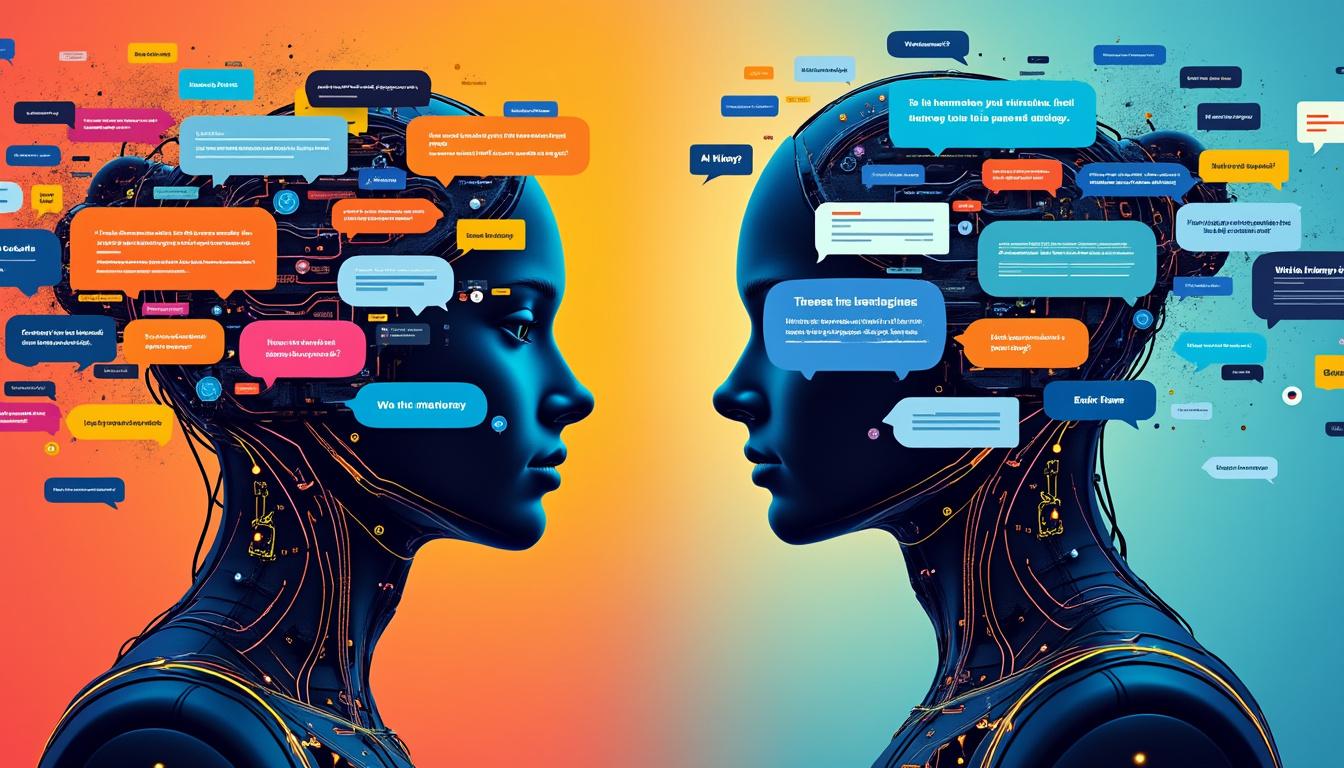
ChatGPT’s Impact on Our Language: Uniformity and Courtesy Put to the Test
As we approach 2025, the technological revolution continues to reconfigure our modes of communication. At the heart of this transformation, tools like ChatGPT, developed by OpenAI, are redefining our relationship with language. Terms that were once marginal are becoming part of our everyday vocabulary, suggesting a trend toward linguistic uniformity. This article explores how these advances, along with the rise of other technologies like Grammarly and Duolingo, are influencing not only our speech but also our daily interactions. How ChatGPT Influences the Way We CommunicateSince the introduction of ChatGPT, a notable shift in the way we communicate has been observed. Recent studies indicate that certain words and syntactic structures have seen an increase in their frequency of use, especially in academic and professional settings. This trend is not insignificant: according to an analysis conducted by the Max Planck Institute, terms such as “meticulous” and “dig” have increased in use by 51% since the emergence of AI. This raises the question of whether we are becoming receptacles for AI language instead of expressing our original thoughts.The change in our everyday vocabulary The words we choose to shape, whether in informal conversations or public speeches, are indicative of this influence. With digital tools at our fingertips, it is easier for us to access powerful language models, such as those generated by Jasper or Replika. This may make our speech more fluent, but does it come at the expense of our authenticity? Lexical acceleration: Words are being substituted for more precise ones.Politeness norms:
Communication styles are becoming more formalized and courteous. Risks of standardization:
Erosion of linguistic and cultural diversity. Studies reveal significant changes Another striking aspect is the transformation of our emotional tone. Analyses show that our expression is becoming more neutral, which could lead to a less personal form of communication. Mor Naaman, a professor at Cornell University, explains that this trend could reduce the richness of our human interactions. The depth at which we engage with others could suffer if we choose to rely on AI to manage sensitive conversations.
Impact on
Before ChatGPT After ChatGPT Vocabulary Pronounced varietyIncreased standardization
- Emotional Personal engagement
- Emotional neutrality Interaction
- Authentic conversations More calculated exchanges
Linguistic uniformity in the face of cultural diversity
One of the major challenges posed by
| ChatGPT | and other AI tools is the preservation of linguistic and cultural diversity. By concentrating data on a few dominant languages, we risk marginalizing dialects and ways of speaking that have their own richness and nuances. | The Loss of Accents and Regional Expressions |
|---|---|---|
| Regional accents and local expressions are essential aspects of cultural identity. By adopting a more standardized language, we may lose not only words, but also the connection to our cultural heritage. This uniformity could create an additional barrier between generations, which is particularly relevant in a world where communication is increasingly digital. | Accentuation of Differences: | Minority languages are often underrepresented. |
| Cultural Expression: | Unique phrases that convey history may disappear. | Interconnectedness: |
| Linguistic diversity fosters dialogue between cultures. | The Impact on New Generations | Young people, who grow up with these tools, are particularly sensitive to these transformations. The use of Bing, Google, and other search engines exacerbates this trend, as they often offer standardized formulations. This can affect the way new generations use and understand language, favoring facilitative responses at the expense of more critical thinking. |
Aspects
Positive Impacts Negative Impacts Information Search
Rapid Access to Data
Lack of Nuance in Understanding
- Personal Writing Writing Assistance with Tools Like Grammarly
- Standardization of Writing Styles Social Interactions
- Facilitating Connections Risks of Less Authentic Communication
Hyper-Personalization of the Language Experience
While there is a trend toward standardization, there are also movements toward hyper-personalization. Tools such as Duolingo and Lingvist seek to tailor language learning to users’ individual needs, offering an approach that could counteract some of the effects of standardized language. Opportunities offered by technologyTools such as Microsoft’s Bing provide access to a wealth of resources, offering unique learning opportunities. This allows users to explore language variants, idiomatic expressions, and much more, contributing to the enrichment rather than the neutralization of language. Access to multiple resources: Learning diversity for a diverse audience.
| Encouragement of creativity: | Users can express themselves differently. | Cultural awareness: |
|---|---|---|
| Understanding of local specificities. | The need for conscious reflection | It is essential to remain vigilant in the face of these dynamics. The key lies in our ability to navigate these changes while taking care to preserve the unique aspects of our language. Far from being a purely technological phenomenon, this challenge calls for a sociocultural reflection on how we want to communicate in the future. |
| Tools | Features | Apps |
| Duolingo | Adaptive Learning Platform | Personalized Language Tutorials |
Grammarly
Writing and Grammar Help Real-Time Corrections Lingvist Learning by Doing Exporting Language Skills
Toward a Conscious and Diverse Future
As the impact of ChatGPT on our language continues to evolve, it is essential that we do not lose sight of the importance of our linguistic individuality. Uniformity may seem appealing for its simplicity, but it must be balanced by the richness that linguistic diversity can offer. Relying on technology to dictate how we communicate is not enough. Making concrete choices, such as prioritizing authentic exchanges, can strengthen our ability to maintain a vibrant and dynamic language. Ultimately, it is up to us to consciously navigate this new era, both surrounded by technologies deeply integrated into our lives, but with a commitment to the diversity, authenticity, and humanity of our interactions.