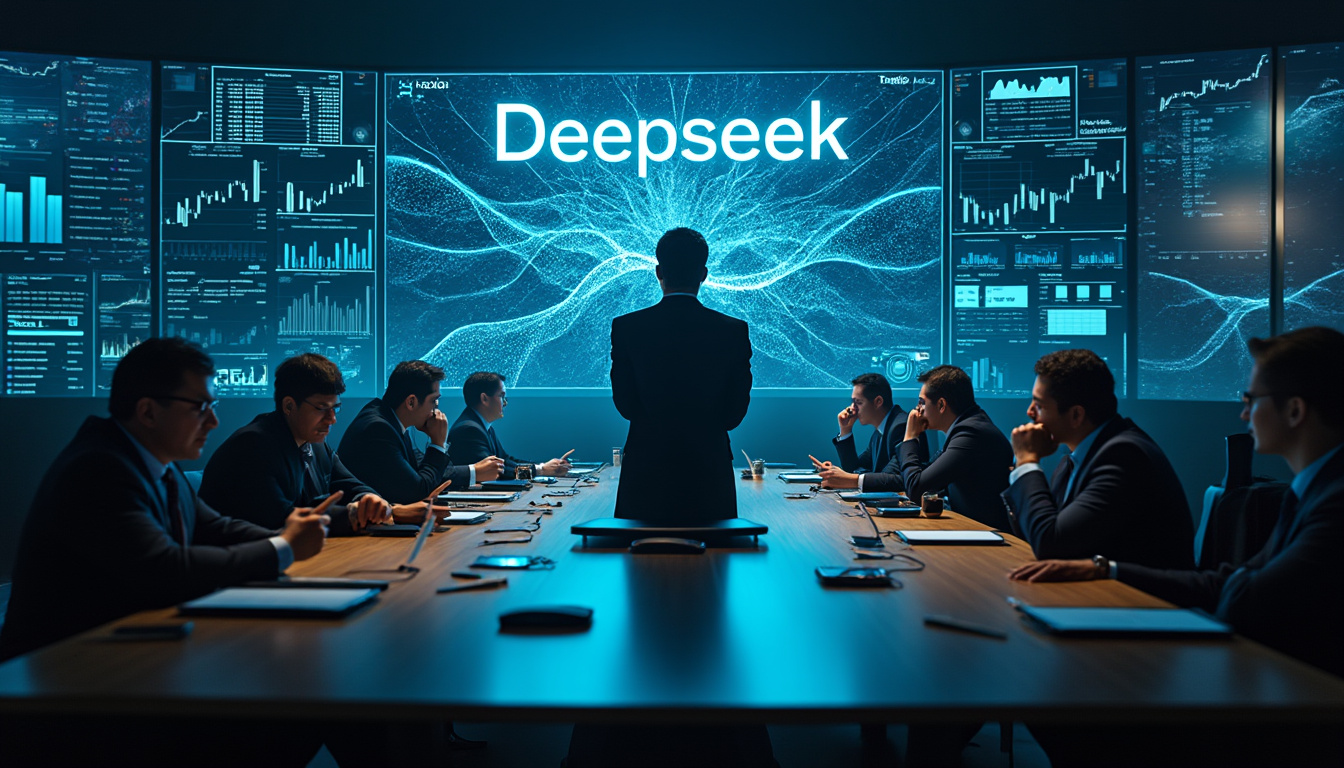
Artificial Intelligence in the Spotlight: Analyzing Stock Market and Espionage Concerns Around the DeepSeek Phenomenon in 17 Questions
Since its emergence on the global stage, artificial intelligence has exerted a double-edged fascination, arousing both admiration and concern. With the emergence of the startup DeepSeek, which is struggling to compete with giants like OpenAI and Google AI, the debate is intensifying around the technology’s impact on stock markets and data security. Against this delicate backdrop, we will explore the many facets of modern AI, from its performance to the risks it poses. This analysis will unfold in the form of 17 key questions, providing clear answers and valuable insights into a hot topic.
Stock Market Issues Related to DeepSeek and Artificial Intelligence
DeepSeek’s rise to prominence has prompted an immediate reaction from the financial markets, raising questions about the performance of traditional technology companies, such as NVIDIA and Microsoft Azure AI. So, how are investors reacting to this new competition? 1. What impact has DeepSeek had on stock prices? Since its launch, the financial results of AI companies have been under unprecedented pressure. In January 2025, NVIDIA saw its shares fall by 17% due to concerns about demand for its GPUs, essential for training AI models. Such a reaction underscores how the emergence of a player like DeepSeek can shift the technology landscape.2. Why are investors worried?
Investors’ fears stem from several factors:
The increased competitiveness introduced by DeepSeek in the AI sector. The potential reduction in demand for hardware components, particularly GPUs. Uncertainties regarding the business models of established companies like
OpenAI
and
- IBM Watson
- .
- 3. What strategy are AI giants implementing to counter this threat? Traditional tech companies are seeking to innovate and diversify their offerings to respond to market pressures. For example, Meta aims to invest between $60 and $65 billion to improve its data processing infrastructure. These initiatives aim to maintain its market share while preparing for future advances in AI. 4. How is the developer community reacting to these developments? With the emergence of open source models, the developer community welcomes DeepSeek’s initiative to provide access to code. This creates a dynamic for collaboration and innovation, while also sparking debates about the future of intellectual property in the tech sector. Espionage and Data Security ConcernsBesides financial concerns, data security and espionage issues are emerging with the arrival of AI. In a world where information circulates at breakneck speed, what does this change entail?
5. What threat does DeepSeek pose to data security?
DeepSeek faces a dilemma. Although it offers powerful models, its location and status as a Chinese company raise questions. Chinese data protection laws allow authorities to access information stored on servers, which poses a high risk to companies that may rely on it. 6. What are the privacy implications of “shadow AI”? The “shadow AI” phenomenon refers to the use of AI tools by employees without their company’s consent, thus putting sensitive data at risk. The proliferation of services like those
Salesforce Einstein
only exacerbates this situation, as users face ethical dilemmas regarding the confidentiality of their information.
7. Should we fear backdoors in AI applications?
Analysts are wary of open source technologies. While access to source code fosters innovation, it also increases the risk that malicious actors will exploit these systems for attacks. Companies like Palantir are working hard to strengthen security systems and protect users.
The Tech War Between the West and China
With the rapid development of AI like DeepSeek, a strategic face-off between China and the United States is emerging. How is this technological rivalry influencing the market?
8. Could DeepSeek reignite a tech showdown?
Yes, the rise of DeepSeek could exacerbate existing tensions. In response, the United States is intensifying its efforts to position itself as a leader in AI. However, this could also lead to a price war in the sector, as the analyst community has already observed. 9. What role do governments play in this dynamic? Governments are putting increased pressure on technology companies to monitor data integrity and ensure that national security is preserved. For example, Italy blocked DeepSeek on its territory, questioning the protection of its citizens’ personal data.
10. What does this mean for US and European startups?
Startups must redouble their efforts to innovate while taking into account data protection regulations. They must also evaluate their business models in the face of competition from emerging low-cost AI models like those proposed by DeepSeek. Future Prospects for Global AI As artificial intelligence continues to evolve, what possible futures might emerge for industry players?
11. How does AI sustainability influence its adoption?
The increasing energy burden of data centers to support large-scale models raises environmental concerns. The International Energy Agency (IEA) warns that infrastructure energy consumption could double by 2026, increasing the urgent need for greener AI solutions.
12. How important is continuous innovation?
Innovation is becoming essential to stay ahead of the AI race. Companies like Amazon Alexa are constantly seeking to improve their models. The emergence of AI design and adaptive models could be a game-changer for many companies.
13. How can AI help solve global problems? AI can potentially be a positive force in the fight against climate change, optimizing resource efficiency. The application of AI in areas such as sustainable agriculture or climate data analysis is a good example of this potential.
14. How can companies prepare?
Companies must establish clear strategies for integrating these new technologies. This includes:
Training technical teams in the ethical use of AI.
Adopting data security policies that meet legal requirements.
Investing in sustainable infrastructure to support the sector’s growth.
Ethical and Human Issues Around AI
Beyond technical and economic considerations, AI also raises ethical issues. Analyzing the human implications of these technologies is essential.
15. What are the risks of excessive use of AI?
The intensive deployment of AI in daily life raises questions about dependency. Users must be aware of the potential consequences, including a loss of autonomy in decision-making. 16. How can we promote the responsible use of artificial intelligence? Ethical frameworks must be put in place, encompassing principles of transparency, fairness, and safety. The development of AI must not come at the expense of fundamental human values.
17. What does the future hold for the regulation of artificial intelligence?
Regulation is a crucial element in overseeing the development of AI. Governments must work with market players to establish laws that both protect consumers and foster innovation.
In short, the rise of DeepSeek and the development of artificial intelligence raise complex issues that will affect all aspects of society. The key lies in a balanced approach that fosters innovation while ensuring safety and ethics.
Catégories : News & AI
Tags : analysis, artificial intelligence, deepseek, espionage, stock market concerns