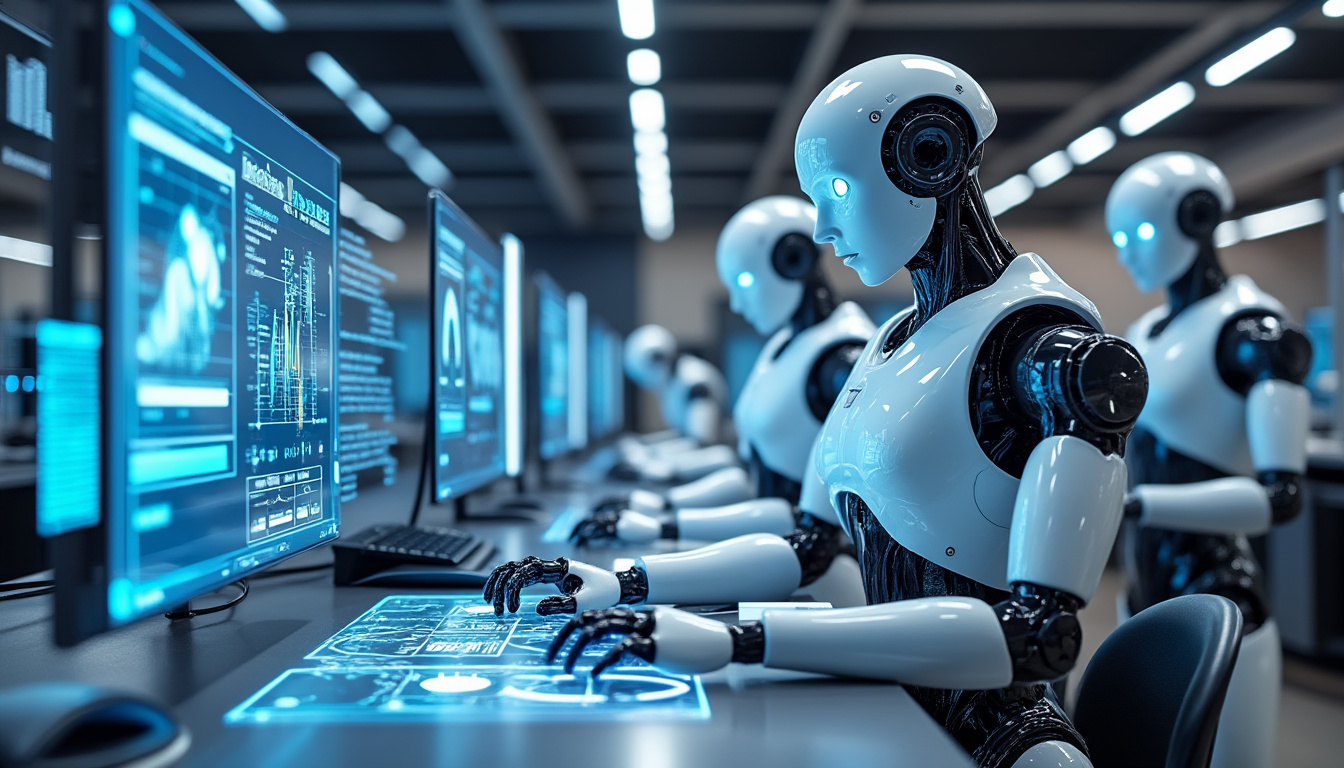
Artificial intelligence agents using innovative tools
In the contemporary world, artificial intelligence has become a powerful driver of innovation and transformation in various sectors. AI agents, equipped with advanced capabilities, now leverage tools that are revolutionizing the way we interact with technology. From healthcare to finance to education, the potential for improvement is immense. How are these AI agents leveraging cutting-edge technologies to optimize their performance? This article explores the latest advances in AI and how they are changing our daily lives.
Emerging Trends in Artificial Intelligence
Over the years, we have seen artificial intelligence evolve from simple programmed systems to intelligent agents capable of learning and adapting. In 2025, several key trends are emerging:
- Machine Learning: Machine learning techniques continue to advance, enabling agents like OpenAI and IBM Watson to develop increasingly sophisticated models. Interoperability: Systems such as Google AI and Microsoft Azure AI are working to harmonize the user experience by integrating AI services into various applications. Strategic Partnerships: The emergence of alliances between companies such as Salesforce Einstein and NVIDIA is fostering rapid innovation and effective new solutions. Deep Learning and Autonomous Systems Deep learning has revolutionized the way computers process information. Using advanced algorithms, these systems are able to recognize complex patterns in massive data, ranging from images to human language. For example, C3.ai has developed solutions that enable accurate prediction of consumer behavior, transforming the way businesses interact with their customers. Autonomous systems, for their part, are redefining many sectors. From self-driving vehicles to delivery drones, these technologies rely on powerful artificial intelligence agents to operate without human intervention. This demonstrates the importance of integrating reliable and suitable tools. Technology Use Impact Deep Learning
- Data analysis, image recognition Improved personalized services Autonomous systems Vehicles, drones Significantly increased logistics efficiency Impact on the job market
- The rise of artificial intelligence agents raises many questions about the future of work. The automation of routine tasks has become a reality in many sectors, promising to improve productivity. However, this automation raises employment concerns. Experts believe that while specific tasks can be replaced, new jobs will emerge requiring AI skills. The 2025 McKinsey report highlights that up to 45% of tasks currently performed by humans could be automated, leading to significant disruptions in job market dynamics. AI Applications in Various Sectors Artificial intelligence agents are not limited to a single sector. On the contrary, their impact is being felt across a multitude of industries: Healthcare: AI plays a crucial role in early diagnosis, medical data analysis, and treatment optimization. Companies like H2O.ai are developing tools that process millions of data points for more clinically accurate results. Finance: AI is revolutionizing risk management and financial predictions, with solutions offered by DataRobot. These tools enable greater responsiveness to market fluctuations. Education
: Thanks to AI solutions, platforms like BlaBlaCar AI enhance the learning experience by offering curricula tailored to students’ needs.
Concrete examples of AI implementation The Pitié-Salpêtrière Hospital in Paris has integrated artificial intelligence agents into its departments. Thanks to a collaboration with IBM Watson, doctors use advanced analytical tools to handle complex cases. This innovation has improved diagnosis time and increased treatment success rates. In the financial sector, chatbots powered by Google AI handle customer queries with impressive efficiency. This has not only improved the user experience but also reduced companies’ operational costs. Sector Application Result
Health
| Medical Diagnosis | Improved Treatment | Finance |
|---|---|---|
| Chatbots | Cost Reduction | Education |
| Personalization of Curricula | Better Matching to Student Needs | Challenges and Ethical Considerations of Artificial Intelligence |
As AI continues to evolve and be integrated into our daily lives, ethical concerns persist. What are the implications of using artificial intelligence agents in sensitive areas such as healthcare or justice? The need for appropriate regulations is becoming paramount.
Transparency
: Decisions made by AI systems must be understandable to users. How can we ensure that these systems act ethically?
Fairness
: Algorithms must avoid biases that could unfairly penalize certain groups. Fairness in AI outcomes must be a priority.
- Responsibility : If an AI system fails, who is responsible? Companies must establish clear guidelines. Towards Regulation of Artificial Intelligence As companies like NVIDIA and C3.ai continue to innovate, creating a solid regulatory framework has become essential. The debate around AI ethics is intensifying, with governments and institutions needing to consider appropriate actions. In Europe, initiatives such as the General Data Protection Regulation (GDPR) are setting the standard. This demonstrates that it is possible to combine innovation with the protection of user rights.
- Ethical Challenge Description Solutions ConsideredTransparency
- Users’ Understanding of Decisions Developing Explainable Algorithms Fairness Avoiding Bias in Results
Regular Audits of Algorithms
Accountability Determining Responsibility in Case of FailureEstablishment of Clear Guidelines
Conclusion and Future Outlook
| As we move into an era dominated by intelligent technologies, artificial intelligence agents are already an integral part of our daily lives. Ethical challenges, questions of liability, and the need for adequate regulation must be at the heart of our concerns. At the same time, the opportunity to improve our daily lives through these innovations is immense. The future of AI is not just about tools, but about a true societal transformation that deserves our attention. | ||
|---|---|---|
Catégories : Non classé
Tags : artificial intelligence agents, ia, innovation, innovative tools, technology