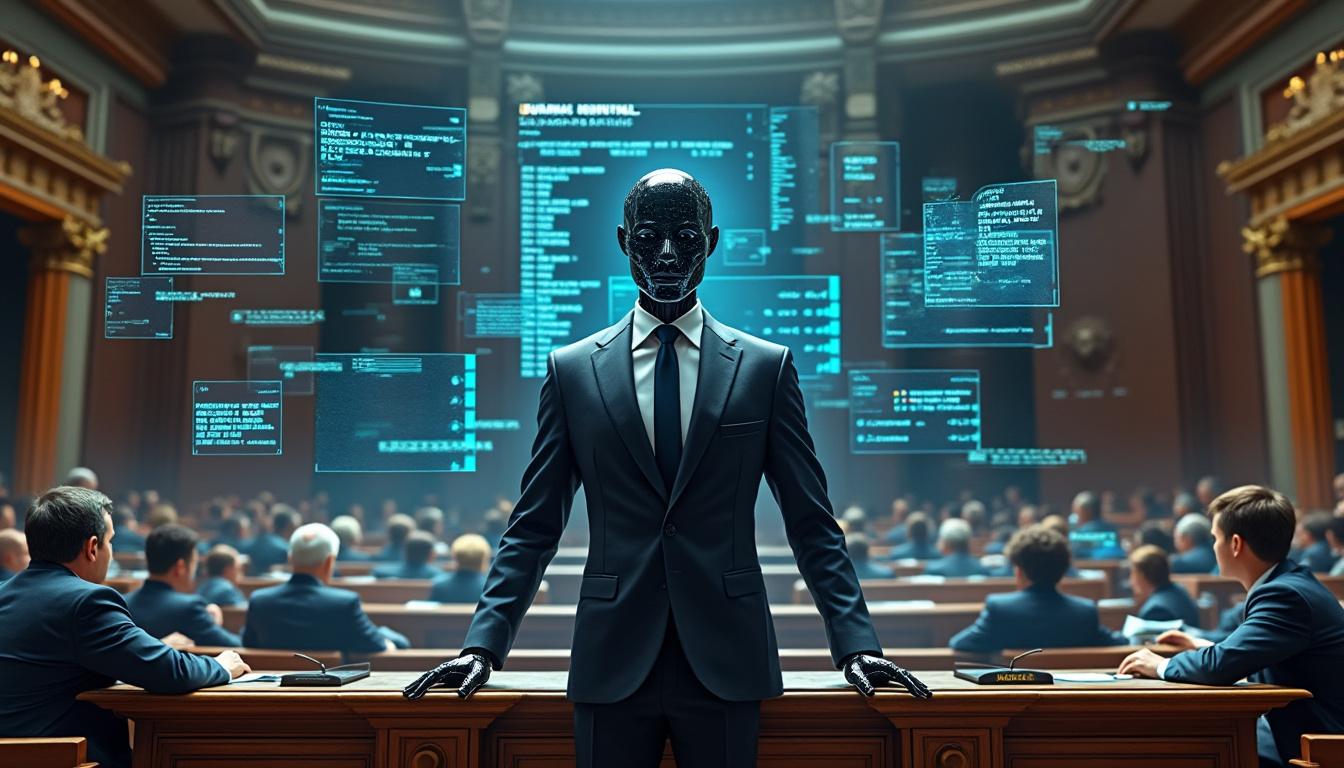
Anthropic’s AI triumphs in a major legal battle, but what’s really behind it?
At the heart of a judicial system increasingly involved in innovative technology, the case pitting Anthropic against American writers marks a crucial step for the future of artificial intelligence (AI). While the court issued a landmark ruling, the issue of ethics and copyright law remains at the center of the debate. What this partial victory reveals about the practices of AI companies, and the resulting implications, deserves in-depth analysis.
The Impact of the Anthropic Ruling on the AI Sector
The California court ruled in favor of Anthropic on certain aspects, recognizing the concept of fair use—a reasonable use of copyrighted works. However, the implications of this decision are far from trivial. What are its implications? And how could this legal battle shape the future of sustainable AI development? What is fair use? The concept of fair use is a key principle of copyright law that allows the use of certain works without authorization. In the context of AI, this raises questions about the nature of the content used to train models. For Anthropic, the prior use of thousands of pirated books was deemed unacceptable, but the use of other works as training data was upheld.
Key elements of the court ruling
The judgment is based on several key points:
Fair use
: The judge accepted that the use of certain works to create new content is covered by fair use.
- Data liability : However, the use of millions of pirated books was characterized as “theft,” highlighting the importance of legally purchasing training data.
- Potential fines : With a law providing for up to $150,000 per violation, Anthropic faces a potential penalty exceeding $1 trillion.
- Jurisdictional Aspect Summary
| Fair Use | Recognized for model training, except in cases of piracy. |
|---|---|
| Piracy | Approximately 7 million books used without authorization. |
| Fines | Up to $150,000 per violation, with a colossal total risk. |
| Consequences for other market players | This clash between Anthropic and the authors is not isolated. It echoes other ongoing proceedings, such as the one between Stability AI and Getty Images. Complaints are multiplying, notably that of the New York Times against OpenAI. The interpretation of fair use could, ultimately, reveal broader issues for generative models in the technology ecosystem. The Ethical Dilemma of AI in Content Creation |
As AI evolves, the ethical question of using data for content creation becomes paramount. Writers and artists must ask themselves difficult questions about the protection of their work in the face of this rapid technological innovation.
Content Creators’ Concerns
Authors fear that AI models will devalue their work. The impact on the market and the possibility that these creations will replace authentic work raise concerns about law and fair remuneration. Here are some key concerns:
Loss of Revenue
: AI-generated alternatives could reduce the market for original content.
Intellectual Property
- : Who owns the rights to AI-generated works? Reduced Quality
- : Creations without a human touch can lead to uniformity and a lack of authenticity. The Need for a New Legal Framework
- To resolve these concerns, a suitable legal framework is essential. This could include specific laws regarding AI and copyright, taking into account the transformative nature and evolution of the creative industry. Discussions around these laws must include both technology innovators and content creators, in order to strike a balance that is both ethical and sustainable. Ethical issues
Solutions considered
Loss of income for creators
| Remuneration based on the use of works by AI. | Unclear intellectual property |
|---|---|
| New legal framework defining the rights of AI creators and companies. | Impact on the quality of creations |
| Quality standards to be respected for AI-generated works. | Future prospects for the AI industry |
| While Anthropic’s ruling opens the door to new opportunities for innovation, it is necessary to address the long-term implications of this legal battle. The legal and ethical framework in which AI evolves will have to be shaped by the current and future challenges of the sector. | Implications for technological innovation |
Innovation must not come at the expense of ethics. AI companies, such as Anthropic and OpenAI, must integrate sustainable practices, ensuring a copyright-respecting approach in their future developments. Potential avenues for progress include:
Collaboration with rights holders
: Working together to uncover the mutual benefits of AI.
Transparency
- : Establish clear protocols regarding the use of training data. Education
- : Provide resources for creators to understand how AI models work. An interconnected future
- Ultimately, the future of AI will depend on the ability to strike a sustainable balance. In the era of artificial intelligence, collaboration patterns between creators and technologists must evolve to meet the challenges of the moment. This involves not only the AI sector, but the entire creative ecosystem, in a spirit of innovation and mutual respect. As we move toward a world where AI plays a leading role, the question of how it interacts with copyright and ethics remains open. Could the outcome of this legal battle serve as a model for other cases to come? The answers are on the horizon.
Catégories : News & AI
Tags : anthropic, ethics, ia, technology