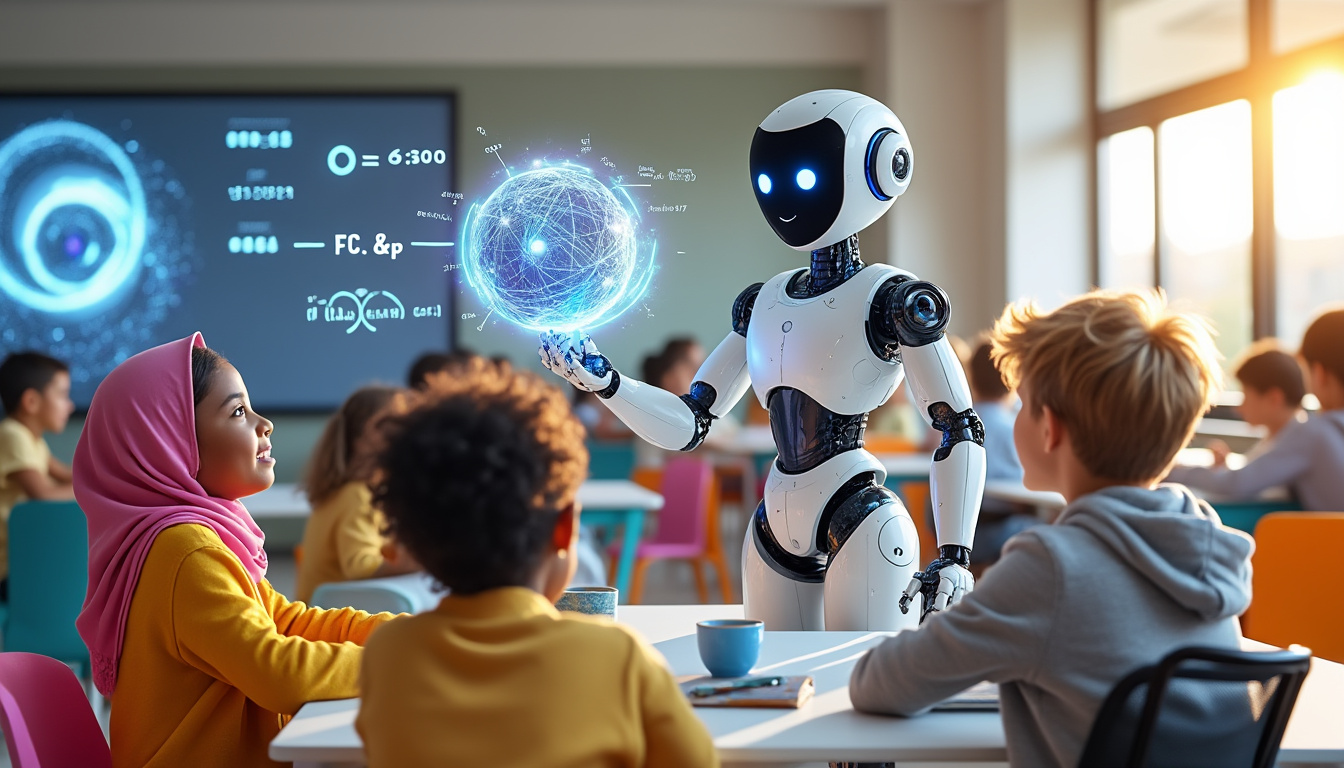
Anthropic unveils Claude for Education, an artificial intelligence dedicated to improving critical thinking in students
In a world where education is facing unprecedented challenges, innovation is essential to fostering student learning. Artificial intelligence (AI) is proving to be a valuable ally, and with this in mind, Anthropic’s latest initiative, entitled Claude for Education, takes on its full meaning. Designed to enhance learning while developing students’ critical thinking skills, this chatbot promises to support teachers and learners in a modern and engaging way. By combining educational technology with a student-centered approach, Claude for Education could well mark a turning point in traditional teaching methods.
Claude for Education: A New Era for Learning
The educational version of Claude comes at a time when the use ofartificial intelligence in the classroom is increasingly recognized. Far from being limited to passive use, schools are beginning to realize the positive impact AI can have on teaching. Claude for Education doesn’t just answer students’ questions; He engages them in a process of discovery. Instead of providing ready-made answers, he stimulates their curiosity by questioning them, asking them questions that lead them to reflect and find solutions on their own.
An innovative learning method
At the heart of Claude for Education is a new learning method that is particularly suited to the needs of students. This method differs from traditional teaching methods by encouraging interaction and engaging in dialogue. For example, instead of simply saying, “The answer is X,” Claude asks relevant questions such as: “How would you approach this problem?” “What evidence supports your conclusion?” This exchange not only encourages students to develop their critical thinking
- but also allows them to assimilate key concepts while learning to reason on solid foundations. For example, a student could begin an assignment on the causes of climate change, and Claude could guide them by getting them to reflect on the economic, environmental, and social impacts of these changes.
- Features tailored to teachers’ needs
Claude for Education isn’t just geared toward students. Teachers also benefit from tools that facilitate their daily work. Thanks to this AI, they can develop personalized assessment rubrics based on the specific learning objectives of their course. Here are some examples of available features: Writing personalized comments on student work to provide detailed feedback.Creating chemistry equations adapted to different levels of difficulty.
Analyzing enrollment trends and managing email responses to reduce the administrative burden. The Benefits of Claude for Education in Cognitive Development
Innovation in education is essential not only for learning progress, but also for students’ cognitive development. With Claude for Education, educational technology goes even further by offering a tool that encourages students to go beyond simple academic supervision. Interactions with Claude create an active learning environment that meets the needs of each student. Support for bibliographic and mathematical research A concrete example of this assistance is Claude’s ability to help students develop literature reviews. By enabling them to correctly cite their sources, Claude prepares them not only for formal assessments but also for future academic research. In mathematics, AI guides students through complex problems, breaking down each step to ensure a thorough understanding. This helps them acquire essential skills, such as:
- Step-by-step problem solving. Ability to justify their answers.
- Developing autonomy in the learning process.
- Improving teaching methods with AI
Thanks to Claude, teachers can enrich traditional teaching methods with innovative approaches. This could translate into group projects where students collaborate with Claude to solve challenges, but also interactive exercises that make learning more fun. By collaborating with this artificial intelligence, teachers create a dynamic and stimulating classroom dynamic, encouraging students to fully engage in their education. The Potential and Ethical Challenges of Such Technology
While artificial intelligence offers enormous benefits for education, it is essential to address the challenges and ethical considerations it raises. For example, reliance on AI could potentially alter how students learn to solve problems independently. Increased vigilance is needed to ensure that the use of Claude does not replace the foundational skills students need to acquire. This includes the risk of leveling the playing field, where authentic interactions between teachers and students could be relegated to the background.
Balancing Technological Innovation and Traditional Teaching
To avoid these abuses, it is essential that educational institutions find a balance between the integration of technologies like Claude and traditional teaching methods. Teachers must be trained not only in the use of these tools, but also in how to effectively integrate them into their teaching practices. Furthermore, a collaborative approach between AI developers and educators is essential to ensure that AI tools like Claude evolve according to the real needs of students and teachers.
- Conclusion: Towards an Educational Future Enriched by Artificial Intelligence
- With Claude for Education, Anthropic opens a door to a future where education takes on a new dimension. By placing students at the heart of the process and fostering their cognitive development, this AI provides valuable solutions to the challenges facing education today. By investing in these innovative tools, we can hope for a renewal of teaching methods that will benefit future generations.
Catégories : News & AI
Tags : anthropic, artificial intelligence, Claude for Education, critical thinking, education