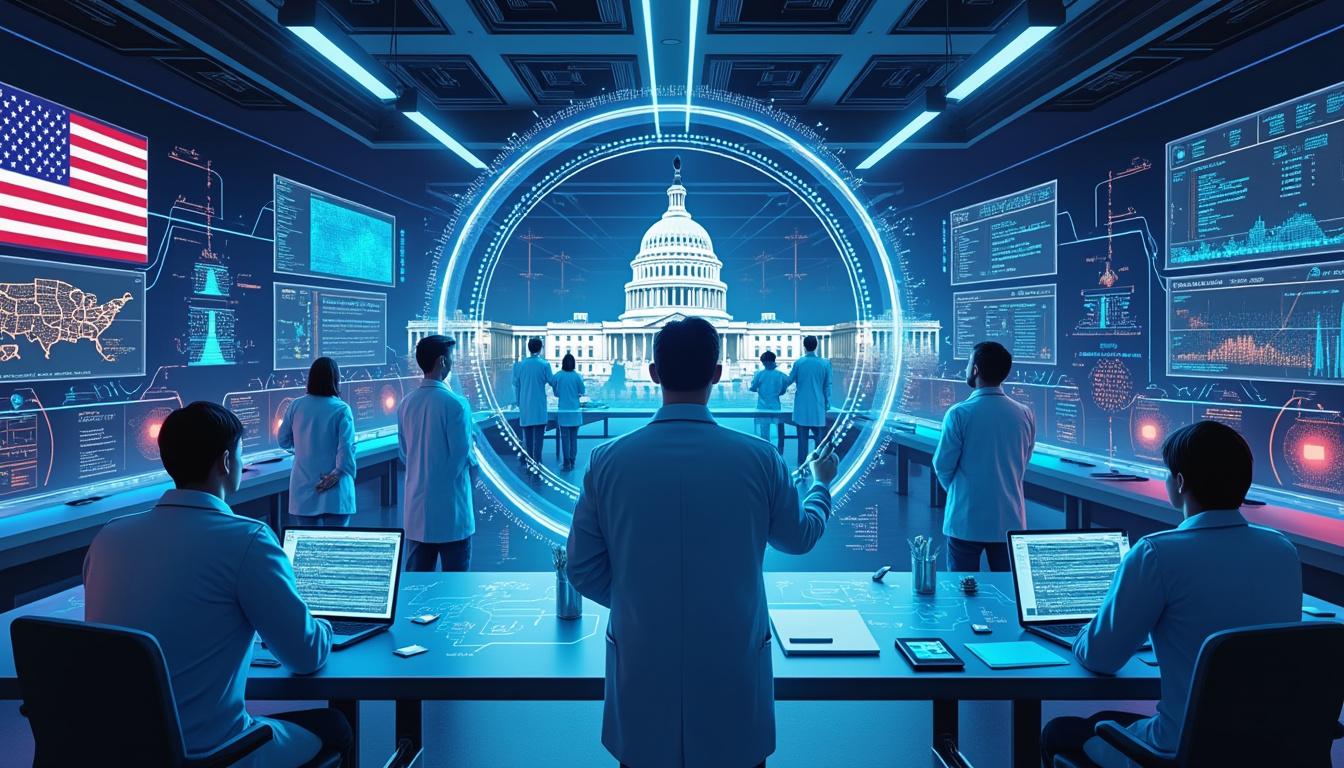
Anthropic Launches Custom Artificial Intelligence Models to Strengthen US National Security
In a context where the global geopolitical situation is becoming increasingly complex, national security is becoming essential for any state. In this regard, technology is emerging as an essential ally. With the advent of artificial intelligence, companies like Anthropic are taking the lead by launching tailor-made models specifically designed to meet defense challenges. This article explores how these innovations in artificial intelligence are opening new avenues for improving US national security and the potential impact on technology industries, cybersecurity, and research and development in this sector. The Growing Challenges of National Security and the Role of Artificial Intelligence Recent decades have been marked by a constant evolution of threats to national security. While traditional armed conflicts persist, new forms of attacks, particularly cyber attacks, are emerging, making vigilance more necessary than ever. As such, artificial intelligence presents itself as a promising solution for anticipating and responding to these threats. A tailored response to new threats Custom-built artificial intelligence models developed by companies such as Anthropic aim to provide concrete answers to the challenges posed by new forms of conflict. Here are some examples of threats these technologies seek to counter: Cyberattacks: Intrusions into government systems and strategic companies. Propaganda and disinformation: Social media campaigns aimed at influencing public opinion. Industrial espionage: The theft of sensitive data by state or non-state actors. Faced with these challenges, governments are turning to innovative solutions focused on artificial intelligence. , capable of processing huge volumes of data in record time, detecting anomalies, and proactively anticipating attacks. AI Technologies to Strengthen National Defense The applications of artificial intelligence in national security are vast. Here are some specific technologies that are already operational: Surveillance: Use of drones equipped with AI software to monitor sensitive areas. Predictive Analytics: AI models capable of anticipating the movements of terrorist groups. Attack Interception: Systems to detect and neutralize potential cyberattacks before they cause damage.
These technologies not only improve defense capabilities; they also pave the way for closer collaboration between the public and private sectors. Indeed, technology industries are working with government agencies to develop tailored, tailored solutions. Threat
AI Technology Used Expected OutcomeCyberattack Anomaly Detection SystemsInstant Intrusion ResponseEspionage Real-Time Data Analysis
Potential Threat Identification
Disinformation Social Media Analysis Malicious Campaign Detection
- Anthropic and Its Role in Defense Innovation Anthropic has emerged as a key player in the field of artificial intelligence dedicated to national security. Its mission is to develop customized models that address the specific concerns of the U.S. government while respecting ethical principles.
- Collaboration with government and security agencies One of Anthropic’s strategies is to establish partnerships with government agencies and industry experts to better understand the unique challenges they face. Through these collaborations, the company can design innovative solutions tailored to the specific needs of defense. This also ensures continuous feedback to constantly improve its artificial intelligence models. The benefits of this collaborative approach include:
- Speed of Adaptation: Rapid response to emerging threats thanks to a flexible model.
Shared Expertise:Access to diverse expertise in defense and technology. Ethical Solutions:AI development in accordance with high ethical standards.Custom Models for Maximum Impact
Anthropic stands out for its ability to design custom models that precisely meet the needs of national security. These models allow for customization for each use case, greatly enhancing their effectiveness. Characteristics of these models include:
Adaptability:Ability to evolve based on new data and constantly changing environments. Accuracy: Algorithms optimized to reduce false positives and false negatives. Scalability:
- Ability to deploy solutions at scale while maintaining performance. By adopting a future-oriented approach, the innovation brought by these models could be instrumental in U.S. cybersecurity efforts and the protection of sensitive data.
- Criterion Traditional Model
- Customized Model Anthropic Customization
Low High Adaptability Medium High
| Accuracy | Medium | Higher |
|---|---|---|
| Challenges and Future Opportunities for AI in National Security | Although advances in artificial intelligence models for national security are | Although the prospects for national security |
| are promising, several challenges remain. It is crucial for stakeholders to navigate a complex environment filled with ethical, technological, and political issues. | Obstacles to Overcome | Here are some of the major obstacles to overcome to ensure maximum effectiveness of artificial intelligence solutions in the defense sector: |
| Ethical Issues: | The way data is collected and used must be transparent and fair. | Risks of Cyberattacks: |
AI-based systems must be robust to withstand potential intrusions.
Lack of Transparency: AI algorithms must be understandable to build user trust.Relevance of Research and Development Investments To anticipate and overcome these challenges, it is imperative to allocate sufficient resources to research and development in the field of artificial intelligence. Governments and businesses must work together to foster innovation while ensuring adequate regulation. This collaboration is key to: Protecting sensitive data: Developing robust protocols for managing and protecting critical information.
Encouraging responsible use:
Implementing ethical frameworks for the use of AI technologies.Strengthening defense capabilities: Investing in advanced AI solutions to address emerging threats. In short, the future of artificial intelligence in national security will depend on the ability of stakeholders to innovate while respecting ethical and regulatory standards.Challenge ImportanceSolution
Ethical issues
- High Establishing clear guidelines
- Risks of cyberattacks Critical
- Rigorous security protocol Lack of transparency
Significant
Creating explainable algorithms
Catégories : News & AI
Tags : anthropic, artificial intelligence models, national security, technology, UNITED STATES