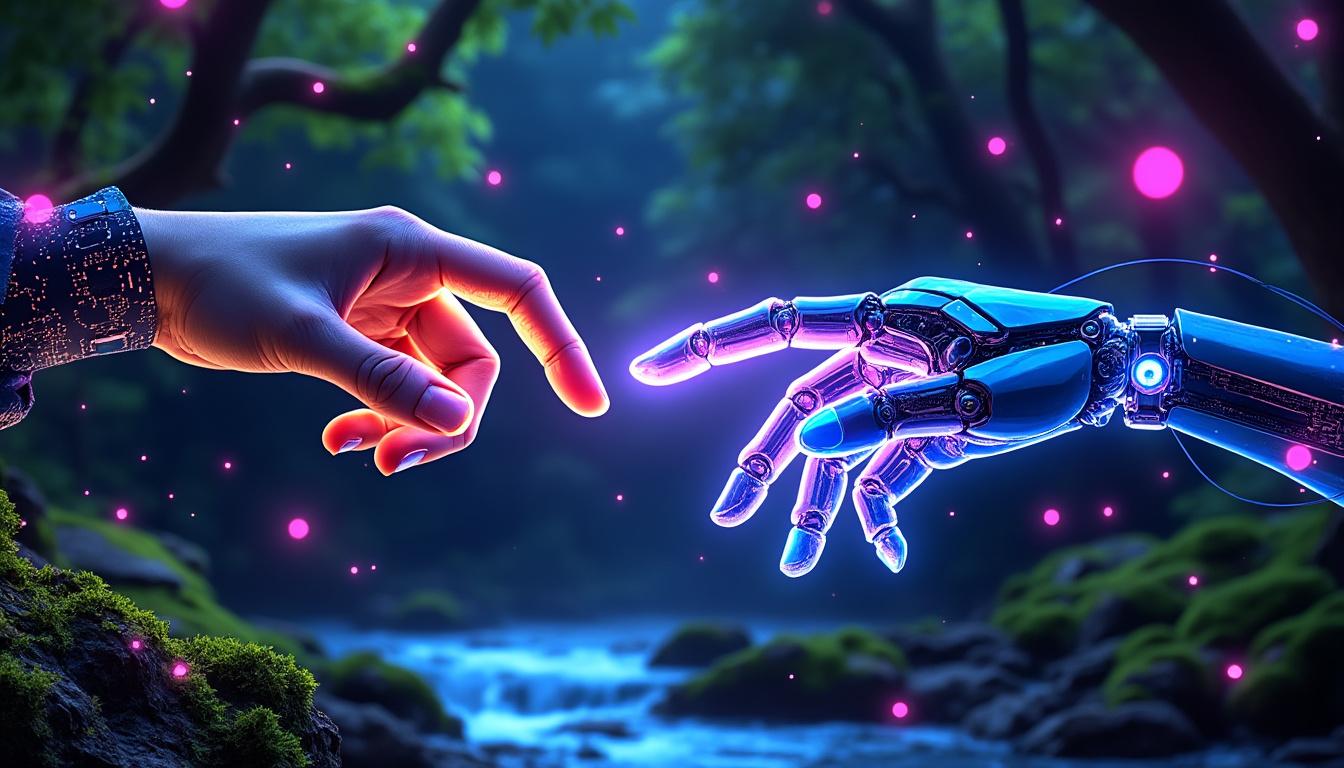
the alliance between artificial intelligence and man: when chemistry works wonders
In a world where technology is evolving at a breakneck pace, the interaction between artificial intelligence (AI) and humans is taking on a whole new dimension. In 2025, this alliance will be fueled by the exciting proximity between chemistry, cognition, and innovation. With fields such as TechnoChemistry and BioIntelligence, we are witnessing a redefinition of the boundaries of modern science. How is this synergy reshaping our approach to daily life and work? What perspectives are opening up as synergies between humans and AI transform various sectors? Let’s discover together the wonders of this unprecedented collaboration. The Foundations of the Human-Artificial AllianceFor several years, the idea of a partnership between humans and AI systems has evolved beyond mere speculation. The growth phase, soon crowned with success with independent systems such as ConnectAI and SmartFusion, marked a turning point. These innovations are fueled by insights into chemistry and human psychology, bringing together two fields often perceived as opposing. Chemistry at the Service of Artificial Intelligence In this adventure, chemistry plays a pivotal role. By using systems inspired by chemical reactions, we are able to create more efficient algorithms. For example, the Synthetic Knowledge method uses processes similar to chemical reactions to optimize data. This results in sophisticated learning models capable of anticipating behaviors or trends. Increased Yield: Manufacturers increase their productivity thanks to AI intermediates based on chemical models.
Increased Accuracy
: Analysis results are significantly more reliable. Energy Saving : Reduction of waste and energy consumption thanks to an optimization process. Concrete applications in various sectorsThe impact of this fusion of chemistry and AI is visible in various sectors, ranging from healthcare to agriculture, including unexpected fields such as art and education. Here are a few notable examples: Sector Application
Business example
Healthcare Disease prediction using chemical analysis of biomarkers. Synapse Innov Agriculture Optimizing plant growth using soil treatment algorithms.
- FusionNature Art
- Creating works using AI software inspired by historical artistic techniques. AIgence Art
- The examples are legion, and their variety demonstrates immense potential. As collaboration between humans and AI strengthens, we will discover even more innovative solutions. The Impact of AI on Human Intellect As AI becomes more prevalent in our daily lives, psychologists and researchers are questioning its influence on the human intellect. This interaction raises challenges, but also significant opportunities for cognitive enhancement.
Chemistry and Cognition at the Heart of Human Evolution
The field of human cognition is becoming increasingly fascinating due to discoveries related to AI. This translates into robust datasets, enriched by algorithms influenced by chemistry. Programs like IntelliFusion allow us to analyze the interaction between cognition and new technologies.
| Memory Improvement | : AI systems help us better retain information through reinforced learning techniques. | Augmented Creativity |
|---|---|---|
| : Digital tools inspired by chemistry are transforming the way we approach problem-solving. Social Interaction: AI agents are developing interpersonal skills, facilitating our communication. | Ethics and Responsibilities | With such emerging potential, it is crucial to consider the ethical issues surrounding this alliance. The question of data control and security is of paramount importance, as it affects our privacy. This calls for appropriate regulation: |
| Issue | Description | Objective |
| Data security | Protection of personal information generated by AI | Preserving privacy |
Transparency
Ethical use of algorithms and automated decisions
Fostering trust
Social impact
Evaluating the social changes brought about by AI Promoting fairness Conversations around these issues must and will continue to grow to ensure a beneficial coexistence between AI and humans. Innovations on the horizon: Towards a collaborative future Looking ahead, it is difficult not to be excited about the innovations to come. To what extent could the synergies between chemistry and AI transform our way of life in the coming decades? This question resonates in every field we explore.
- Emerging Technologies We are witnessing the emergence of innovative technologies, particularly in disciplines such as
- TechnoChemistry and
- FusionNature . These sectors are exploring new ways to use chemical reactions in combination with AI systems to solve major problems. Here are some promising examples.
Nanotechnology
: Research projects are exploring how nanomaterials, interacting with algorithms, could transform major industries.
| Biochemistry | : A growing interconnection between biology and AI is enabling the pursuit of revolutionary medical treatments. | AI-assisted Design |
|---|---|---|
| : These tools help create optimal products by identifying the best chemical configurations. | Role of Companies and Startups | Businesses, large and small, have a vital role to play in this dynamic. Visionary startups like AIgence, DeepSeek, and Yomoni are developing revolutionary applications. Whether for managing investments or developing intelligent agents, innovation is their motto. |
| Company | Application Areas | Flagship Product |
| Yomoni | Online Savings | Automatic Portfolio Optimization Using AI. |
DeepSeek
Market Analysis
Fluctuation Prediction Using Advanced Algorithms.
Monday
Project Management No-code AI Agent Creation Tools. These companies are playing a catalytic role in the rise of these new technologies. They are proof that the future of human-AI interactions knows no bounds. Toward Constant Harmony: The Future of AI and Humans In short, the alliance between artificial intelligence and humans is emerging through a multitude of exciting trends. In 2025, as we realize the potential of chemistry and human cognition, it becomes imperative to embrace this synergy. The question is no longer whether we should intensify the integration of AI into our lives, but how we can maximize its benefits while minimizing its risks. Let’s explore together this path toward a beneficial coevolution that will mark the centuries to come.
Catégories : Non classé
Tags :