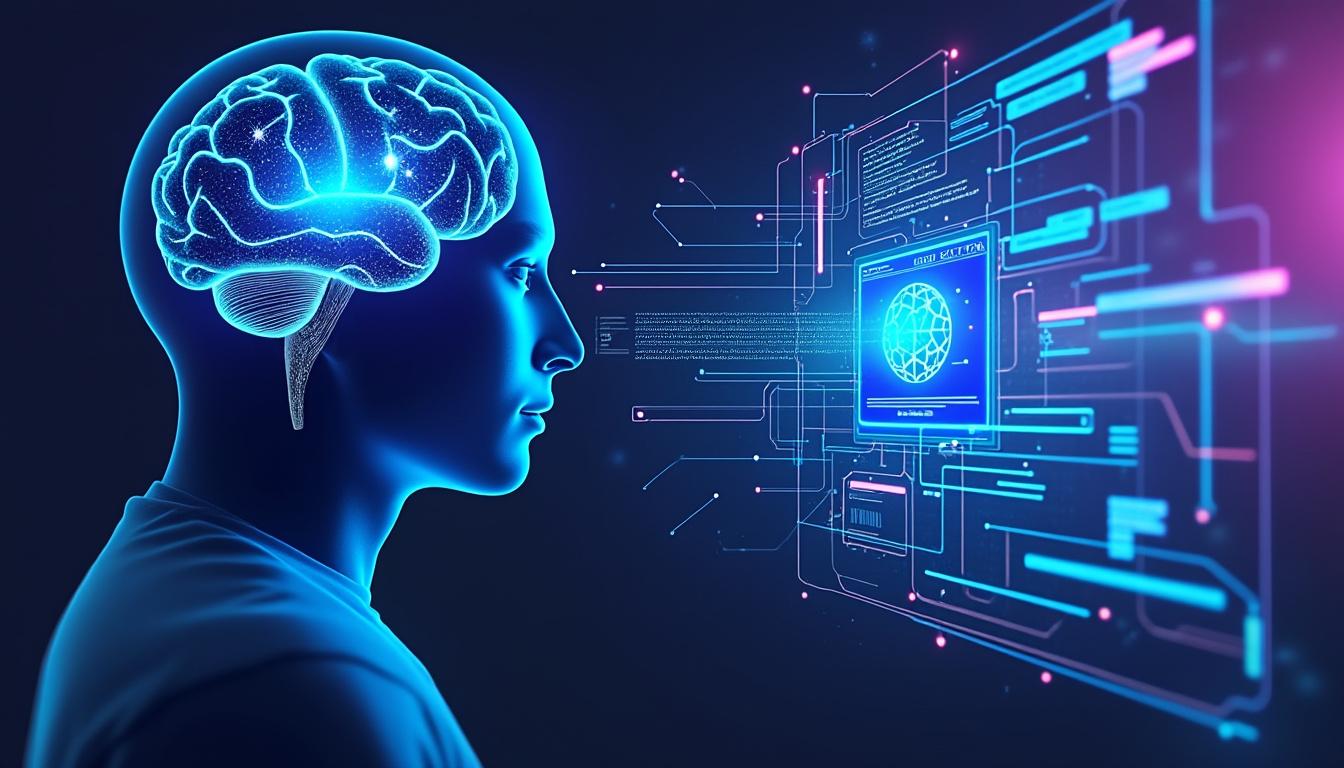
the impact of using ChatGPT on our brain activity
In a world where artificial intelligence is increasingly integrated into our lives, conversational tools like ChatGPT are revolutionizing the way we work and learn. While these technologies promise significant productivity gains, a crucial question emerges: what impact does this have on our cognition and mental health? A study conducted by the Massachusetts Institute of Technology (MIT) highlights concerns about the use of generative AI and its consequences on our brain activity.The Cognitive Implications of Using AI At first glance, using conversational agents like ChatGPT seems like an undeniable advantage, but researchers, such as MIT’s Nataliya Kosmyna, are questioning the hidden effects of this technology. The study revealed a worrying trend among users: a reduction in cognitive engagement and a certain intellectual laziness. Results of the MIT Experiment In this experiment, 54 participants aged 18 to 39 were asked to write essays on a general topic, such as the question: “Can works of art change people’s lives?” The subjects were divided into three groups, each with different access to technology: Group 1: No technological tools Group 2: Access to Google without using AI Group 3: Access to ChatGPT The participants’ brain activity was measured using an electroencephalogram. The results showed that those using ChatGPT had significantly lower brain activity than the other two groups. Furthermore, 83% of these participants experienced difficulty recalling passages of their writing, even shortly after writing.The Importance of Cognitive Engagement
Participants who wrote their essays without the aid of technological tools showed a
Higher neural connectivity, particularly in brain regions involved in creativity and critical thinking. Therefore, not only did these individuals have a better ability to retain their ideas, but they also engaged areas of their brain that promote innovation and learning.Group Brain Activity Idea RecallNeural Connectivity
No Technology
High
- High
- Optimal
- Google Use
Moderate
Moderate
Acceptable ChatGPT Use Low LowMinimal
| These results not only reflect a danger to our basic learning, but also a key question: to what extent could relying on AI impoverish our ability to think critically? | Developing New Digital Skills and Creativity | While AI tools significantly improve productivity in many fields, their use also raises questions about the evolution of digital and creative skills. Professionals across various sectors are adopting these technologies at a rapid pace, but are they truly aware of the skills they could be neglecting in the process? | Opportunities and Risks |
|---|---|---|---|
| While AI can facilitate access to information and generate content, it could also limit our ability to think outside the box. A growing body of research highlights a homogenization of ideas and expressions used thanks to tools like ChatGPT. | Opportunities: | Save time in content writing. | Fast access to information and resources. |
| Improved search capabilities. | Save time in content writing. | Fast access to information and resources. | Improved search capabilities. |
| Risks: | Reduced critical thinking and creativity. | Decreased memorization and retention of information. | Standardization of language and writing styles. |
Reduced critical thinking and creativity. Decreased memorization and retention of information. Standardization of language and writing styles.
A balanced approach
To effectively navigate this era of innovation, it is imperative to find a balance between the use of AI and the development of our fundamental human skills. Educators, for example, are encouraged to integrate technological tools into their teaching while encouraging students to practice critical thinking. Education must be a space where technology complements, not replaces, learners’ essential skills.The impact on mental health and cognitive development As artificial intelligence becomes ubiquitous, it is crucial to assess its effects on our mental health. Recent studies reveal that excessive use of technological tools can lead to a feeling of dependency, thus threatening users’ psychological health. Addiction to AI Technologies The easy access to AI-generated information and content creates a dynamic in which users may feel overwhelmed or devalued if they attempt to complete tasks without assistance. This can lead to increased levels of anxiety and stress. Symptoms of addiction include:
Difficulty concentrating without the AI.
Acute emotional reaction when disconnected.
- Diminished perception of self-worth without using the tool.
- Difficulty concentrating without the AI.
- Acute emotional reaction when disconnected.
- Diminished perception of self-worth without using the tool.
- Promoting learning strategies that combine the use of AI tools with stress-reducing practices, such as mindfulness and time management, is essential for maintaining good mental health.
- Promoting a holistic view
- For the use of AI to be beneficial, it is essential to adopt an approach that recognizes the importance of human skills and the link between technology use and well-being. This can include training on effective time management and relaxation techniques to ensure a healthy balance in a constantly evolving technological world. Addiction Symptoms
- Suggested Solutions
- Difficulty Concentrating
- Time Management Methods
- Stress and Anxiety
- Mindfulness Practices
- Diminished Perception of Value
- Self-Reflection and Journaling
In summary, the future of integrating artificial intelligence into our daily lives will depend on our ability to assess not only the practical benefits it can offer, but also its implications for our cognition, creativity, and mental health.
Open Conclusion on the Future of AI and Our Brain Activity
The findings regarding the impact of using ChatGPT on our brain activity raise fundamental questions about the future of learning and cognition. As we move into an era marked by technological innovation, it is essential that users are aware of the potential consequences of their addiction to artificial intelligence. How can we navigate the many facets of this new era of innovation in a balanced and thoughtful manner?
Catégories : News & AI
Tags : artificial intelligence, brain activity, chatgpt, impact, neuroscience