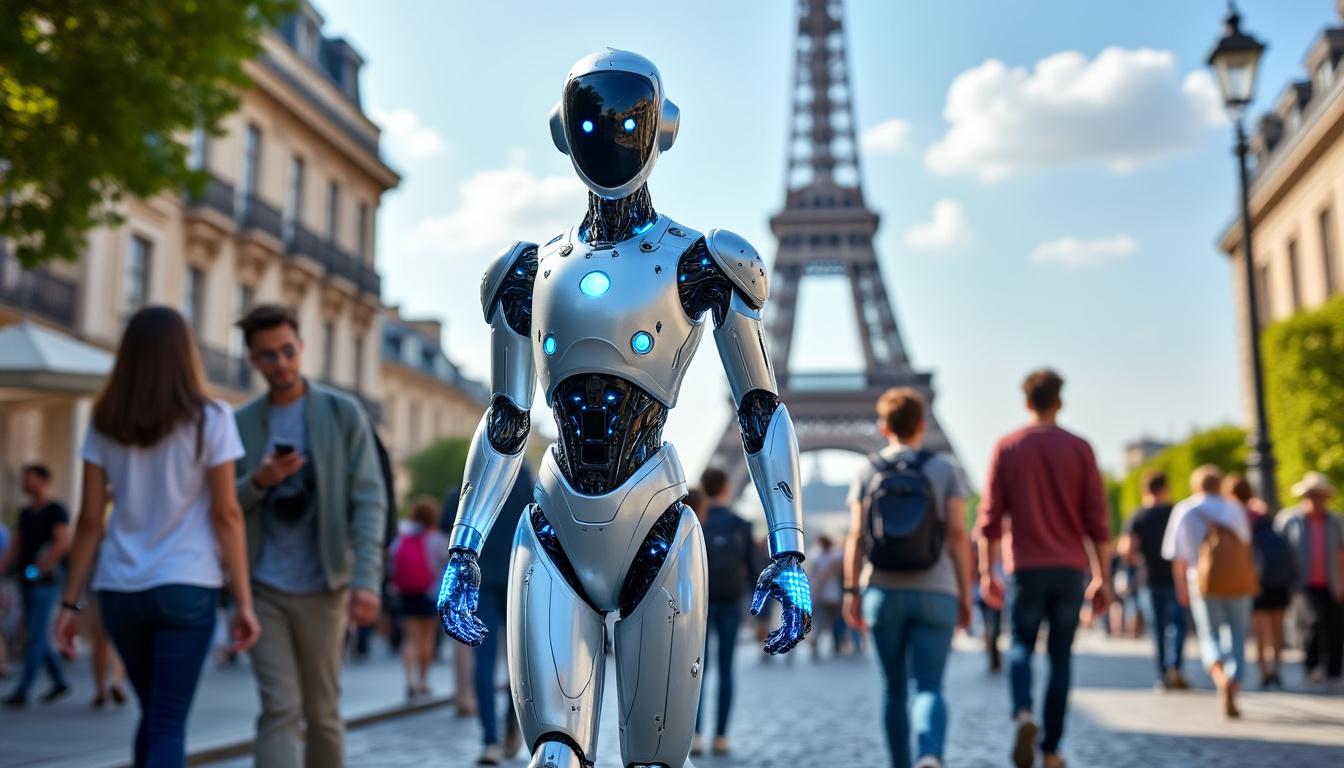
Artificial intelligence, the new travel companion of the French
With vacations in full swing, more and more French people are turning to artificial intelligence to create the trips of their dreams. With Bison Futé predicting a busy weekend on the road, AI is positioning itself as a valuable ally, transforming vacation planning into a more seamless and personalized experience. From a simple hotel search to creating a complex itinerary, AI is no longer just a tool; it’s becoming an intelligent companion for AI travelers, an essential travel assistant in vacation planning. According to a recent survey conducted by Flashs for Hostinger, a wide range of trends is emerging regarding the use of artificial intelligence by the French. Although 92% of respondents feel able to do without this technology, a third already recognize its usefulness. These figures demonstrate growing adoption, especially as the summer holidays approach. By 2025, it’s clear that AI has strengthened its role, going beyond simple queries to offer comprehensive assistance at every stage of the trip. New Vacation Trends with Artificial Intelligence The digital revolution has profoundly changed travel habits. A study reveals that 76% of French people who use AI believe it will be beneficial for planning their summer vacation. Among these users, their needs and expectations revolve around several areas.Use of AI in Travel Planning Percentage of Users Itinerary Planning
57%
Flight and Accommodation Price Comparison
54%
| Choosing a Destination Based on Their Desires | 45% |
|---|---|
| Vacation Budgeting | 38% |
| Dispute or Claim Management | 36% |
| Packing Checklist Preparation | 35% |
| Delays, Cancellations Management | 35% |
| Carbon footprint simulation | 23% |
| These figures say a lot about the expectations of | AITravelers |
| of today. AI is not just limited to new features to improve the experience, it acts as a | AIExplorer |
| which accompanies the user in each phase, making preparations less stressful and more efficient. Through this article, let’s take a closer look at how artificial intelligence is shaping the future of travel. | Optimization of the itinerary and creation of tailor-made trips |
One of the biggest strengths of artificial intelligence is its ability to analyze vast amounts of data to make personalized recommendations. In 2025, users will turn to travel apps incorporating powerful AI algorithms to plan tailor-made itineraries. Platforms such as SmartTrip or IntelliVoyage stand out for their ability to offer trips that take personal preferences into account, while optimizing travel time. Reduction in travel times: AI analyzes traffic in real time, thus avoiding traffic jams. Suggested activities: Depending on interests, recommendations for attractions are offered.
Dynamic adaptation:
In the event of an unforeseen event, such as a flight delay, the itinerary adapts instantly.
- This level of adaptability transforms travel into truly enriching experiences. Travelers get more out of their time by choosing destinations that suit their desires, while navigating optimized itineraries. This is how a journey becomes a automated travel
- , where technology takes care of the logistical aspects, leaving more room for adventure and discovery. Price comparison made easier thanks to AI
- Finding the best price has long been a headache for travelers. Nowadays, AI plays a crucial role in simplifying this task. By leveraging sophisticated search algorithms, applications like AIDiscovery allow users to instantly compare flight and accommodation prices. This transparency benefits both consumers and businesses, allowing them to adjust their offerings based on market demand. Access to exclusive offers.
Analysis of price trends to anticipate potential price increases. Price drop alerts for desired destinations.Users are therefore better informed, allowing them to make more informed choices. Thanks to integrated virtual assistants, buyers can also ask questions about the features of accommodation or flights, bringing more context to their decisions.
Managing the unexpected during travel
Unexpected events are an integral part of any trip. Whether it’s a flight delay, a cancellation, or a dispute with an accommodation, these situations can quickly turn disastrous. Fortunately, AI technologies are available to manage these uncomfortable situations, relieving AI travelers of the concerns that could spoil their experience.
- Dispute and Claims Management
- To alleviate these various inconveniences, travelers can now call on AI agents who guide them through the claims process. Rather than spending hours on the phone or waiting for an email response, these tools provide clear and timely instructions. In 2025, companies like Sakana are leveraging revolutionary artificial intelligence that combines mediation services with personalized support.
- Instant Assistance:
Direct contact with professionals without long waits.
Tailored advice:
Guidance on best practices to maximize the chances of success in claims. Satisfaction statistics: Access to testimonials from users who have encountered the same issue.
Artificial intelligence is thus changing the dynamics of customer service, making solutions accessible and instantaneous.
Anticipate delays and cancellations Furthermore, the predictive power of artificial intelligence is also revolutionizing the management of unexpected travel-related events. Platforms with weather or traffic monitoring features, such as AI Explorer, can alert users of potential delays well before their departure. Thanks to continuous data collection, these tools can even suggest suitable alternative solutions, such as changing modes of transportation or changing departure times. This anticipation not only reduces stress but also helps preserve the overall travel experience. By being constantly informed, travelers can adjust their plans accordingly and stay focused on their adventure. Raising awareness of the carbon footprint of travel
- Beyond a simple user experience, artificial intelligence is also committed to a responsible approach to travel. As sustainability becomes increasingly central to consumer choices, the AI Travelers of 2025 are concerned about an often-overlooked aspect: their carbon footprint. To this end, tools like VoyageAI simulate the emissions associated with each stage of a trip. Suggestions for eco-friendly alternatives
- Thanks to artificial intelligence, users can explore more environmentally friendly transportation options while maintaining their comfort. Proactive planning can include eco-friendly accommodations or nature-based activities. Research shows that 23% of French people using AI choose to simulate their carbon footprint before finalizing their bookings. This commitment reflects a growing desire to travel more sustainably. Using public transportation when possible.
- Selecting eco-friendly accommodations. Participating in tourism activities designed to minimize environmental impact.
These choices contribute to a more thoughtful way of traveling, where the impact on the planet takes center stage in vacation planning.
Eco-friendly Activities
Description EcotourismTraveling in a natural setting while preserving the environment.
Eco-friendly B&Bs
Staying in locations that adopt sustainable practices.
Low-emission transportation Using electric vehicles or public transportation. Awareness and Adapted AI Tools As commitment to the planet increases, some apps allow users to track the ecological impact of their travel decisions. By providing real-time recommendations, they encourage choices that promote a reduced carbon footprint. This comprehensive approach proves that AI can harmonize the travel experience with ethical concern for the environment. The Future of Travel with Artificial Intelligence As we move toward the end of the decade, it’s clear that artificial intelligence will continue to evolve in the travel industry. From vacation planning to managing unforeseen events, it’s gradually influencing every aspect of the trip. From airlines to travel tools, companies of all sizes are integrating AI to enrich the customer experience.
The innovations in this area are promising. In the coming years, we can expect intelligent companion systems, such as Virtual Pilot, to become the norm. These assistants, going beyond the simple role of travel agent, will be tasked with understanding each user’s preferences and providing targeted advice throughout the trip.
Evolution of Offers and Available Tools
- With the continued integration of AI in the travel industry, increasingly personalized services will emerge. For example, agencies like DeepSeek are already developing AI solutions that not only meet immediate demands but also anticipate future traveler needs. According to reports, interest in these solutions will not only be a passing trend, but a real necessity for Automated Travelers.
- Development of innovative features adapted to changing user needs.
End-to-end travel experience, from preparation to execution.
| High-level personalization through data analysis and user feedback. | This evolution is leading the industry to completely redefine the concept of travel. User identification, enhanced by advanced technologies, will allow companies to better understand customer expectations and make them full participants in their own experience. |
|---|---|
| A user-centric travel model | One of the main directions AI is heading in is the feeling of a truly user-centric travel experience. With AI capable of adapting, personalizing, and predicting needs, the future of travel can only be optimized. Tomorrow’s SmartTrips will offer recommendations and adjustments not only based on trends, but also on travelers’ individual stories. |
| In short, AI is ensuring an unprecedented transformation in the way we plan, experience, and share our trips. Combining comfort, utility, and environmental responsibility, artificial intelligence is honing the skills of tomorrow’s AITravelers, preparing them to meet the challenges of a constantly changing world. | |
Catégories : Non classé
Tags : artificial intelligence, French, new, technology, travel companion