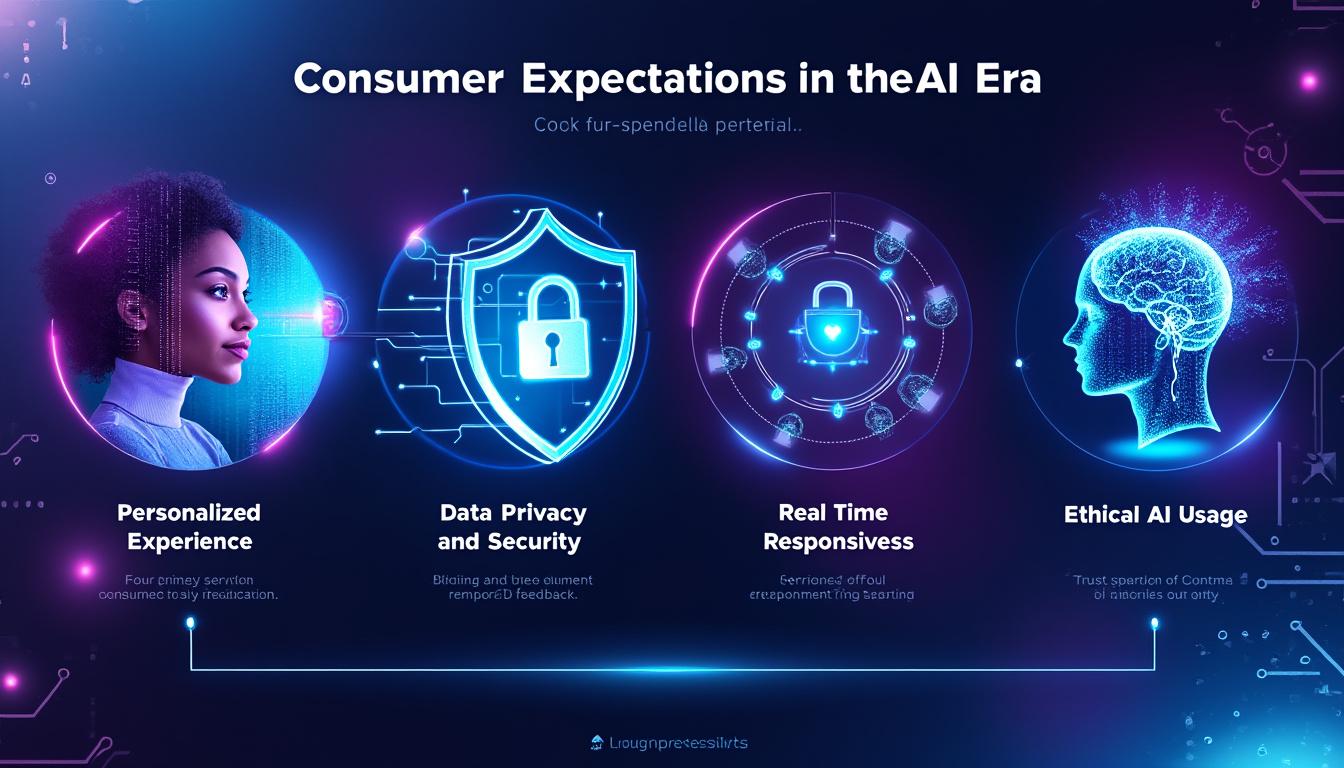
Four essential elements for understanding consumer expectations in the era of artificial intelligence agents
As artificial intelligence takes center stage in our daily lives, understanding consumer expectations is becoming essential. Technological advances in recent years have not only changed the way we interact with brands, but have also redefined user expectations. Brands must therefore adjust their strategies to meet these expectations, which vary depending on consumer profiles. This article examines four user typologies for intelligent agents and explores how companies can leverage these insights to maximize satisfaction and engagement while ensuring authentically personalized interactions.
AI Agent User Typologies: A Necessary Understanding
The evolution of artificial intelligence has given rise to tools that are deeply tailored to user needs. A study conducted by Salesforce revealed four main profiles that make up the current consumer landscape for AI agents. These typologies are not limited to statistics, as they reveal specific expectations regarding transparency, responsiveness, and accessibility. Profile PercentageMain Needs The Strategist (“Smarty Pants”)43%Analysis of options, informed decision-makingThe Minimalist (“Minimalist”)
| 22% | Simplification, reduction of mental load | The Efficiency Champion (“Life-Hacker”) |
|---|---|---|
| 16% | Optimization of productivity, automation | The Trendsetter (“Tastemaker”) |
| 15% | Personalized recommendations, inspiration | The Strategist: the quest for understanding |
| The first profile, the Strategist, represents 43% of users. This group is characterized by a deep desire for understanding before acting. They aren’t satisfied with a quick answer; they want detailed analyses that help them choose with confidence. Therefore, when these consumers interact with AI agents, they expect them to be able to simplify complex information and allow them to easily navigate through various options. | The Minimalist: Seeking the Essential | At 22%, Minimalists are primarily looking to lighten their mental load. Often from Generation X or Baby Boomers, they favor simple and practical solutions. In this category, approximately 58% say they are unfamiliar with AI, but 37% are particularly eager for support to make simplified decisions. For brands, this means developing AI agents that are not only powerful, but also accessible and easy to use. The Efficiency Champion: Maximizing Performance |
| The 16% of Efficiency Champions are distinguished by their ease with digital tools. They are constantly looking for ways to automate their tasks and maximize their performance. For them, an AI agent must offer seamless integration with other tools to ensure process optimization. Furthermore, these users have high expectations for reliability: they want their tools to work smoothly to avoid wasting time. | The Trendsetter: An Inspired User | Finally, the 15% of Trendsetters, often from Generation Z and Millennials, seek recommendations that perfectly match their personal tastes. A study showed that 40% of this group expect relevant suggestions regarding TV shows, restaurants, or products. This paves the way for advanced personalization, where each interaction must result in a unique and authentic experience. |
The Evolution of the Relationship Between Consumers and AI Agents
As AI agents become a norm in our daily lives, consumer expectations are becoming more diverse and complex. New relationships are emerging, where users expect technology to understand and anticipate their needs rather than simply react to their requests. Brands must therefore rethink their approach. It is becoming crucial to go beyond simple demographic data to gain a detailed understanding of customer motivations. A New Standard of Interaction
These new consumer expectations raise crucial questions for businesses:
Will AI agents be intelligent enough to be perceived as helpful rather than intrusive?
Can they combine efficiency and personalization without compromising the transparency of interactions?
How can we ensure user trust in these technologies while ensuring constant innovation? To answer these questions, it is essential to develop a strategy based on active listening to consumer needs. By creating interactions based on authenticity and engagement, brands can stand out in an increasingly saturated competitive landscape. Building a tailored user experience
To develop agents that effectively meet the expectations of different profiles, brands should create tailored experiences. Here are some strategies to consider:
In-depth analysis : Conduct studies to understand specific user preferences and behaviors. Advanced personalization
: Use algorithms to recommend offers based on individual preferences.
Data transparency
: Inform users about the use of their personal information to build trust.
User testing
- : Invite focus groups to test AI agents to refine features and adjust expectations.
- These initiatives will not only contribute to customer loyalty but also create a climate of trust essential for the adoption of new technologies. The need for continuous adaptation in the commercial ecosystem With the rise of AI agents, brands must also consider the effect of information saturation on users. In a world of abundant choices and an influx of information, the imperative for businesses will be to act as information filters while continuing to anticipate consumer needs.
- A constantly evolving technological environment Another fundamental aspect is the reliability of AI tools and agents. Consumers must be able to rely on technology that works effectively. Brands like Salesforce and Amazon are investing heavily to ensure their AI systems are not only advanced but also adaptable to rapidly changing user tastes and behaviors. An approach focused on transparency and engagement
Transparency is a key element in this new era of consumption. As the study shows, users expect brands to provide them with clear and accessible information about their operations. Therefore, companies must adopt an open communication strategy regarding data use.Alert users about the use of their data. Provide easy access to privacy settings.Encourage feedback to adjust the offering.By taking these elements into account, brands will not only be able to build trust but also ensure authenticity in their interactions with their customers.
Challenges and Opportunities Facing the Rise of AI Agents
The transition to an AI-powered user experience presents undeniable challenges for businesses. However, these challenges also translate into considerable opportunities for those ready to embark on this path.
- Demystifying Artificial Intelligence For many consumers, AI is still a mysterious technology. Therefore, it is the responsibility of brands to educate their audiences about the benefits and possibilities offered by these tools. This can be done through:
- Explanatory webinars on how AI agents work. Awareness campaigns on the real benefits of using artificial intelligence.
- Success case studies demonstrating concrete applications of AI. Attracting attention: a necessity in the attention economy
- In the attention economy, it is crucial for brands to adjust their strategies to capture consumers’ interest. In this regard, personalizing user experiences will not only boost satisfaction but also foster lasting customer relationships. AI tools like those developed by companies like Google or HubSpot can optimize this personalization. In short, understanding consumer expectations in the age of artificial intelligence agents requires an innovative and responsive approach from brands. Companies must commit to listening to their customers, anticipating their needs, and continuously adapting their offerings to ensure a rewarding and authentic user experience.
Catégories : Non classé
Tags : artificial intelligence, consumer behavior, consumer expectations, digital economy, technological innovation