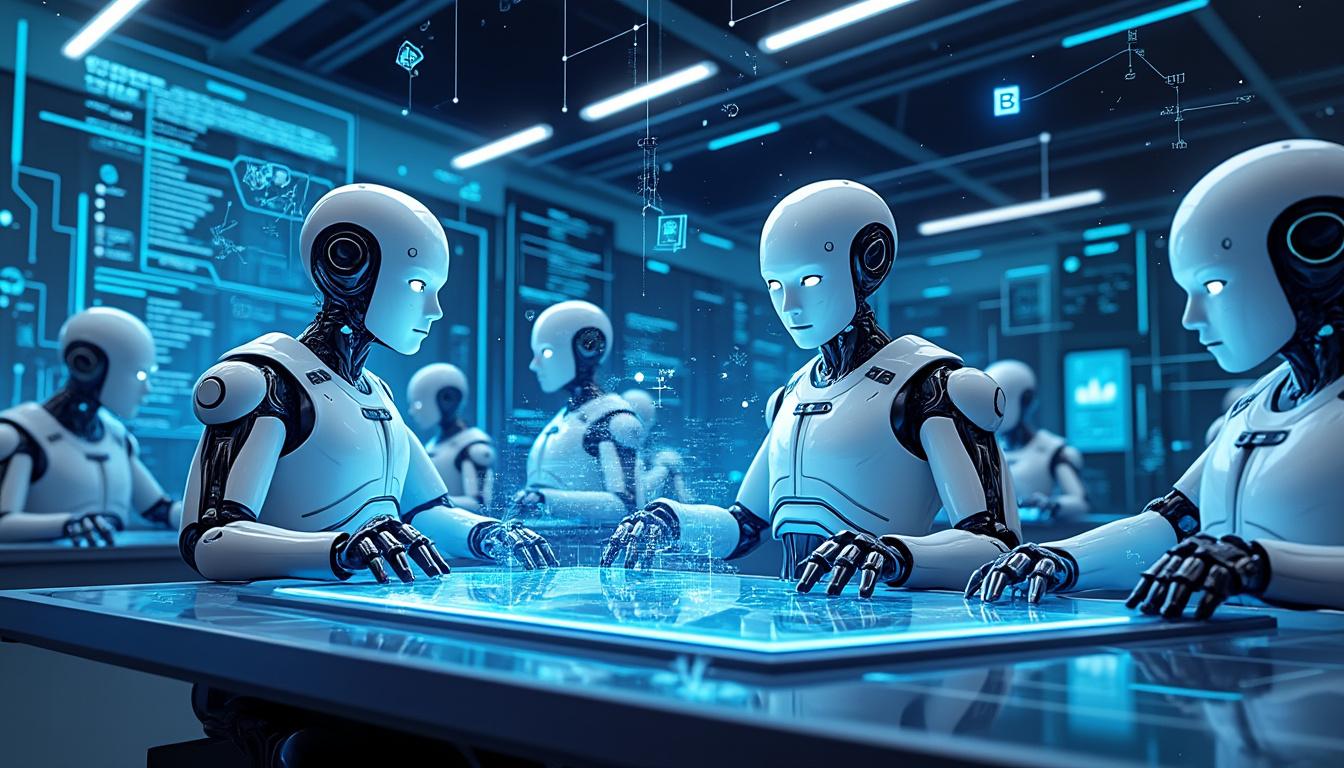
Deploying a multi-agent system: Anthropic reveals its internal experiences
The deployment of multi-agent systems has become an unavoidable reality for technology companies in 2025. As giants like Anthropic, OpenAI, and Microsoft embark on increasingly ambitious projects, Anthropic’s feedback on the challenges encountered during this journey offers valuable insights. Whether to optimize operational efficiency or improve the user experience, understanding these issues is essential for technical decision-makers. This article breaks down the difficulties identified by Anthropic, while discussing strategic responses companies can consider to fully leverage the potential of multi-agent systems. The Challenges of Deploying Multi-Agent Systems at AnthropicIn its recent analysis, Anthropic presents the obstacles encountered in implementing its multi-agent systems. These systems allow multiple AI agents to collaborate to achieve common goals. However, this collaboration is not without its complications. Key challenges include: Integration of Existing Technologies : Ensuring compatibility between pre-existing AI systems and new modules is often complex. Process Optimization : Effective coordination between multiple agents requires fine-grained task orchestration, which can quickly become a headache. Data Management: Data processing and analysis must be seamless to ensure informed decisions in real time.
Ethics and Bias
: Decisions made by multi-agent systems can be influenced by biases present in the original data. These challenges require careful vigilance and a well-thought-out strategy to mitigate potential risks. Let’s take a moment to explore each of these issues in more detail. Integration of Existing Technologies
- Integrating new systems into existing infrastructures is a major obstacle. In 2025, many companies are still using legacy systems that aren’t designed to collaborate with advanced AI solutions. This can lead to unforeseen delays and additional costs. To overcome this, companies such as IBM and Google have opted for modular solutions, facilitating the gradual assembly of AI without requiring radical changes.Process Optimization
- Coordinating between multiple agents requires non-trivial orchestration. DeepMind, for example, has invested in specific orchestration algorithms to ensure that each agent can work autonomously while contributing to common overall goals. Integrating these algorithms improves workflow and maximizes efficiency.Data Management
- Data management is also a challenge. With the volume of data generated by agents, it is crucial to have systems capable of processing this information quickly and securely. NVIDIA has recently developed graphics and computing tools that support parallel data processing, reducing bottlenecks without compromising the accuracy of results.Ethics and Bias
- The ethical issues surrounding the use of AI cannot be overlooked. Companies must ensure that their agents do not reproduce pre-existing biases.Facebook AI has implemented bias-checking protocols in its systems to ensure fair results. Incorporating these controls into the development of multi-agent systems is an essential step in building trust with users.
Strategies for Overcoming the Challenges of Multi-Agent Systems
Based on Anthropic’s experience, several strategies can be adopted to optimize the deployment of multi-agent systems. Here are some key recommendations:
Adopt a modular approach : Facilitate integrations with independent AI solutions. Train teams : Invest in training to maximize understanding of new technologies and infrastructures. Use advanced orchestration tools
: Integrating appropriate algorithms is crucial for the smooth operation of the system.
Implement ethical checks : Create tools to analyze and correct bias in agent decisions.These strategies provide a framework for companies looking to embark on multi-agent systems or those looking to improve their existing installations. By engaging in careful planning and rigorous execution, CIOs can turn these challenges into opportunities.
Adopt a modular approach
By opting for a modular architecture when deploying multi-agent systems, companies can reduce integration risks. This approach allows for the combination of various Microsoft and Salesforce tools while preserving the integrity of existing processes. Train teams Upskilling technical teams is essential. Training programs should focus on handling new AI infrastructures and understanding orchestration algorithms to maximize the benefits of multi-agent systems.
Use advanced orchestration tools
Organizing tasks between agents requires sophisticated orchestration tools. Companies like Amazon AI have developed systems that facilitate task allocation, ensuring that each agent acts in synergy with the others. These tools also allow for real-time monitoring of agent performance. Implementing Ethical Checks
Ethical checks can also help improve public trust in AI systems. Companies like Google have developed technology audits to ensure their systems remain transparent and accountable. This results in greater user acceptance, thereby strengthening brand reputation.
Successful Examples of Multi-Agent System Deployment
- To illustrate the potential of multi-agent systems, let’s look at some examples of companies that have successfully implemented effective solutions. These examples show that, despite the challenges, it is possible to leverage this technology to transform business operations.Case Study 1: The Banking Sector
- A major global bank decided to integrate multi-agent systems to improve the customer experience. By using AI agents, the bank was able to personalize customer interactions while optimizing transaction processing. This change resulted in a 30% increase in customer satisfaction in one year. Adopting AI not only improved the user experience but also reduced customer service costs.Case Study 2: Logistics and Supply Chain
- A leading logistics company adopted multi-agent systems to manage its supply chains. Thanks to AI, it was able to optimize transportation costs and improve inventory management. This led to a 25% reduction in operational costs.NVIDIA
- provided the processing power required for these complex operations, enabling real-time computation for each agent involved in the process.Case Study 3: Healthcare
In the healthcare sector, a hospital integrated multi-agent systems to coordinate patient treatments. These agents facilitated real-time communication between doctors and nurses, improving patient outcomes. Reports show a 20% reduction in medical errors, thus increasing the safety of care.
Future Trends in Multi-Agent Systems
As we move toward an era where multi-agent systems become the norm, several trends are emerging to shape the future of this technology. Here are a few to keep a close eye on: Increased Automation : The move toward AI systems that can self-correct and optimize their performance will be essential. Interoperability Between Systems : The ability to seamlessly interact with various systems will be a major asset for businesses. Increased Personalization
: Agents will become increasingly adept at delivering personalized services based on real-time data.
Attention to Ethics
: Companies will need to develop transparent ethical systems to build trust with users.
These trends create significant opportunities for companies ready to embrace the changes. For example, advances by OpenAI and IBM toward scalable AI systems should inspire new approaches to implementing multi-agent solutions. Increased Automation Automation will be a key factor in the future development of multi-agent systems. The innovations brought by DeepMind
Already illustrate how systems can learn from past experiences to improve their effectiveness. This will result in agents capable of positively influencing human decision-making.
Interoperability between systems Interoperability will become essential, especially in a context where different AI solutions must coexist. The work carried out by Google
to connect different AI systems can serve as a reference for other companies moving in the same direction.
Increased Personalization
Companies will seek to offer a more personalized user experience. Systems such as those offered by
Salesforce
already allow companies to adapt their services to user preferences in real time, thus increasing customer loyalty.
Attention to Ethics Finally, it will be highly necessary for industry players to strengthen ethical measures around the use of AI. Leaders will need to actively commit to creating transparent protocols to manage bias, as is the case with Facebook AI
. The deployment of multi-agent systems, while not without its challenges, represents a tremendous opportunity for businesses. Anthropic’s experiences provide important insight for CIOs seeking to navigate this technological transition. The strategies, case studies, and trends presented here illustrate how the AI ecosystem is constantly evolving and how businesses can leverage this momentum to position themselves at the forefront of technological progress.
Catégories : News & AI
Tags : anthropic, artificial intelligence, deployment, internal experiences, multiagent system