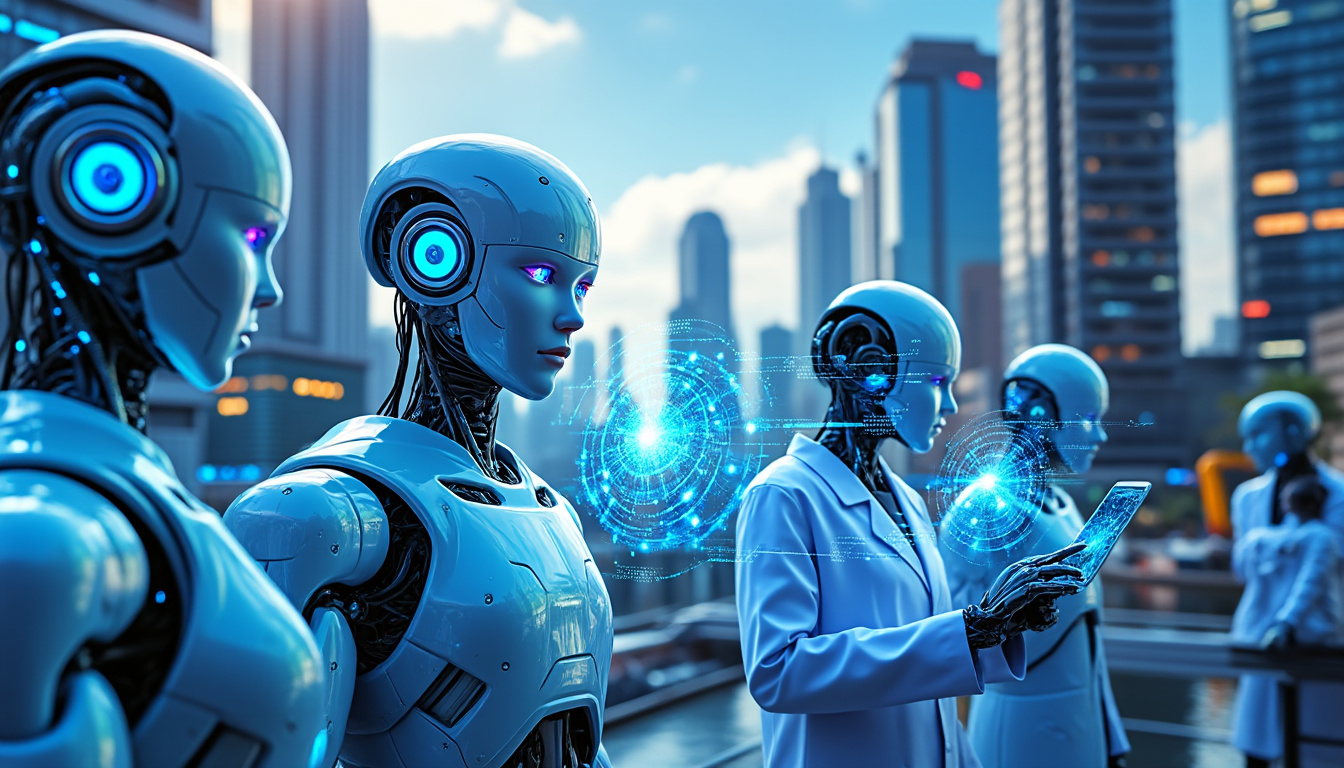
AI Agents: Moving from Theory to Practical Application
Artificial intelligence agents are experiencing rapid expansion and transforming diverse fields, from healthcare to education to commerce. The meteoric rise of these technologies, coupled with significant advances in machine learning and natural language processing, raises the question of their practical application. As several companies attempt to capitalize on these innovations, we will explore current developments, challenges, and future prospects for these AI agents.
AI Agents: A Constantly Evolving Definition
Artificial intelligence agents are systems designed to perform a series of tasks without direct human intervention. They can analyze data, make decisions based on learning algorithms, and interact with users. However, their implementation varies greatly depending on the sector.
An Overview of AI Agents in Business
Many companies are adopting AI agents to automate their processes and improve efficiency. For example, NVIDIA develops AI solutions that improve machine performance, while IBM Watson is making a name for itself in the healthcare field with advanced diagnostics. Here’s an overview of the key players:
| Company Name | Sector | Applications |
|---|---|---|
| NVIDIA | Technology | Data Processing Optimization |
| IBM Watson | Healthcare | Medical Diagnostics and Analytics |
| Salesforce Einstein | CRM | Sales Personalization |
| Microsoft Azure | Cloud | Machine Learning Services |
| DataRobot | Data Analytics | Predictive Model Automation |
This diversity of applications clearly demonstrates that artificial intelligence is no longer just a theory, but is becoming a reality in a wide range of practical tools. Furthermore, companies like Zalando Zircle are using AI agents to redesign their logistics approach, making their operations more agile and responsive to demand.
Challenges of AI Implementation
Despite the undeniable benefits, integrating AI agents into businesses is not without challenges. Several obstacles hinder their adoption:
- Implementation cost: Advanced technologies often require significant investments.
- Employee training: It is crucial that employees are trained to collaborate effectively with AI agents.
- Ethics and confidentiality: Data sovereignty and privacy issues must be addressed.
- Resistance to change: Companies sometimes find it difficult to modify their established processes.
These factors underscore that thoughtful and gradual adoption is essential to overcome obstacles and foster the integration of AI agents into daily business operations. The Impact of AI Agents on Human Resources
HR is one of the areas where the impact of AI agents is most felt. Companies like Salesforce have implemented AI agent solutions to improve the employee experience. The Salesforce Einstein tool, for example, analyzes employee data to offer tailored actions.
Improved Employee Experience AI agents are specifically designed to optimize HR processes. Notable benefits include: Talent Management: Agents can analyze employee skills and facilitate their development.Automated Recruitment:
Algorithms assist the selection process, making it more efficient.
Performance Management:
- Real-time feedback allows for more accurate monitoring of employee development. Feature
- Description Skills Analysis
- Identifying Talent and Development Opportunities Intelligent Recruitment
| Filtering Resumes Based on Predefined Criteria | Continuous Feedback |
|---|---|
| Providing Instant Performance Feedback | These innovations not only improve the efficiency of HR processes, but also enrich the employee experience, leading to reduced turnover and higher job satisfaction. |
| Ethical Concerns Surrounding AI Agents | With the benefits of AI also come ethical concerns. Companies like DeepMind and IBM Watson must be vigilant in their use of these technologies. Here are the main ethical issues to consider: |
| Transparency: | How can we ensure that AI agents’ decisions are understandable to users? |
Bias:
Algorithms can reflect human biases, requiring constant vigilance.
Confidentiality: Data security issues are paramount in the use of AI agents in HR. It’s therefore a delicate balance to strike between efficiency and the ethical framework necessary for their development. Recent innovations in the field of AI agents In 2025, the AI sector will experience significant advances that revolutionize its use. Initiatives like those of SAS in natural language processing are making interaction with AI more intuitive. Cutting-edge technologies
- Among the most promising innovations are the following: Generative models:
- These models are capable of creating new content based on existing datasets, paving the way for a variety of applications. Advanced conversational agents:
- Chatbots and interactive voices are becoming increasingly human-like in their interactions, facilitating communication. Contextual intelligence:
Networks like those developed by Cortical.io enable a more detailed understanding of the context of interactions.
These technologies open a new chapter in the relationship between humans and machines, making AI agents more accessible and effective.
Concrete Application Examples To better understand the impact of recent innovations, let’s examine some application examples: Application
Technology Used
Impact
- Customer Service Automation Conversational Agents
- Improved Customer Responsiveness and Satisfaction Predictive Analytics in Marketing
- Machine Learning More Targeted and Effective Strategies
Inventory Optimization
Contextual AI
Reduced Operational Costs
| These examples illustrate how technological innovation, when properly integrated, can transform business models in a sustainable manner. | Future Outlook for AI Agents | Finally, the future of AI agents looks promising, with trends currently emerging. Companies and researchers are exploring new avenues that could revolutionize our current understanding of AI. Key Trends to Watch |
|---|---|---|
| Several trends are emerging for 2025 and beyond, including: | Increased Personalization: | The need to tailor services to individual users will become even more pronounced. |
| Human-Machine Collaboration: | AI agents will work in concert with humans, creating new synergies. | Regulations and Standards: |
| Governments will establish frameworks to govern the use of AI and ensure its ethical use. | These trends demonstrate that AI is not limited to isolated applications, but is becoming an essential component of our societies. | The Potential for a Radical Transformation |
In short, artificial intelligence agents have the potential to significantly transform economic sectors. From optimizing human resources to improving business relationships, their impact is already measurable and promises to be decisive in the years to come. So, what opportunities do these innovations offer you?
This road to the integration of AI agents seems long, but not only is it underway, it also heralds a radical change in the way we interact with everyday technology.
Catégories : Non classé
Tags : AI app, AI theory, artificial intelligence, technological innovation