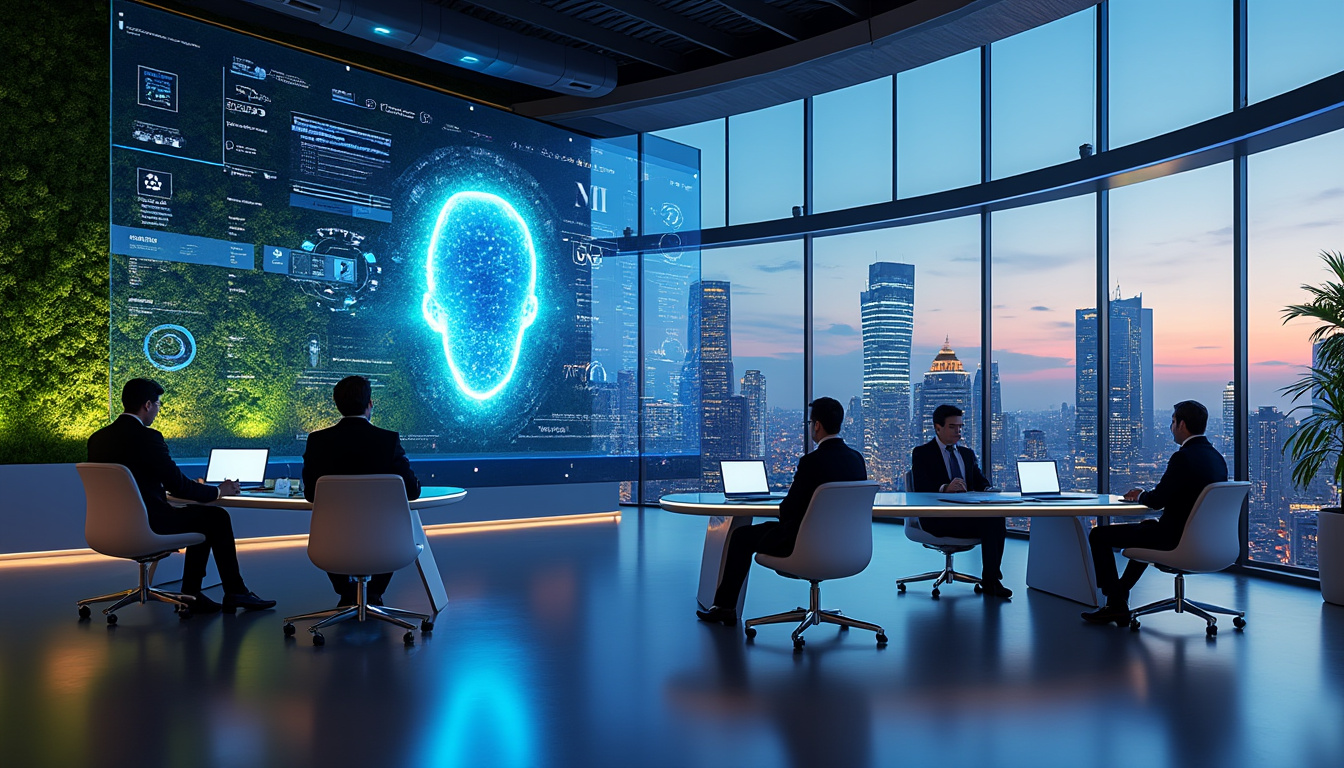
Artificial intelligence becomes a working partner: Moderna merges human resources and technology for a futuristic office
As 2025 approaches, the transformation of work environments is taking an unprecedented turn thanks to the integration of artificial intelligence (AI) in human resources (HR). Moderna, a pioneer in this field, is unafraid to combine advanced technologies with innovative management methods, creating a futuristic office where AI is not just a tool, but a true teammate. This article explores the implications of this advancement, the challenges it faces, and the opportunities it presents for companies.Moderna and the Integration of Artificial Intelligence in Human Resources In today’s dynamic business world, Moderna has clearly identified the importance of a strong synergy between artificial intelligence and talent management. By merging human resources with innovative technologies, the company is transforming the way employees interact within the organization. The Merger of Artificial Intelligence and Human Resources This collaboration between AI and HR offers a multitude of benefits. First, let’s explore several key points regarding this integration: Improved recruitment processes: AI allows for more efficient screening of resumes, identifying suitable potential candidates, and reducing human bias. Performance monitoring and evaluation:
Analyzing employee data helps managers track their progress and personalize evaluation methods.
Personalized training:Thanks to AI algorithms, training programs can be tailored to the specific needs of each employee. Improved employee experience: Chatbots and virtual assistants provide ongoing support to employees, facilitating their onboarding. To fully understand how Moderna is leveraging this dynamic, let’s examine the challenges encountered.
Automation in the workplace can cause anxiety among some employees, worried about losing their position. However, Moderna is taking a proactive approach, emphasizing collaboration between humans and technology.
The Benefits of a Futuristic Office
- By adopting a futuristic approach, Moderna is transforming not only its work environment, but also innovation within the company. How does this translate in practice? Workspace Flexibility:
- Flexible offices allow employees to work according to their preferences, thus promoting productivity. Collaboration Spaces:
- Dedicated areas encourage cross-team collaboration, boosting innovation. Optimization Technology:
- Integrated office tools facilitate task management and automate certain responsibilities, allowing employees to focus on high-value tasks. Aspects of the Futuristic Office Features
BenefitsFlexibility Modular Offices
Adaptation to Individual Needs
CollaborationOpen Meeting Spaces Better Communication
- Technology Process Automation
- Time Savings Employee Training in an Automated World Automation raises questions about professional development. Moderna has implemented continuous training programs adapted to technological advancements. These initiatives not only reskill employees but also foster an environment conducive to constant learning. Furthermore, Moderna uses online learning platforms enhanced by AI systems that analyze individual learning preferences. This paves the way for fully personalized educational paths, thereby improving employee productivity.
- The Impact of Technology-Enhanced Talent Management Talent management is more than ever a core concern for businesses. Thanks to AI, Moderna is developing a comprehensive approach that fosters engagement and professional growth. The integration of technology allows for real-time analysis of team performance data.
| The implementation of these technological tools generates tangible results, such as: | Improved employee satisfaction rates: | Employees with access to regular feedback and tailored training feel valued. |
|---|---|---|
| Talent identification: | AI helps identify promising internal candidates who could aspire to leadership positions. | Career prospects: |
| Thanks to clear professional development plans, employees can plan for the long term within the company. | At a time when digital transformation is essential for the sustainability of companies, it is becoming crucial for them to rethink their relationship with work. Moderna, at the crossroads between technology and human resources, offers a model for innovation. | Towards a future of ideal collaboration between humans and technology |
| As we continue our exploration of tomorrow’s work environments, it is undeniable that collaboration between humans and machines is redefining professional relationships. Moderna is positioning itself as a leader in this quest for a harmonious balance. | Evolving Work Practices Through Automation | Automating repetitive tasks frees up employees’ time, allowing them to focus on more strategic missions. What happens when employees dedicate more time to creativity and innovation? Companies like Moderna are seeing a dynamic of progress. |
To better illustrate this complementarity between humans and AI, let’s analyze several innovations that have emerged in this context:
Predictive analytics tools:These tools provide advanced analysis of market trends, enabling informed decision-making. Virtual assistants:
Available 24/7, these tools assist employees with a variety of tasks, increasing their autonomy and efficiency. Talent management platforms: These solutions facilitate performance monitoring, career management, and training needs assessment. Technological Innovations
Features
Implications for Employees Predictive Analytics Tools Real-Time Data Analysis
Fast and Strategic Decision-Making
- Virtual Assistants Continuous Support
- Time Savings and Autonomy Talent Management Platforms
- Personalized Monitoring Optimized Professional Development
Workplace Culture and Atmosphere: Towards a Revolution Corporate culture is evolving rapidly, and Moderna is taking employee well-being into account. By integrating AI into HR, the company is focusing on the values of collaboration, transparency, and listening. This commitment translates into: Stimulating Workspaces:Work villages that encourage creativity and initiative.Continuous Feedback:Implementing systems to regularly collect employee feedback.
Team-Building Initiatives:
Activities held to strengthen team spirit and foster cohesion. The impact of AI in HR and within organizations raises the question of the meaning of work. Moderna, aware of this challenge, is creating a framework where employees can not only grow, but also contribute to a cause that goes beyond work. This engaging model transforms mindsets and places employee satisfaction at the heart of management concerns. Constraints to anticipate in technological integration
Despite the undeniable benefits of advanced AI integration, several challenges remain. It is essential for companies to address employee fears regarding this transformation:
Employment concerns:
Fear that certain tasks will be completely automated and lead to job losses.
- Training and skills: Lack of adequate training to use these new technologies.
- Acceptance of change: Resistance to this technological evolution.
- To overcome these challenges, Moderna mobilizes internal communications teams, forming working groups and incorporating feedback on legitimate employee concerns. This process, which ensures a smooth transition, also contributes to building a collaborative and optimistic vision. Commitment to a successful digital transformation
| The year 2025 is shaping up to be a major turning point in the evolution of businesses. | Digital transformation is no longer an option; it has become a necessity. Moderna, by consciously integrating AI into its HR processes, is a pioneer: a vision that unites technology and people. | The role of technology in the company’s strategic vision |
|---|---|---|
| Every company must now consider its digital strategy. Moderna adopts a philosophy focused on: | Strategic alignment: | Company objectives are aligned with the adoption of new technologies. |
| Continuous innovation: | Decisions made integrate technological advances and evolving market needs. | Agility: |
| The ability to quickly adapt to changes, both internal and external. | Principles of digital transformation | Examples of application |
Impact on the business
Strategic alignment
Technological objectives aligned with the company’s vision
- Consistency of operations and results Continuous Innovation
- Technology Monitoring Practices Sustainable Competitive Advantage
- Agility Ability to Respond to Feedback
Increased Customer and Employee Satisfaction
A Necessary Legal Framework to Support Businesses
As we observe the rise of AI, a clear regulatory framework is needed. Companies, including Moderna, must prepare for evolving legislation regarding personal data protection and the ethical use of AI.
- By implementing transparent and legally compliant practices, companies can not only avoid legal issues but also strengthen employee and customer trust in their methods. Seeking to shape a future that seamlessly connects humans and technology is an urgent challenge for all companies. Congratulations to Moderna for leading the way in implementing such a vision.
Catégories : Innovations & Trends
Tags : artificial intelligence, human resources, moderna, technology, work partner