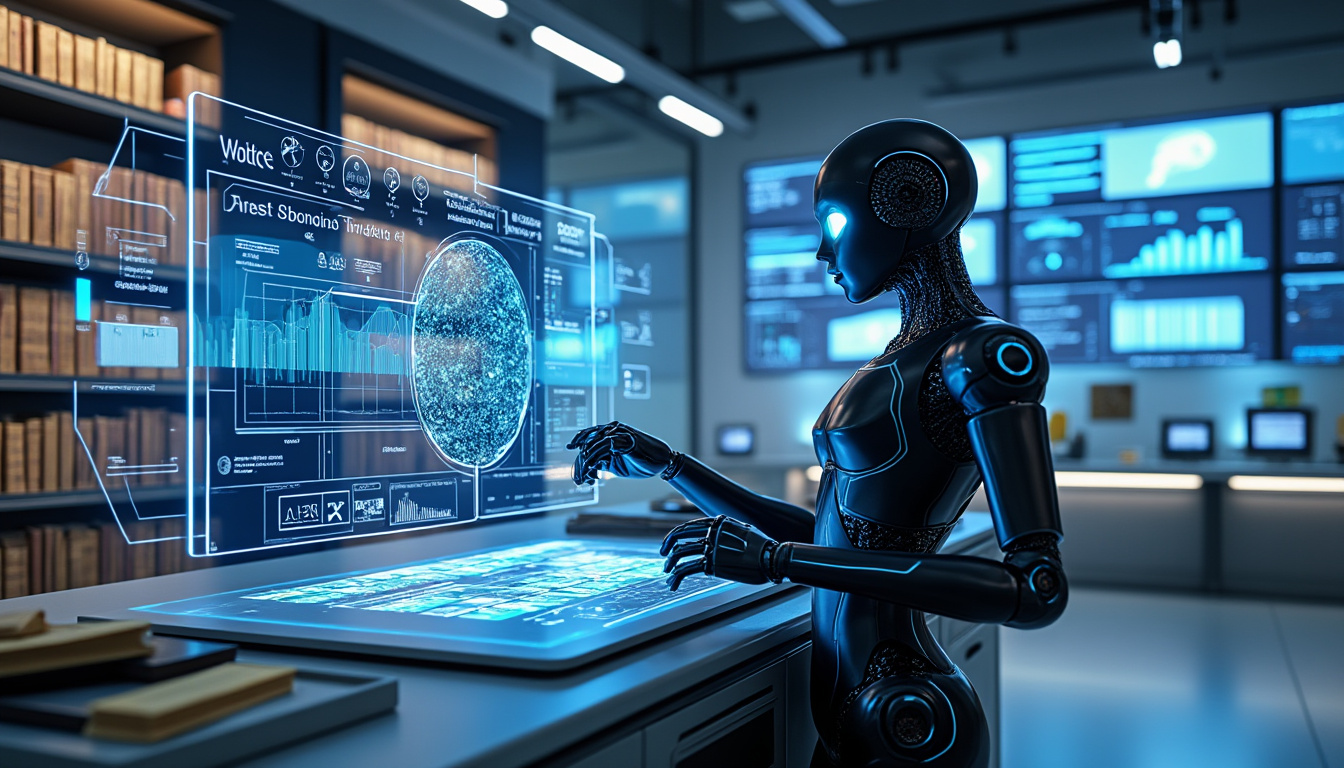
Discovering Manus, the Chinese artificial intelligence that aims to do everything for you: our review
In a world where automation and efficiency are becoming essential, the discovery of Manus, a Chinese artificial intelligence (AI), is generating growing interest. Recently launched by the startup Monica, Manus claims to be a “general AI agent,” ready to handle a multitude of tasks, both professional and personal. But is this bold promise based on solid foundations? After several weeks of use, we decided to take a closer look at this technological innovation. Between high hopes and criticism, here is our feedback on Manus. Manus: An overview of its operation and its ambitions Manus’s promise is clear: to deliver concrete results to its users. Presenting itself as an agent capable of connecting “thoughts and actions,” this tool is designed to operate autonomously, tackling complex projects without human intervention. Manus’s development leverages leading AI models such as Anthropic’s Claude 3.7 and Alibaba’s Qwen models, which emerged from the AI revolution in China.The AI Agent Paradigm and Its ImpactManus is part of a broader trend of technological innovation involving AI agents, designed to relieve users of tedious tasks. Manus’s work structure is as follows:
Information Gathering
: Internet research to gather relevant data. Data Structuring : Organizing and compiling acquired information.Task Execution: Coding and completing projects ranging from website creation to event planning. The ability to handle complex projects offers a new dimension of automation in our daily lives, making technology more accessible and efficient.Manus’s Different Offers and Subscription Models
To explore Manus, there are several subscription options. The free version, although limited to 1,000 credits, allows users to familiarize themselves with the user interface and basic features. Here’s an overview of the plans offered:
Subscription NameCost Credits per Month
- Simulated Tasks Simultaneously Starter
- €45 3,900
- 2 Pro
€22919,900 5
With such options, everyone can choose a plan that suits their needs, although the cost of subscriptions raises questions about the accessibility of this technology for the general public.
Manus Test: First Experience and Results
| To understand the true scope of Manus, we undertook various projects using the macOS app, as well as the iPhone version. This allowed us to test its varied capabilities and discern whether this AI could live up to its promises. A Website Designed by Manus: A Successful Challenge | First, we asked Manus to create a website on the topic of data breaches in France. In just a few minutes, Manus conducted research, structured the entire process, and coded it, demonstrating impressive execution skills. Here’s how the process unfolded: | Researched relevant information on data breaches. | Created the site structure. |
|---|---|---|---|
| Wrote and coded the site in HTML and CSS. | The final result was functional and had a well-designed design. This increased efficiency convinced us that Manus could, in some cases, act as a true intelligent assistant, saving us considerable time. | Manus’ Limitations: Mixed Results | However, we did notice a certain limitation in the fluency of the French language used by Manus. Thus, when we asked Manus to design a document based on provided files, the results were more mechanical and lacked elegance: |
| The writing style was repetitive and rigid. | The AI struggled to respond to specific requests requiring stylistic adaptation. | Although Manus excelled at creating data and interfaces, its writing abilities were lacking, highlighting a need for improvement in this area. | Exploring Manus’s Planning Skills |
Another aspect we explored was Manus’s ability to plan trips. These tasks, requiring a comprehensive look at multiple data points, revealed the system’s strengths and weaknesses, providing insights into its flexibility.
Developing a Complete Travel Itinerary
To test its practical skills, we requested a full day of activities during a trip to Paris. Manus quickly produced a PDF containing a detailed itinerary. What we found particularly fascinating was:
The method of organizing activities by geographic proximity.
The restaurant recommendations suitable for different budgets.
- The activity schedules, including tips for avoiding queues.
- This type of planning is symptomatic of what the digital future can offer in the travel industry, replacing endless searches. It’s a real breakthrough thanks to the automation and efficiency of modern systems.
- An intuitive user interface, but bugs to be fixed
Another interesting feature about Manus is its user interface, which seems quite user-friendly overall. However, we encountered a few challenges:
Files are sometimes difficult to download.
Frequent crashes during complex operations.
- This raises questions about the stability of the deployed technology, given that imperfections can significantly hamper the user experience. The accumulation of bugs can impact user perception and, consequently, the mass adoption of this technology.
- Manus, an intelligent assistant with promising potential
Despite the criticisms and limitations observed, it would be reductive to consider Manus solely on its weaknesses. Its potential in the context of personal and professional assistance opens up fascinating perspectives for innovation
in artificial intelligence. The growing need for automation in various fields could give it a crucial role, particularly in the administrative sector:
Synthesis of complex documents.
Organization of repetitive tasks without manual intervention.
Retrieval and organization of data from various sources.
- In fact, Manus embodies a model of what the future of digital personal assistants could be, especially in terms of performance and efficiency. A Look at Future Possibilities
- Looking ahead, several questions arise about the developments Manus could undergo. Artificial intelligence development is generally proactive, and in the case of Manus, we can envision:
- Continuous improvement of language understanding by integrating contextual elements.
Regulatory updates providing bug fixes and improving stability.An expansion of its capabilities to include more varied tasks, making the user experience even more fluid. Perceived as a tool for innovation, Manus could transform the way we interact with technology on a daily basis.
Catégories : Non classé
Tags : artificial intelligence, China, critical, manus, technological innovation